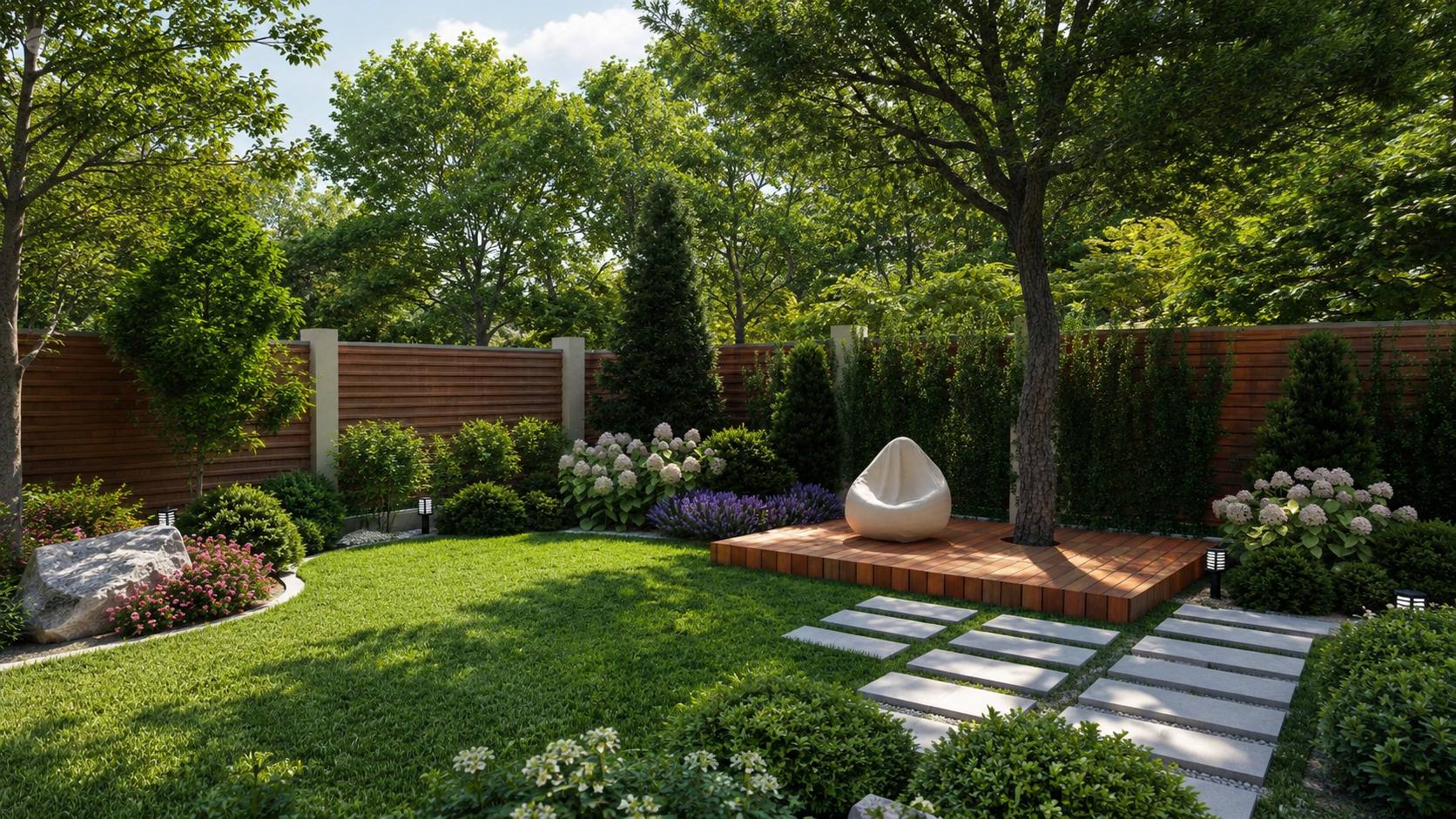
Modern development projects are becoming increasingly complex in terms of process coordination, engineering integration, and budget management. As expectations for high-quality urban environments continue to rise, landscape architecture is no longer viewed as a final decorative stage but as an essential part of strategic project planning. Martin Palma, founder and CEO of Ecolandscape Studio, analyzes the key causes of budget overruns in landscaping projects and notes that in most cases, financial losses are driven not by project scale but by the absence of an integrated approach during early stages. High-quality coordination across all phases – from concept development to final implementation – significantly reduces risks, prevents costly mistakes, and ensures more efficient use of resources.
One of the most common causes of budget loss is fragmented project management. When architectural concepts are developed separately, engineering solutions are addressed later, and contractors are brought in without a unified coordination strategy, the risk of conflict between systems increases dramatically. Even minor inconsistencies between documentation and execution can lead to delays, redesign, and additional expenses. Specialists at Ecolandscape Studio believe that the lack of a unified project logic is often the core reason behind avoidable budget overruns that could have been prevented before construction even began.
An integrated approach in landscape architecture means that all project components are treated as one interconnected system. Planting design, drainage, irrigation, lighting, surface materials, topography, and user movement scenarios must be designed simultaneously rather than sequentially. This method allows potential conflicts to be identified and resolved before physical implementation begins. At Ecolandscape Studio, we analyze completed projects and consistently observe that early integration of all disciplines not only minimizes errors but also significantly improves overall design efficiency. The earlier strategic decisions are made, the less expensive it becomes to adjust them when needed.
Budget savings become especially evident during procurement and construction. Projects developed without deep coordination frequently encounter situations where materials must be changed, engineering systems adjusted, or structural elements redesigned during implementation. Such modifications almost always increase total project costs. Specialists at Ecolandscape Studio note that comprehensive planning enables optimization of specifications, supply logistics, and construction sequencing from the outset. This significantly reduces the risk of unexpected costs while helping maintain budget control throughout every stage of execution.
Long-term operational efficiency is another critical factor. Mistakes made during design rarely affect only initial capital costs. Poorly considered decisions can increase maintenance, repair, and operational expenses for years. This is why professional project planning evaluates not only capital expenditure but also total lifecycle cost. At Ecolandscape Studio, we believe that strong landscape architecture must perform effectively over the long term by maintaining a balance between visual quality, functionality, and operational resilience.
The market increasingly demonstrates that an integrated approach is no longer a competitive advantage but an essential standard for high-level projects. Coordinating every phase, from master planning to execution, allows developers to manage capital more efficiently, reduce risks, and achieve more predictable outcomes. We see integrated planning as the foundation of modern landscape architecture, where every decision is made within the context of a broader strategy, and high-quality planning becomes the most powerful tool for preserving budget and maximizing project value.