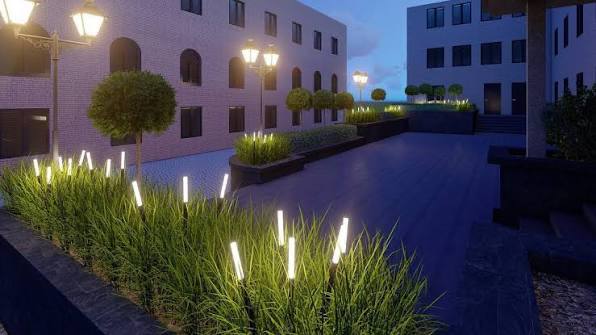
A city is perceived in a completely different way after sunset. Spaces that feel open, clear, and welcoming during the day can become visually complex, less inviting, or emotionally uncomfortable at night. At that moment, light begins to play a defining role, shaping not only visibility but the entire experience of urban space. Martin Palma, founder and CEO of Ecolandscape Studio, notes that landscape lighting should no longer be seen as merely a decorative addition but as an essential tool of spatial design that directly influences safety, comfort, and the way people interact with the city. A well-designed lighting strategy has the power to transform a territory entirely, revealing its full potential during evening and nighttime hours.
Modern landscape lighting performs far more functions than simply providing illumination. It helps create intuitive navigation, emphasizes the architectural structure of space, highlights important areas, and naturally guides pedestrian movement. Light can visually expand a territory or, conversely, create a sense of intimacy and warmth in carefully selected zones. Specialists at Ecolandscape Studio believe that high-quality lighting design should operate on the level of user experience, creating environments where people feel confident, oriented, and comfortable regardless of the time of day. This approach is particularly important for public spaces, parks, pedestrian routes, and residential districts, where lighting directly influences how people perceive and use the environment.
One of the most important aspects of lighting design is safety. Poorly illuminated areas are often perceived as potentially unsafe, even when actual risks remain low. Insufficient lighting reduces orientation, limits visual awareness, and increases psychological discomfort. At the same time, excessively bright or poorly distributed light can also create problems by causing glare, visual fatigue, and sensory overload. At Ecolandscape Studio, we analyze modern international approaches and observe that effective lighting depends on balance – combining sufficient brightness, visual softness, and carefully positioned light accents. Safety is not determined by the quantity of light alone but by the quality and intelligence of its design.
An increasingly important factor in contemporary urban environments is the interaction between lighting and natural elements during nighttime hours. Trees, shrubs, water features, and topography can become integral components of a lighting composition. Illuminating green zones helps preserve spatial depth, create expressive visual compositions, and ensure that landscapes remain architecturally complete even after dark. Specialists at Ecolandscape Studio note that integrating lighting into natural elements creates emotionally richer environments, giving urban landscapes a new visual identity while making them more attractive and welcoming for residents.
Energy efficiency has also become a major priority in modern lighting strategies. Advanced lighting technologies make it possible to significantly reduce energy consumption without compromising environmental quality. LED systems, intelligent brightness control, motion sensors, and adaptive lighting scenarios allow cities to optimize operational costs while maintaining high levels of comfort and functionality. We believe that sustainable lighting should combine aesthetics, performance, and environmental responsibility. This integrated approach enables the creation of urban spaces that remain efficient, relevant, and sustainable over the long term.
Nighttime perception of a city is shaped by countless details, yet light remains one of the most powerful tools for influencing the urban experience. It can strengthen the sense of security, enhance the quality of public spaces, and build a deeper emotional connection between people and their surroundings. At Ecolandscape Studio, we see landscape lighting as a vital part of the future of urban design, where every lighting element contributes to creating more comfortable, harmonious, and vibrant cities that continue to function fully even after darkness falls.









