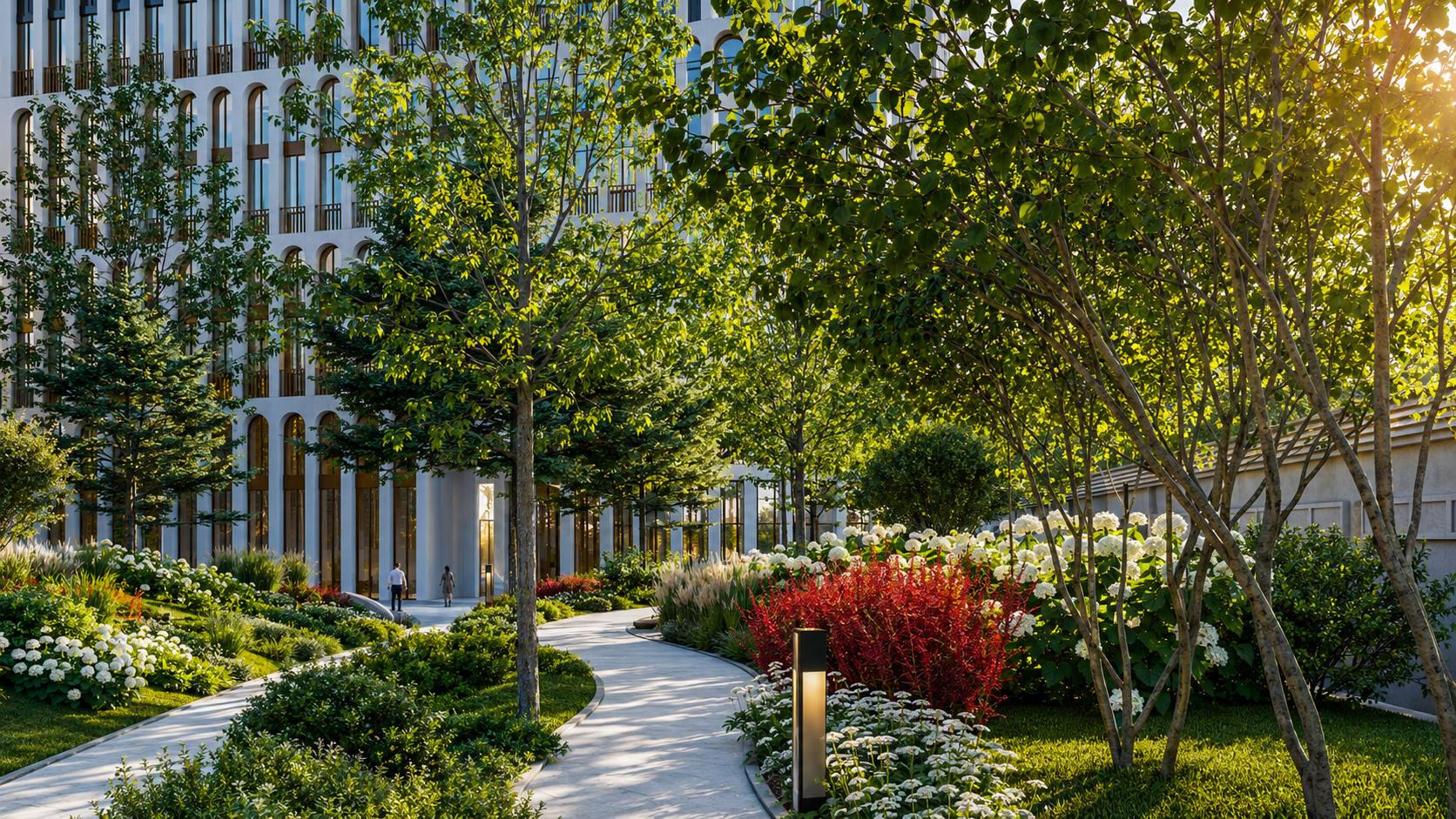
In modern real estate development, the perception of a project begins long before a potential client steps inside the building. The first few seconds of interaction with a property often become decisive in shaping emotional perception, perceived value, and the level of trust toward the developer. Access roads, entrance zones, landscaping, visual axes, outdoor materials, and the overall quality of the external environment create that crucial first impression, which later influences the perception of the entire project. Martin Palma, founder and CEO of Ecolandscape Studio, views exterior design as one of the key factors in shaping the market value of a property, as the external environment is the first element to communicate with a buyer and establish an initial perception of quality, prestige, and project level. In a highly competitive market, it is becoming increasingly clear that a strong product begins not inside the building, but with the space surrounding it.
The psychology of first impressions operates faster than rational analysis. People evaluate space within fractions of a second, subconsciously forming conclusions about safety, exclusivity, comfort, and overall quality. Before a potential buyer even studies floor plans, technical specifications, or infrastructure advantages, the brain is already interpreting signals from the surrounding environment. Poor landscaping, visual chaos, or weak spatial planning can significantly reduce perceived value before negotiations even begin. Specialists at Ecolandscape Studio believe that premium exterior design must operate on an emotional level, creating a sense of sophistication, prestige, and trust from the very first visual contact.
Exterior design becomes especially important in the premium real estate segment, where buyers purchase not only property but also lifestyle. In the luxury market, clients are not simply buying square meters – they are investing in an environment in which they will live, relax, or conduct business. Privacy, movement comfort, material quality, and the balance between architecture and nature all become part of the overall product. At Ecolandscape Studio, we analyze buyer behavior and observe that high-quality exterior environments strengthen emotional attachment to a property and help clients imagine themselves as part of that space much faster. The stronger the visual and emotional response, the higher the likelihood of a positive purchasing decision.
Exterior design also has a direct impact on developer branding. Today, competition exists not only between buildings but between project philosophies. The external environment becomes a visual language through which a property communicates its values to the market. Some developments emphasize privacy and exclusivity, while others focus on social interaction, sustainability, or prestige. Well-executed landscape architecture helps create a distinctive identity that makes a project memorable and clearly differentiated from competitors. Specialists at Ecolandscape Studio note that strong exterior design can become part of a project’s brand DNA, increasing its commercial appeal and strengthening market positioning.
The investment dimension is equally important. Projects with high-quality external environments often demonstrate stronger sales performance, higher price per square meter, and more stable long-term demand. The reason is simple – buyers increasingly perceive landscaping as an essential indicator of asset quality. We believe investments in the external environment should be viewed as strategic investments in project liquidity. High-quality exterior design not only increases visual value but also directly enhances the commercial performance of a development.
The modern market is moving steadily toward experience-driven development, where value is created through the interaction between people and space. First impression is no longer a secondary factor – it has become a critical component of market success. At Ecolandscape Studio, we see exterior design as a powerful value-creation tool, where architecture, landscape, and user experience merge into a unified system capable of building trust, strengthening emotional connection, and increasing project competitiveness even before a client sees the interior.