In recent years, more and more people are seeking to replace traditional chlorinated pools with more eco-friendly and aesthetically appealing natural pools. At Ecolandscape Studio, we believe that these pools are not just an innovative trend but a natural continuation of the philosophy of harmony with nature. Natural pools became especially popular in Europe since the mid-1980s and are gradually gaining attention in the US, despite the many myths surrounding them. So, what lies behind this phenomenon, and why do we recommend considering natural pools as part of modern landscape design?
Natural Pools: The Perfect Combination of Aesthetics and Ecology
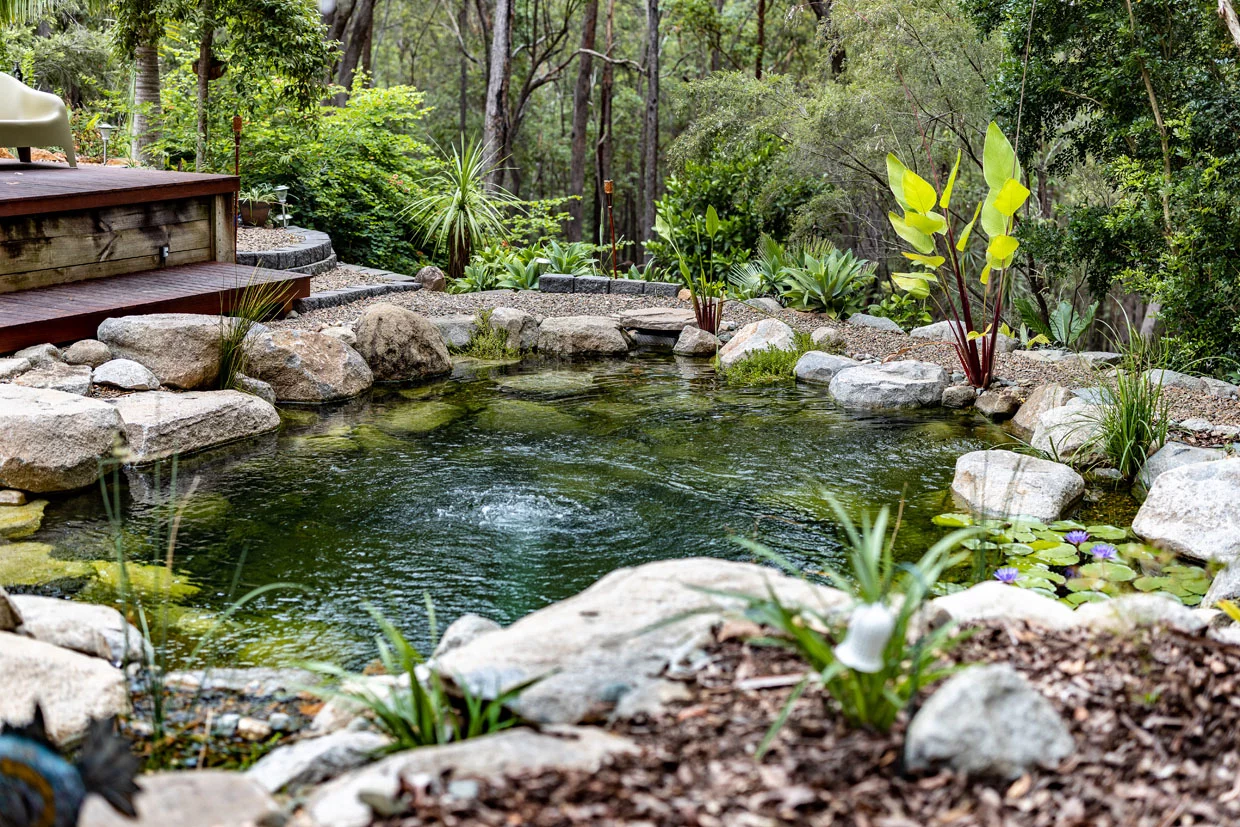
A natural pool is not just a water feature designed for swimming. It is an entire ecosystem that uses plants and microorganisms to maintain water purity. Instead of chlorine, these pools use plants for filtration. These pools often have an attractive appearance, as their design can vary greatly from organic ponds that blend seamlessly with the landscape to more stylish infinity water features.
At Ecolandscape Studio, we see natural pools not only as a way to create an ecosystem but also as a means to make the landscape more beautiful and natural. They are the perfect solution for those who want to enjoy swimming in natural, living water while minimizing their impact on the environment.
A Unique Approach to Water Purification
The process of water purification in a natural pool differs significantly from traditional methods that rely on chemicals. At its core, it follows the principle of self-regulation inherent in wetlands. Plants like water lilies, reeds, and other aquatic vegetation play a crucial role in filtering the water by absorbing pollutants and improving its quality. An important element of such systems is the filtration zone, filled with gravel and plants, which effectively purifies the water, creating favorable conditions for swimming.
The Benefits of Natural Pools
Without chlorine, the water in natural pools remains clean and safe for health. This significantly reduces the impact of chemicals on the overall ecosystem. In these pools, the water is purified naturally through the interaction with plants and microorganisms, creating a living environment that maintains harmony and balance.
Natural pools blend perfectly with the landscape, adding natural beauty and texture. Stones, plants, waterfalls all these elements can become an essential part of the design, harmonizing with the surrounding space. Such a pool becomes not just a water feature, but an integral part of nature, enhancing the garden.
Moreover, these pools require minimal maintenance and consume much less energy compared to traditional chlorinated pools. Since the water purification process happens naturally, there is no need for constant chemical treatments or powerful pumps. This makes natural pools more economical and sustainable in operation.
As Martin Palma, the founder and CEO of Ecolandscape Studio, notes, «While the natural processes and ecosystem of these pools work seamlessly, it is important to remember that their design and maintenance require knowledge and attention to detail. It’s crucial to properly organize the plant and filtration zones to ensure long-term sustainability.»
Barriers to Popularization
Despite all the obvious benefits, natural pools are still not widely spread in the US. Often, people are hesitant due to a lack of information and existing myths about whether such systems can be sufficiently clean or safe for swimming. Many perceive natural pools as something exotic and difficult to maintain, but this is far from the truth. In fact, natural pools require minimal intervention, and their maintenance generally involves controlling the water level and ensuring the health of the plants.
At Ecolandscape Studio, we are confident that awareness of natural pools will grow year by year. We believe that more people will start focusing on the ecological aspects of their homes, and natural pools will become an essential part of this trend.
How to Choose a Natural Pool for Your Garden
If you are considering creating a natural pool in your garden, it is important to keep several factors in mind:
- The size and shape of the pool should harmonize with the surrounding landscape and the overall style of your garden.
- Choice of plants: Properly selected plants not only enhance aesthetics but also help with water filtration.
- Maintenance: While natural pools require less maintenance, their design should account for local climate conditions and ecosystem characteristics.
At Ecolandscape Studio, we recommend always consulting professionals when designing and building such a pool. We can help you create a harmonious space where the pool will not only be a place for relaxation but also an eco-friendly element of your garden.
Natural pools are not just a fashionable trend but an environmentally friendly and aesthetically appealing solution for those who value harmony with nature and care about their health. At Ecolandscape Studio, we believe that these pools can become an important element of modern landscape design, satisfying both aesthetic and ecological needs. With the right approach, they can be not only beautiful but also functional, adding uniqueness and balance to your garden.
If you want to implement a natural pool project, feel free to reach out to us. We will be happy to assist you in creating the perfect water feature that will become an integral part of your garden and living space.