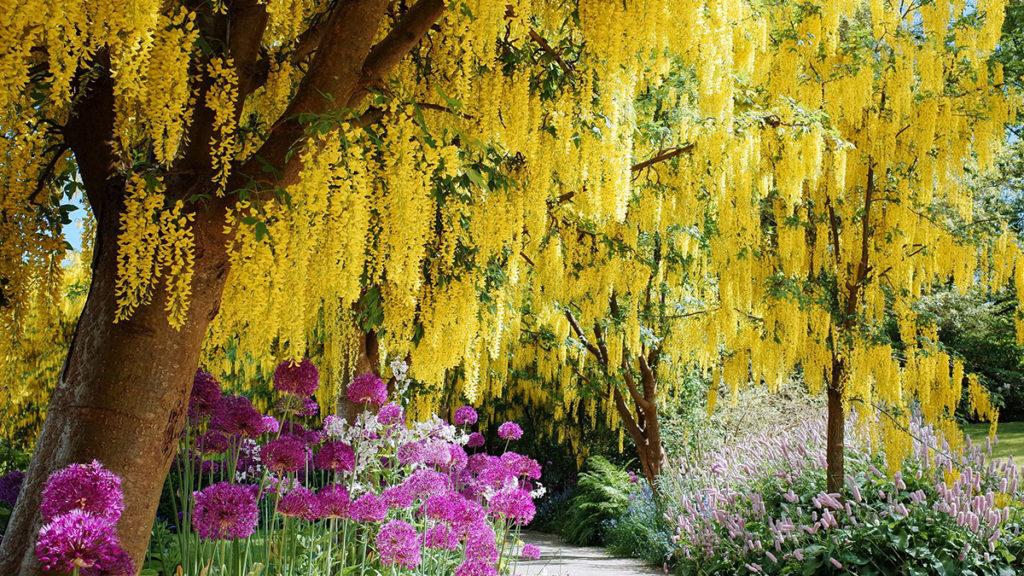
Choosing the right tree for your garden can be more complex than it seems at first glance. Many factors must be considered — from available space to climate conditions, and, of course, aesthetic preferences. At Ecolandscape Studio, we believe that the right tree can not only serve as a decorative element but also become an essential part of the overall harmony of your landscape. In this article, we’ll explore how to select the best tree for your garden, which types are most popular, and how to incorporate them into your design.
Variety of Trees for the Garden: From Miniature to Massive
When selecting trees for your garden, it’s important to understand that each type has its own unique characteristics. At Ecolandscape Studio, we consider both functionality and visual impact, offering solutions that suit your specific space. Trees can be:
- Small and compact – perfect for urban gardens, terraces, and balconies with limited space.
- Tall and powerful – these trees are more suitable for larger plots and rural gardens.
- Flowering trees – they create vibrant accents and attract attention throughout the year.
- Evergreen trees – providing greenery and structure all year round.
It’s also essential to consider the shape of the tree: some have drooping branches, while others feature compact and narrow crowns. At Ecolandscape Studio, we always select trees that match the style of your garden and the local climate.
Popular Trees for the Garden
Cornel, maple, cypress, and magnolia are just a few examples of trees that are popular among garden enthusiasts. For every garden type, there’s a tree that can become its central feature and highlight its style. Let’s take a look at a few trees that can add uniqueness to your garden:
- Japanese maple – With its decorative foliage and distinct shape, this tree is perfect for various gardens, adding elegance and refinement.
- Magnolias – These trees capture attention with their large flowers, becoming the focal point and creating an atmosphere of sophistication and tranquil beauty.
- Flowering dogwood – Not only does it delight with its flowers, but its decorative fruits stay through late autumn, adding bright accents and extending the season of beauty in the garden.
- Crape myrtle – Perfect for creating accents against other plants, its compact form and vibrant flowers make the garden more lively and dynamic.
Each of these trees brings its unique feature to the garden, creating harmony and an atmosphere that will delight the eye throughout the year.
Evergreen Trees for the Garden: Reliability and Beauty Year-Round
Evergreen trees such as arborvitae, cypress, and fir add structure to the garden and remain attractive even in winter. At Ecolandscape Studio, we often recommend these trees as they are ideal for creating hedges, windbreaks, or decorative backgrounds.
For smaller spaces, you can choose compact varieties like Polar Gold arborvitae or Soft Serve cypress. These trees thrive in various climates and require almost no pruning. It’s important that they harmonize with other plants and don’t take up too much space.
Many evergreen trees are not only beautiful but also functional. For example, conifers are often used to create secluded corners in gardens. They serve as natural windbreaks and protect against curious eyes.
Tree Selection Tips for Your Garden
At Ecolandscape Studio, we always select trees based on their growth characteristics, size, and care requirements. For those seeking evergreen trees for small spaces, we recommend Blue Arrow juniper. It occupies minimal space but still offers a range of decorative benefits.
For larger plots, we suggest the Horstmann’s Silberlocke Korean fir, which not only attracts attention with its unique foliage but also features a striking contrast in winter when purple cones stand out against the silvery needles.
Martin Palma, the CEO of Ecolandscape Studio, always emphasizes that it’s not just about choosing the right tree; it’s important to consider its interaction with other plants and the overall style of the landscape. “Every tree should be seamlessly integrated into the garden, creating a unique atmosphere,” he says.
How to Choose the Right Tree for Your Garden
Consider the climate zone. It’s crucial that the tree matches the temperature conditions of your region. For cold climates, hardy conifers are ideal, while for warmer regions, deciduous trees with stunning foliage are a great choice.
Plan the tree’s size. Some trees can grow to massive sizes, quickly taking up a lot of space. For limited spaces, opt for dwarf or compact varieties.
Don’t forget about aesthetics. It’s important that the tree harmonizes with the other plants, textures, and the overall design of your garden. This helps create a balanced space that will be enjoyable for both you and your guests.
Maintenance and pruning. Some trees require regular pruning to maintain their shape and health. Choose varieties that align with your level of involvement in gardening.
Selecting the right tree for your garden is not just a task — it’s an art. At Ecolandscape Studio, we approach this process with professionalism and attention to every detail. The right tree will not only enhance the beauty of your garden but also improve the microclimate by providing shade, wind protection, and year-round appeal.
If you’d like personalized recommendations for selecting the perfect tree for your garden, we’re always here to help.









