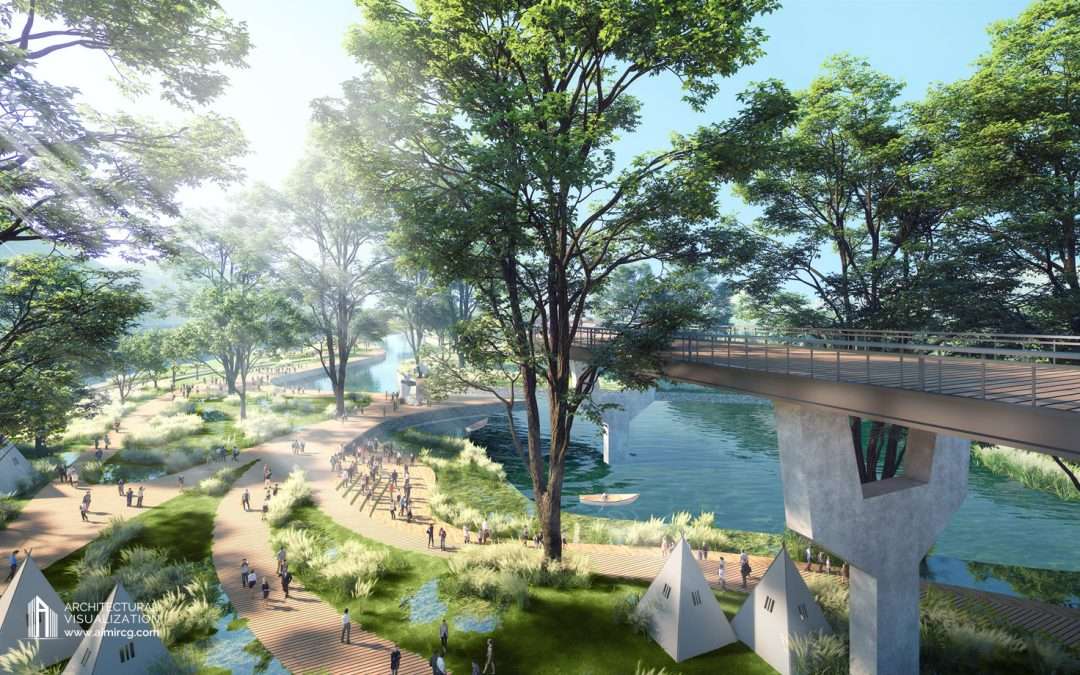
Designing public spaces in modern cities is a critical task that requires a careful approach, combining aesthetic, functional, and ecological aspects. At Ecolandscape Studio, we believe that these spaces should not only be attractive but also sustainable, meeting contemporary requirements while being accessible to all users. In this article, we will share the key principles of designing public spaces that are currently relevant, and how we apply these approaches in our projects to achieve harmony between the city and nature.
Why Design Public Spaces?
Public spaces are essential elements of the urban environment. They serve a variety of functions: from providing areas for relaxation and cultural events to enhancing the quality of life for residents and supporting social infrastructure. These spaces influence the ecological state of the city by creating places that address both aesthetic and practical needs.
As Martin Palma, the founder and CEO of Ecolandscape Studio, points out: «Modern public space design must not only meet visual and functional requirements but also be ecologically responsible, supporting the harmony between urban environments and nature for many years to come.»
Key Trends in Designing Public Spaces
Modern public spaces are not just green zones or parks. Several significant trends shape the approach to design in recent years.
Inclusivity and Accessibility — This is a crucial trend in urban environments. Public spaces must be comfortable and accessible for all population groups, including people with disabilities, elderly individuals, and children. Creating barrier-free spaces has become an integral part of modern landscape design, greatly improving the quality of life in cities.
Green Technologies — Another important trend. There has been a growing interest in green roofs, vertical gardens, water bodies, and plants that improve air quality, reduce noise, and support ecosystem sustainability. Elements of nature have become not just decorative but also essential functional components that provide comfort for urban dwellers.
Multifunctionality — The third trend. Modern public spaces must be flexible and adaptable to meet various needs, from cultural events to sports activities and peaceful relaxation. This allows spaces to be adjusted according to seasonal changes or public demands.
Innovative Technologies in Design
Technological solutions play a crucial role in modern public space design. The use of smart technologies (such as automated lighting, rainwater collection systems, and energy-efficient equipment) significantly enhances the functionality and sustainability of these spaces. These innovations help save resources and make the space more comfortable and safe for residents.
At Ecolandscape Studio, we actively integrate these technologies, choosing environmentally friendly materials, native plants, and designing spaces that prioritize sustainability, which helps reduce environmental impact and improve the quality of life for urban residents.
Ecology and Sustainability in Design
Public space design cannot be successful without considering ecology and sustainability. It is essential to create spaces that not only look beautiful but also support local flora and fauna, ensuring long-term resilience. In this regard, the use of native plants plays a key role. These plants are better adapted to local climatic conditions, require less maintenance, and help maintain biodiversity while attracting beneficial insects.
An important part of our approach is the preservation of natural elements such as old trees, water bodies, and rocks. These elements can be integrated into the garden design, creating natural boundaries and smooth transitions between nature and the urban environment.
Creating Smooth Transitions Between Nature and the City
One of the key aspects of public space design is achieving harmony between the city and nature. We aim to avoid sharp contrasts so that the space feels organic. At Ecolandscape Studio, we use plants that serve as linking elements between different garden zones and the natural landscape, creating smooth transitions and maintaining spatial unity.
Advantages of Sustainable Public Space Design
Sustainable design is not just a trend, but a necessity for the future. These spaces require less maintenance and upkeep, making them more cost-effective in the long run. Using native plants, eco-friendly materials, and natural elements helps create not only beautiful but also environmentally clean spaces that will serve city residents for many years.
Moreover, these spaces ensure accessibility for different groups of people, improve the quality of life, and provide comfortable areas for relaxation and social interaction.
Designing public spaces is an important process that requires attention to detail and a thoughtful approach. At Ecolandscape Studio, we believe that successful landscape design is based on principles of sustainability, accessibility, and harmony with nature. Our projects not only transform urban spaces but also help maintain ecological balance, creating comfortable environments for residents and supporting biodiversity.
If you want to learn more about designing public spaces or are looking for a professional team to help implement your project, we are ready to offer our knowledge and experience to create unique and environmentally sustainable spaces. With Ecolandscape Studio, your project will be executed in line with all ecological and functional standards, creating a space that will delight you and future generations.