At Ecolandscape Studio, we believe that inclusive design is not only an essential aspect of landscape architecture but also key to creating a harmonious urban environment. Every person, regardless of physical abilities, should have equal access to nature and public spaces. In this article, we share our experience and recommendations for creating inclusive parks, as well as explain why inclusive design is crucial for modern cities.
What is Inclusive Design and Why is it Important?
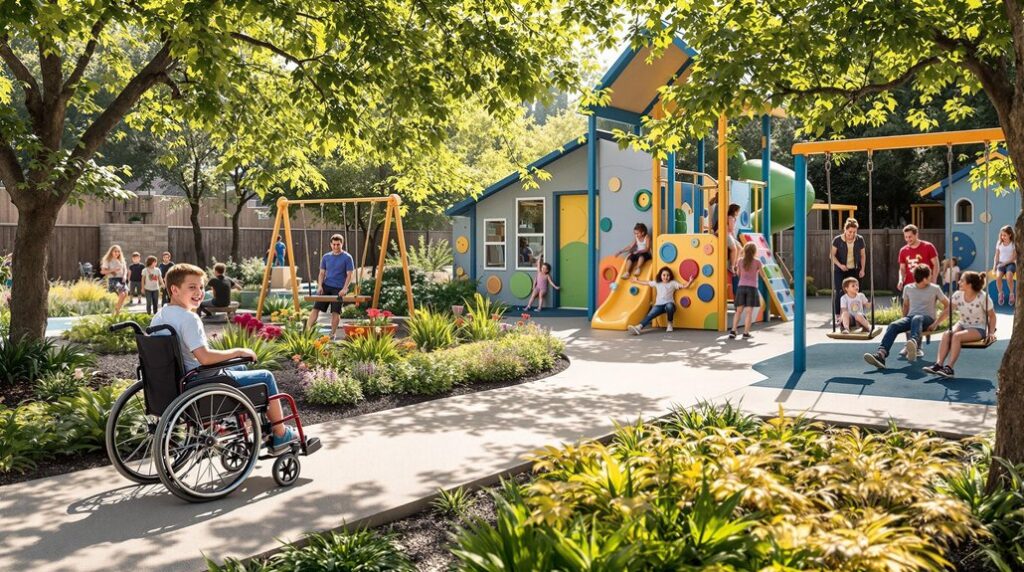
Inclusive design is an approach in which public spaces are designed to meet the needs of all people, including those with physical or sensory limitations. This involves not only people with disabilities but also elderly individuals, parents with small children, and those dealing with temporary injuries or health issues. In parks, inclusive design manifests in accessible ramps, wide pathways, accessible restrooms, and other features that facilitate comfortable and safe movement.
Creating inclusive parks is not just a trend; it is a necessity for forming a more accessible and fair urban environment. Inclusive design promotes social integration, improves the quality of life, and maintains health. It also helps integrate people with disabilities into social life by providing them with equal opportunities to rest and connect with nature.
Benefits of Inclusive Parks
Inclusive parks offer numerous benefits for both people with disabilities and all city residents. First, such parks provide equal access for all, allowing people with disabilities to move freely, use infrastructure, and enjoy nature. This improves their quality of life and fosters social integration, as people with disabilities can naturally interact and share experiences with others in public spaces.
Furthermore, inclusive parks are an important part of sustainable urban development. They create safe and environmentally friendly spaces that benefit both people and nature. These parks contribute to improving air quality, reducing noise levels, and creating green areas for recreation. It is important to remember that creating such spaces is an investment in a sustainable future, where the interests of all citizens are considered.
Examples of Successful Inclusive Parks
An example of successful inclusive design is the High Line in New York, USA. This park, built on an old railway line, is a prime example of how to create a space accessible to everyone. It features convenient ramps, wide walkways, and tactile indicators for people with vision impairments. Importantly, the park is not only accessible to wheelchair users but also to parents with children and people with temporary disabilities.
In London, the Jubilee Gardens park underwent renovations with a focus on accessibility. It features benches with armrests, wide walkways, and tactile pathways, making it comfortable for people with visual and physical mobility limitations. An inspiring example is also the Parc de la Villette in Paris, which combines cultural and inclusive aspects. It is equipped with necessary elements for people with disabilities, including tactile indicators and rest areas.
Tips for Creating an Inclusive Park from Ecolandscape Studio
When designing an inclusive park, we at Ecolandscape Studio follow several key principles. First and foremost, special attention should be paid to pathways. They should be wide, even, and safe for wheelchair users and parents with children. Ramps should be smooth with gentle inclines to ensure easy movement.
Paths must be made of durable, slip-resistant materials to ensure safety throughout the year, including during winter. It is also important to include rest areas in the park, equipped with comfortable benches. These benches should be positioned in places that allow people to choose between shade or sunlight based on their preferences. The placement of armrest-equipped benches is also important for the comfort of people with mobility limitations.
Additionally, effective navigation is essential. It is important to place signs in visible locations and ensure they are accessible to all users, including those with vision impairments. Tactile signs and audio systems can significantly ease movement within the park for people with disabilities. Well-lit pathways and signs also play an important role in ensuring safety after dark.
Don’t forget about the vegetation. Using tactile paths helps people with visual impairments navigate the space, while plants like lavender or rosemary, with their distinctive scents, allow people with vision limitations to engage with nature.
«When I first started working in landscape design, inclusivity was not a priority. But over the years, I have realized how important it is to ensure accessibility for all, regardless of their physical abilities. At Ecolandscape Studio, we always focus on creating spaces that provide equal opportunities for everyone. It’s not just about comfort, but about creating a healthy and harmonious urban environment,» shares his experience Martin Palma, founder and CEO of Ecolandscape Studio.
Common Mistakes to Avoid When Designing Inclusive Parks
When designing inclusive parks, it is important to avoid common mistakes. One of these is underestimating the needs of different groups of people. Often, not all categories of users, such as the elderly, people with temporary injuries, or parents with children, are considered. It is crucial to create a space that is accessible and convenient for everyone.
It’s also important to avoid using inappropriate materials for paths and walkways. Slippery or rigid materials can create additional difficulties for people with limited mobility. Therefore, material selection is a key decision in designing inclusive parks.
Additionally, clear and understandable navigation is essential. Misplaced or unclear signs can cause confusion, especially for people with vision impairments.
Inclusive design is the foundation upon which accessible and fair cities are built. Creating such parks is important not only for people with disabilities but for society as a whole. They promote social integration, improve quality of life, and maintain health. Furthermore, inclusive parks are part of sustainable urban development, combining comfort for all with care for nature.
At Ecolandscape Studio, we are convinced that creating inclusive parks is an important step toward more harmonious and just cities. By applying inclusive design principles, we create spaces that are accessible to everyone. This not only improves the lives of people with disabilities but also contributes to building stronger, more sustainable, and healthier cities.
Recommendations for Creating Inclusive Parks:
- Work with experts and consult with people with disabilities at various stages of design.
- Ensure accessibility for all categories of users, including the elderly and parents with children.
- Apply principles of sustainable and inclusive design in every project.
By following these recommendations, you can create a park that will become an essential part of urban life, accessible to everyone.