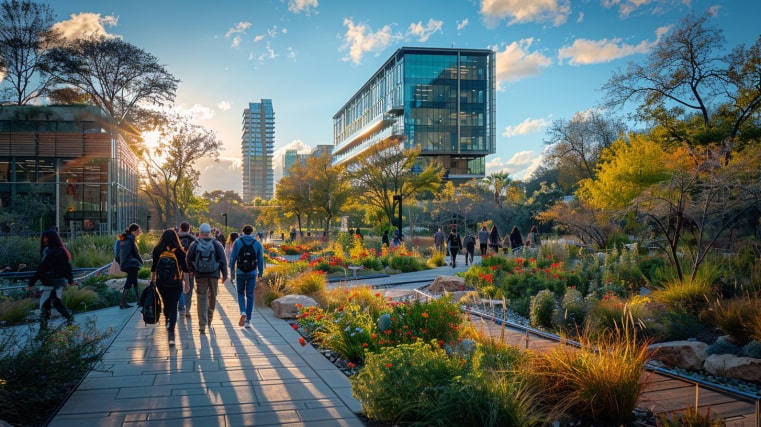
In recent years, urbanization and the rapid development of urban infrastructure have led to the loss of significant natural areas, impacting the environmental state of cities and the quality of life for their inhabitants. Against this backdrop, the concept of biophilia has become an integral part of landscape design, aiming to bring nature back into urban spaces. At Ecolandscape Studio, we firmly believe that biophilia is essential for creating sustainable and harmonious urban environments where nature and humans can coexist in balance.
Biophilia: Philosophy and Principles
Biophilia is a philosophy asserting that humans have an innate desire to be surrounded by nature. Proposed by biologist Edward Wilson, this concept forms the basis of a new approach in landscape design, one that seeks to restore the connection between humans and nature, especially in urbanized environments. Unlike traditional approaches, where nature is seen as a backdrop to architecture, biophilia makes nature an integral part of urban structures.
At Ecolandscape Studio, we actively implement the principles of biophilia, aiming to create landscape solutions that not only enhance the aesthetic value of urban areas but also support ecological balance, improve public health, and increase the comfort of city dwellers. We believe that biophilia plays a crucial role in creating a favorable urban environment that can adapt to the challenges of modernity.
Martin Palma, founder and CEO of Ecolandscape Studio, shares his opinion: “For us, biophilia is a vital need for creating sustainable and environmentally friendly cities. Our projects aim to integrate nature into the everyday lives of urban residents, improving their health and helping restore ecological balance.”
How Biophilia Is Embodied in Our Projects
At Ecolandscape Studio, we actively apply the principles of biophilia in our projects, aiming to create not only beautiful but also functional, ecologically sustainable spaces. This includes the use of natural materials, the creation of green spaces, and the implementation of innovative technologies for preserving and restoring nature within the city.
One of the most striking examples of biophilia is green roofs and vertical gardens. In cities with limited space, these solutions are excellent for integrating nature into urban architecture. Green roofs not only enhance the appearance of buildings but also help reduce pollution levels, improve the microclimate, and reduce the heat island effect characteristic of cities. Importantly, such solutions positively impact biodiversity by creating spaces for plants and insects.
In our projects, we often use water features such as ponds, fountains, and streams. These elements not only visually enrich the space but also serve essential ecological functions. Water helps regulate temperature and humidity in the urban environment, improving conditions for plants and animals. Additionally, water bodies can purify the air, absorb carbon dioxide, and create a pleasant atmosphere for urban relaxation.
We also pay attention to local plants, preferring species that are perfectly suited to the specific conditions of each area. This approach helps create resilient ecosystems that require minimal maintenance and help maintain balance in nature. Native plants contribute to biodiversity conservation by creating natural niches for wildlife and supporting the ecological health of the area.
Biophilia as a Path to Sustainable Cities
Modern cities face global environmental challenges such as air pollution, climate change, and the loss of biodiversity. Biophilia becomes an essential tool for creating sustainable urban areas that can adapt to these challenges and maintain a healthy ecological balance. At Ecolandscape Studio, we are confident that only by integrating nature into urban spaces can we create sustainable and comfortable cities that are both efficient and environmentally safe.
Biophilic-based projects improve the quality of life for urban residents by creating eco-friendly and green spaces. These projects help reduce stress, improve health, and lessen the load on urban infrastructure. Moreover, they address issues such as air pollution and noise pollution, enhancing the overall state of the environment.
Public Spaces and Biophilia
One of the key aspects of biophilia is the creation of public green spaces that serve as places for relaxation and a way to reconnect with nature. At Ecolandscape Studio, we design such spaces where every city dweller can not only relax but also interact with nature, which enhances their quality of life.
These spaces become centers of community life, where people can exercise, relax, socialize, and enjoy the beauty of nature. Biophilic parks, squares, and plazas help not only recreate natural elements but also provide psycho-emotional restoration, which is especially important in urban environments.
Biophilia in landscape design is an essential step toward creating sustainable, healthy, and harmonious cities. At Ecolandscape Studio, we strive to implement biophilic principles in every project, creating not only beautiful but also environmentally safe spaces for people. We are confident that the future of cities lies in nature, and only by integrating nature into urban environments can we ensure a healthy and sustainable urban life.









