Modern trends in residential landscape design are shifting away from the artificial suppression of nature toward absolute synergism. The era of classic emerald lawns, which demand regular chemical treatments, hectoliters of fresh water, and grueling weekly maintenance, is permanently giving way to ecological mindfulness. Today, professional xeriscaping has taken center stage — a progressive design method allows private estates to maintain flawless aesthetics, volume, and rigid structural integrity even in water-deficient environments. Our team at Ecolandscape Studio elevates this pragmatic approach into high art, offering clients exclusive turnkey landscaping that is entirely independent of climate fluctuations.
Contrary to outdated stereotypes, drought-tolerant turnkey landscape design has nothing to do with bleak, lifeless vistas of gray gravel and scattered cacti. For the specialists at Ecolandscape Studio, it represents a sophisticated matrix of engineering, botanical, and architectural solutions engineered to yield futuristic, autonomous, and visually high-end gardens. Intelligent xeriscape property development seamlessly complements modern residential architecture — from minimalism to high-tech — transforming empty acreage into a multi-tiered, high-status environment with its own microclimate.
Executing a project via the xeriscape system is always grounded in mathematically precise planning and meticulous site hydrozoning. We thoroughly analyze topography, insolation levels, and wind loads to segment the property into three key zones. In the oasis zone near the residence, where rainwater naturally channels from roofs and terraces, the landscape architect places larger, more dramatic accent cultivars. Meanwhile, the transitional and xeric zones are populated exclusively by hardy xerophytes that, following an initial adaptation period, thrive solely on the region’s natural precipitation.
The most critical phase in establishing a sustainable dry garden is the complete reconstruction and replacement of the soil profile. In drought-tolerant landscaping, traditional rich black soil or heavy clay become the ultimate liabilities because they trap excess moisture, leading to root rot and damp-off during winter. Engineers at Ecolandscape Studio formulate a specialized custom substrate packed with coarse washed sand, multi-fractional gravel, expanded clay, and volcanic tuff, ensuring instantaneous drainage of meltwater and maximum oxygen access to the root systems.
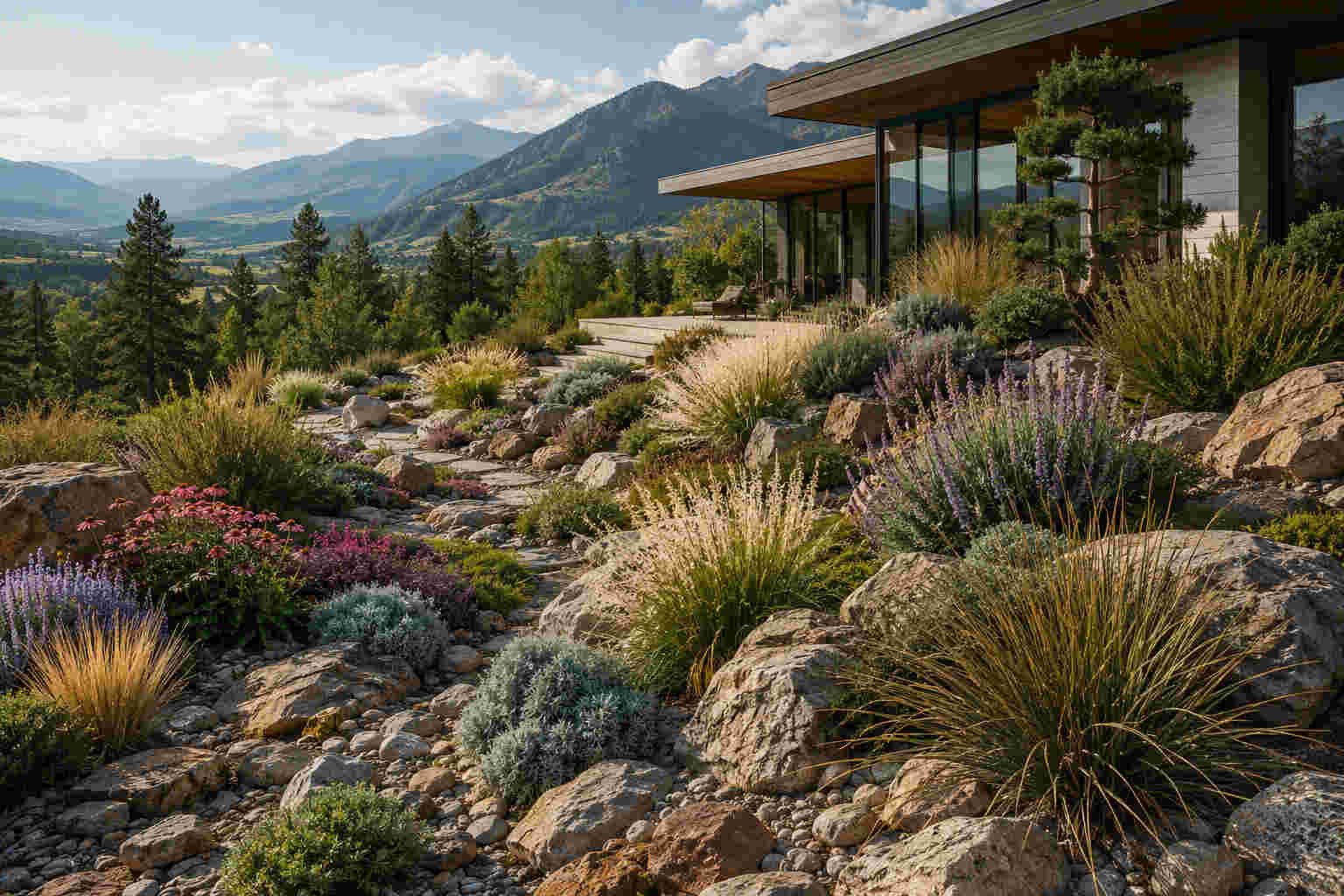
The structural framework of our planting plans relies on resilient endemic species and architectural perennials equipped with natural drought-defense mechanisms. We emphasize large-scale matrix plantings of textured ornamental grasses, including blue fescue, needle grass, prairie dropseed, moor grass, and miscanthus, interweaving them with the vertical wands of Russian sage, echinacea, woodland sage, and choice sedum varieties. Instead of temperamental sod lawns that burn through budgets with automatic irrigation costs, we lay dense, carpet-like eco-covers of creeping thyme and Irish moss, or introduce sophisticated decorative stone mulches.
Martin Palma, Founder and CEO of Ecolandscape Studio, is convinced that drought-tolerant design represents the evolutionary pinnacle of modern luxury landscaping. In his view, the true luxury of a premium country estate today lies not in the ostentatious waste of resources, but in the creation of a flawless, autonomous ecosystem capable of evolving independently of external factors and climate shifts. Martin emphasizes that moving away from traditional, water-dependent monocultures in favor of architectural xerophytes and structural grasses allows the studio’s landscape architects to achieve incredible seasonal dynamics and graphic definition. This approach preserves a high-status aesthetic year-round while minimizing the homeowner’s long-term operational and maintenance expenses.
To provide long-term soil protection against dehydration and to lock in vital nutrients, we utilize multi-layered mulching, which simultaneously serves as a graphic design element. Combining river pebbles, slate chips, basalt screenings, and coarse Siberian larch bark reduces soil moisture evaporation by 80%. This shield protects root zones from extreme summer heatwaves and deep winter ground-freezing while entirely suppressing weed growth. However, it is essential to note that during the first two seasons, while plants are actively establishing their root networks, we integrate a concealed automatic drip irrigation system equipped with smart soil-moisture sensors. This system is permanently decommissioned once the engineered ecosystem achieves full autonomy.
To ensure the dry garden retains its volume and vitality under any weather conditions, Ecolandscape Studio designers masterfully manipulate contrasting natural textures, geometric plant habits, and the color palettes of the «New Wave» movement. Rigid vertical spears of ornamental grasses are balanced by the soft, mounded cushions of wild thyme, while the silver and glaucous foliage of artemisia acts as a natural light reflector, striking a sharp contrast against the deep, dark needles of select junipers and mountain pines. Stone elements in these projects transcend haphazard rockeries, appearing instead as monumental architectural boulders that mimic tectonic outcrops. These rock formations anchor the landscape’s rigid structure even in the dead of winter, long after herbaceous perennials have gone dormant.
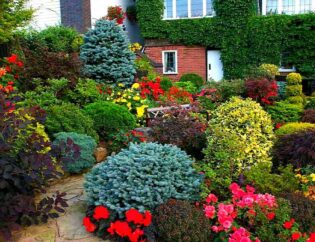
In place of garish, fleeting, and high-maintenance flowerbeds, we curate a sophisticated, intelligent, and refined palette of smoky purples, slate grays, pastel pinks, ochres, and deep burgundies. Such a garden reads as a living impressionist canvas at dawn and dusk, beautifully catching the subtlest shifts of the wind and sun, yet requiring nothing more than a delicate spring pruning of dry stems. Professional xeriscaping by Ecolandscape Studio clearly demonstrates to the global design community that the true prestige of a luxury property is measured not by the volume of scarce water consumed, but by an intellectual approach to design that delivers an autonomous, ecologically sound, and flawless garden of the future.