Coniferous plants make it possible to preserve the architectural character of a garden even during periods when most deciduous species lose their decorative qualities. Martin Palma, founder and CEO of Ecolandscape Studio, analyzes them not simply as evergreen additions to planting schemes but as an important instrument for creating a stable structural framework throughout the property. Differences in height, crown density, foliage color, and growth habit allow designers to develop compositions that remain visually complete in winter while providing a calm background for seasonal flowering in spring and summer. When properly planned, conifers connect different areas of the property and help the garden maintain a recognizable identity throughout the entire year.
The starting point for plant selection is determining the future role of each specimen within the landscape. Tall varieties can create vertical accents, define property boundaries, and partially screen undesirable views. Medium sized plants are suitable for building substantial planting groups and visually separating functional areas. Compact and spreading varieties work effectively in foreground compositions, on slopes, and within smaller planting zones. At Ecolandscape Studio, we analyze not only the dimensions of a plant at the time of purchase but primarily its mature size, because its future volume determines the correct distance from buildings, pathways, and neighboring vegetation.
Crown shape can significantly influence the perception of outdoor space. Narrow vertical silhouettes introduce rhythm and emphasize contemporary architecture. Rounded forms create a more structured and balanced visual composition. Spreading plants soften the strict geometry of paved areas, while low growing varieties create smooth transitions between different landscape levels. However, using too many contrasting forms within a limited area can make the garden appear visually restless. Repeating several carefully selected shapes usually produces a stronger result and reinforces the overall architectural concept.
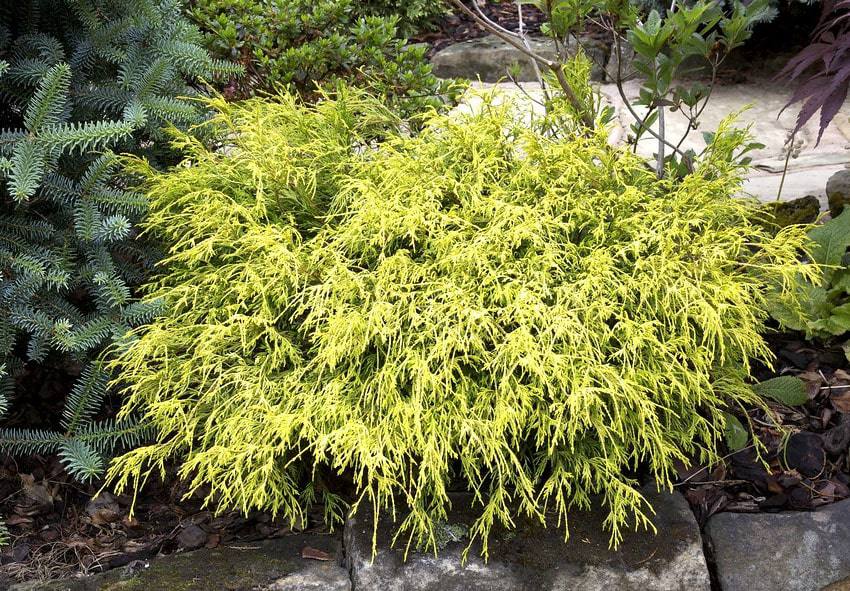
Foliage color provides additional opportunities for creating visual depth. Green, silver, bluish, and golden tones interact differently with building façades, natural stone, timber, and surrounding vegetation. Lighter foliage can visually brighten shaded areas, while deeper green tones create an expressive background for perennials and ornamental shrubs. Specialists at Ecolandscape Studio note that contrast should always be used with restraint. When every plant is intended to become a focal point, the composition loses its hierarchy and begins to appear as a collection of unrelated elements.
Compatibility with site conditions is an equally important criterion. Different coniferous species have individual requirements regarding sunlight, moisture, soil acidity, and air circulation. Some perform exceptionally well in open sunny locations, while others require protection from intense spring sunlight or cold winds. Before planting, soil structure should be evaluated and prolonged water accumulation around the roots must be prevented. Choosing the correct location from the beginning substantially reduces the need for future intervention and allows each plant to preserve its natural form.
Conifers become particularly valuable within the winter landscape. Once deciduous foliage disappears, pathways, architectural lines, terrain, and the underlying structure of planting groups become much more visible. During this period, evergreen plants maintain volume and prevent the property from appearing empty. They can form background masses, emphasize entrance areas, or create attractive views from interior windows. We believe that the winter appearance of the garden should be considered during the initial planting design rather than treated as a secondary consequence of the summer composition.
Combining conifers with deciduous plants creates seasonal movement without sacrificing structural consistency. In spring, evergreen foliage highlights fresh new growth. During summer, it provides a stable background for flowering compositions. In autumn, deep green tones intensify the warmer colors of changing leaves, while in winter conifers once again become dominant visual elements. Particularly natural compositions are created when plants differ not only in color but also in texture. Fine needles, broad foliage, ornamental grasses, and dense shrubs can create sophisticated layers without requiring an excessive number of species.
Maintenance should always reflect the biological characteristics of each plant. Young specimens require careful moisture control while their root systems become established, and certain species may need sanitary pruning or seasonal protection. Excessive shaping can disrupt the natural architecture of the crown, which means every intervention should serve a specific purpose. The condition of the root zone should also be monitored, appropriate mulch depth should be maintained, and excessive soil compaction should be avoided.
Within a mature garden, conifers can perform several functions simultaneously by providing privacy, supporting compositional rhythm, and creating an expressive background for architecture. At Ecolandscape Studio, we see their greatest value in their ability to connect seasonally changing elements within one stable landscape system. When mature dimensions, forms, and foliage tones are selected with future development in mind, coniferous plants become more than a temporary decorative solution. They form a long term foundation for a garden that preserves its distinctive character regardless of the season.









