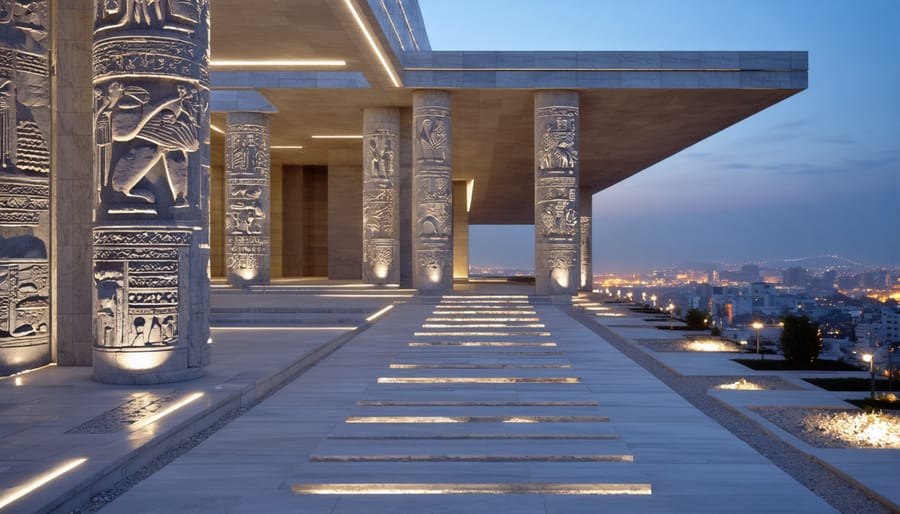
Landscape design is both an art and a science, not only improving the appearance of your site but also creating a unique atmosphere. Art objects play a crucial role in this process, allowing us to add not just decorative elements but also profound meaning to the landscape. In the blog of Ecolandscape Studio, we share our experience and recommendations on using art objects to create harmonious and ecologically sustainable landscapes that serve as both decoration and expressions of the philosophy of sustainable development.
Art objects in landscape design are important elements that give space individuality, depth, and character. Whether it’s classic sculptures, stone monuments, or modern installations, each piece influences the perception of the surrounding environment. In this article, we will explore how art objects in landscape design have evolved from ancient civilizations to the present day, and provide advice on their use in your projects.
The Evolution of Art Objects in Landscape Design: From Antiquity to Modernity
Art Objects in Antiquity and the Middle Ages: Since the beginning of human history, art has been an integral part of landscape design. In Ancient Egypt, stone statues and megaliths were used for decoration, symbolizing power, gods, and spiritual values. These objects became important elements in creating sacred and cultural landscapes.
In the Middle Ages, art objects were a key component of monastic gardens, where sculptures and reliefs played a pivotal role in creating spiritual and philosophical spaces. These elements connected nature and spirituality, imbuing the garden with a special atmosphere. At Ecolandscape Studio, we emphasize that such elements retain immense value in landscape design, as they not only convey beauty but also depth of meaning.
Renaissance and Baroque: The Union of Art and Nature
With the transition to the Renaissance and Baroque periods, art objects became an integral part of not only private gardens but also public spaces. During this time, garden design gained new meaning: fountains, statues, terraces, and other decorative landscape elements became carriers of cultural and philosophical ideas. A prime example of this is the famous Versailles gardens, where the combination of art and nature reached its zenith.
As Martin Palma, founder and CEO of Ecolandscape Studio, believes, it was during this period that the foundation was laid for future conceptual approaches in landscape design. Today, we strive to combine natural elements with artificial ones, creating spaces that are not only aesthetically pleasing but also filled with profound meaning. This is important, as art objects serve not only as decoration but also as a focal point for reflection.
The 20th Century: From Minimalism to Modern Installations
The 20th century brought a revolution in landscape design. Inspired by the ideas of modernism and minimalism, landscape designers began using new materials such as concrete, metal, and glass to create abstract and geometric forms. This period was a time for experimentation, when art objects became not just decorative but also functional, playing a role in structuring the garden.
With the development of technology and global ecological issues, art objects became important tools for raising awareness about sustainable development, ecology, and climate change. Modern installations are dynamic objects that can change depending on the time of year, weather conditions, or interaction with people. This creates unique opportunities for designers and architects who aim to create spatial elements that engage viewers in the process and interact with the environment.
At Ecolandscape Studio, we actively embrace this approach, integrating not only aesthetically appealing art objects into our projects but also those that highlight ecological significance. For example, using recycled materials or creating objects that support ecosystem balance helps create not only beautiful but consciously sustainable spaces.
Art Objects in Contemporary Landscape Design: Functionality and Symbolism
Today, art objects play several important roles in landscape design. They create focal points in the space, transforming plots into bright and memorable places. These can be not only statues or fountains but also interactive elements, such as colorful panels, dynamic lighting installations, or even ecosystems that change over time.
At Ecolandscape Studio, we believe that art objects should be functional. Each element must serve its purpose: whether it’s creating visual accents, supporting the ecosystem, or raising awareness about environmental issues. We recommend that our clients choose objects that harmoniously integrate with the surrounding nature and support ideas of sustainability and responsible resource use.
Moreover, art objects in contemporary landscape design often carry symbolism. This can be a reference to cultural and historical motifs or reflection of current social and environmental issues. By using such objects, you can not only decorate a garden or park but also infuse them with profound meaning and philosophical context.
The Future of Art Objects in Landscape Design
The future of art objects in landscape design is tied to the development of new technologies and eco-friendly solutions. In the coming decades, art objects are expected to become more dynamic, and the use of innovative materials and technologies will allow the creation of objects that adapt to the environment. These could include interactive sculptures that change depending on the weather or objects using solar panels or rainwater collection systems to create environmentally sustainable solutions.
At Ecolandscape Studio, we encourage all landscape designers and landowners to consider the ecological aspects when choosing art objects. Using recycled materials, creating sustainable objects that contribute to nature conservation — this is the future that we must all strive for.
Art objects in landscape design are essential components that give space uniqueness and meaning. From ancient stone statues to modern installations, art objects evolve and become an integral part of ecologically sustainable and functional landscape projects. At Ecolandscape Studio, we are always focused on creating harmonious, thoughtful, and aesthetically appealing spaces that not only delight the eye but also carry important ideas and values.









