There is a particular kind of magic that happens in a garden around sunset. The light turns amber, shadows stretch long across the lawn, and certain flowers seem to glow from within. This is the golden hour, and for anyone serious about residential landscape design, it is one of the most underused tools in planting design. Choosing plants that respond beautifully to warm evening light can completely transform how a yard feels during the hours when most people are actually outside enjoying it.
Most homeowners spend the majority of their outdoor time in the late afternoon and early evening. That is precisely when the quality of light shifts from harsh midday white to something softer and more flattering. A garden designed without this in mind can look flat or washed out during the very hours it gets the most attention. Thinking about golden hour as part of your yard landscaping design is not a stylistic luxury — it is a practical decision that affects how much you actually enjoy your outdoor living space.
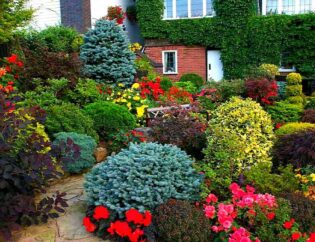
Warm-toned flowers are the obvious starting point. Yellows, oranges, deep reds, and burnished golds catch the low-angle evening light and seem to radiate it back. Plants like rudbeckia, helenium, gaillardia, and echinacea are popular in pollinator garden design for good reason — they attract bees and butterflies while also delivering that warm visual punch in evening light. Ornamental grasses are another strong choice. Their seed heads and fine blades catch the backlight and create a glowing, translucent effect that no other plant type replicates quite as well.
Pale and white flowers also deserve attention here. While they might seem like an odd choice for warm-toned light, whites and creams pick up the golden tones of sunset and shift into soft peach and ivory shades that feel incredibly elegant. Agapanthus, white echinacea, and certain roses perform this trick beautifully. For a low maintenance garden design that still delivers evening drama, mixing warm-toned perennials with a few white accents gives you a palette that works across seasons without constant replanting.
Foliage matters just as much as flowers. Bronze-leafed plants, copper heucheras, and burgundy grasses hold the golden light differently than green foliage. They deepen in tone rather than washing out, which adds richness to the overall planting design. Native plant garden design often incorporates these naturally, since many native grasses and shrubs have warm-season foliage that shifts into copper and amber tones right when the golden hour is at its most dramatic.
Martin Palma, founder and CEO of Ecolandscape Studio, has observed this pattern consistently across residential projects. In his experience, clients who initially focus only on midday appearance are often surprised by how different their garden looks in the evening, and not always in a good way. His approach is to walk a site at different times of day before finalizing any planting plan, specifically to understand how the light moves and where it lands during the hours the homeowners are most likely to be outside. That single habit has shaped many of the plant selections and layout decisions that define the studio’s work.
Plant selection is only part of the equation. The layout of your outdoor living space design plays a significant role in how golden hour light moves through the garden. Positioning seating areas to face west or southwest means you are looking into the light as it sets, which puts your garden beds in the foreground and lets the backlight work in your favor. Patio landscaping ideas that incorporate this orientation tend to feel more atmospheric and intentional, even when the planting itself is relatively simple.
Landscape lighting ideas also connect directly to this concept. Warm-toned LED fixtures that mimic the color temperature of sunset can extend the golden hour effect after dark. Path lights, uplighting on ornamental grasses, and soft wash lighting on textured walls or fences all contribute to an evening garden that feels cohesive rather than artificially bright. The goal is to complement what the natural light does, not compete with it.
For small backyard design, this approach is especially valuable. A compact space that is thoughtfully planted with golden hour in mind can feel far more generous and immersive than a larger yard that ignores light entirely. Privacy landscaping using tall grasses or loosely structured shrubs can also serve double duty, creating enclosure while catching the backlight in a way that feels soft rather than heavy.
Thinking about your garden through the lens of evening light is one of those shifts in perspective that changes everything. It moves the conversation away from what a plant looks like in a catalog photo and toward how it actually performs in your specific space, at the time of day when it matters most. That is the kind of thinking that turns a yard into a place you genuinely want to spend time in.