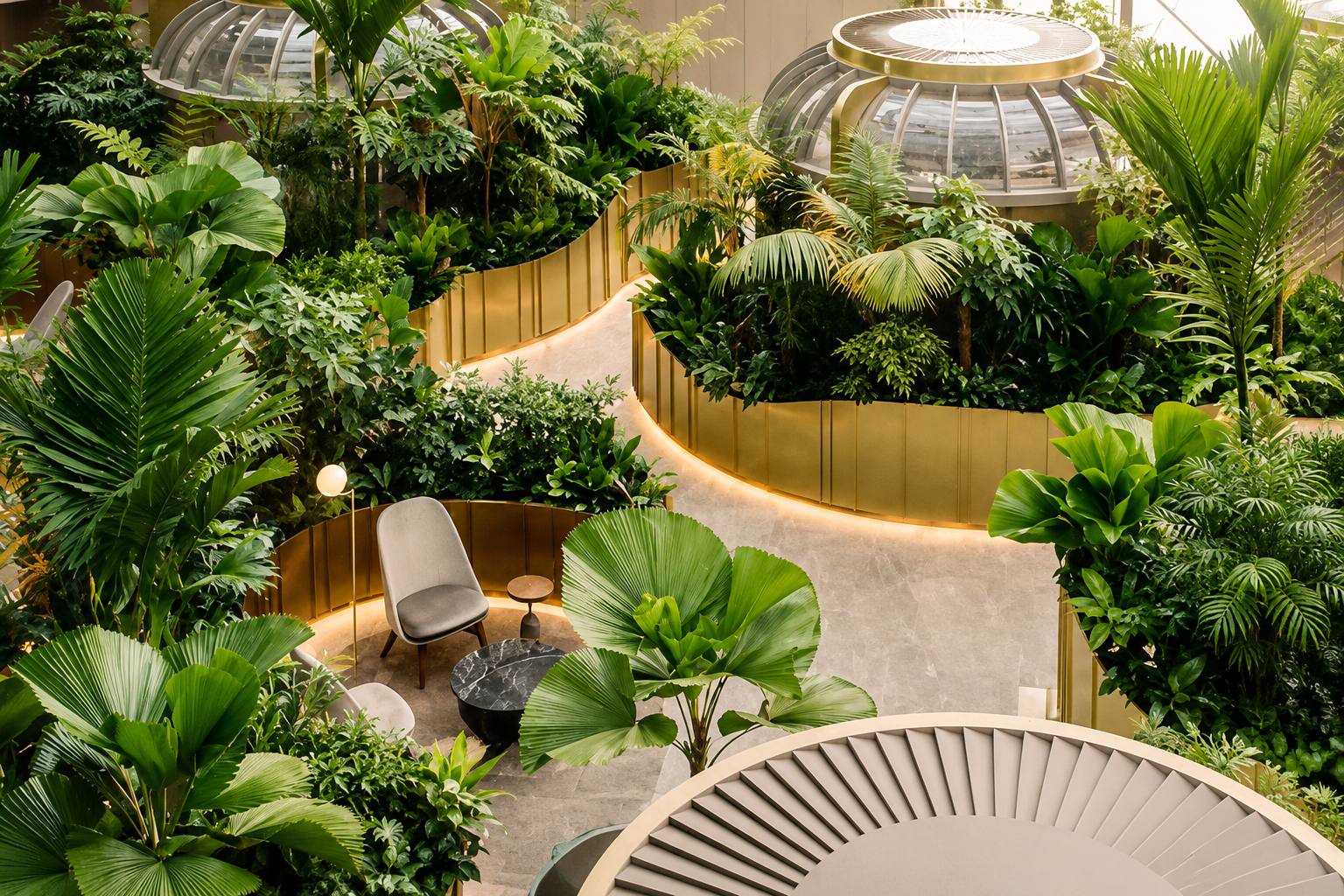
For decades, urban development was associated with increasing building density, the expansion of artificial surfaces, and a gradual reduction in people’s direct connection with natural environments. In recent years, however, global urban planning has begun to move in a different direction. Architects, developers, and city planners are increasingly seeking ways to reintroduce natural elements into everyday urban life. Martin Palma, founder and CEO of Ecolandscape Studio, considers biophilic design to be one of the most promising directions in the evolution of modern cities, combining the convenience of urban infrastructure with humanity’s inherent need for contact with nature. Today, this approach is becoming more than an architectural trend – it is emerging as an important tool for creating healthier, more resilient, and more livable urban environments.
Biophilic design is based on the concept that people possess a natural affinity for the living world. Despite rapid technological advancement, individuals continue to seek access to greenery, natural light, organic materials, and visual connections with nature. As a result, contemporary developments increasingly incorporate landscaped public spaces, interior gardens, water features, vertical greenery, and nature-inspired walking routes. Specialists at Ecolandscape Studio believe that these solutions help create more balanced environments where cities no longer feel entirely artificial but instead function in harmony with natural systems and processes.
The importance of biophilic design becomes particularly evident in cities where residents face growing psychological pressures. Constant noise, fast-paced lifestyles, and limited access to natural areas can significantly affect emotional well-being. The integration of natural components into urban environments contributes to a more comfortable atmosphere and helps reduce everyday stress. At Ecolandscape Studio, we analyze international projects and consistently observe a clear pattern – districts where nature becomes an integral part of urban structure often demonstrate higher levels of attractiveness for both residents and investors.
Modern biophilic design extends far beyond traditional landscaping. Today, it represents a comprehensive planning philosophy in which nature becomes an active participant within the urban ecosystem. Architectural strategies increasingly include natural ventilation, enhanced access to daylight, living green facades, and integrated water elements. Specialists at Ecolandscape Studio note that such features improve not only the visual quality of urban environments but also their environmental performance by reducing overheating, improving air quality, and supporting ecological balance.
Another significant advantage of biophilic design lies in its contribution to long-term urban resilience. Future cities must be capable of adapting to climate change, population growth, and evolving social expectations. Green infrastructure helps create flexible and sustainable environments capable of maintaining high levels of comfort even under increasing pressure on urban systems. At Ecolandscape Studio, we believe that biophilic solutions are gradually evolving from optional enhancements into essential components of responsible urban development.
The return of nature to urban environments reflects a deeper understanding of what modern cities should provide for their residents. Successful cities today aim to create conditions where people can maintain a meaningful connection with nature while continuing to benefit from the advantages of urban living. At Ecolandscape Studio, we see this as a natural progression in global architecture and landscape design, one that enables the creation of more comfortable, environmentally sustainable, and attractive cities for both present and future generations.