Deciduous shrubs can transform the perception of a garden far more significantly than might be expected when individual plants are viewed separately at a nursery. They create an intermediate layer between trees and lower planting, add volume, guide the eye, and allow the composition to evolve naturally with the seasons. Martin Palma, founder and CEO of Ecolandscape Studio, considers deciduous shrubs one of the most versatile tools in landscape design because crown shape, foliage color, flowering, and autumn transformation can all be used to influence the character of an outdoor space without overloading it with decorative elements. For us, the priority is not to view each specimen in isolation but to understand its future role within the overall architecture of the garden.
Scale becomes one of the first considerations. A compact shrub can emphasize the edge of a pathway or fill the space in front of taller vegetation, while larger varieties can create visual boundaries, conceal technical areas, and provide privacy. Mature dimensions must always be considered during the design process rather than relying on the size of the planting material at the moment of purchase. Excessively dense planting quickly creates competition for sunlight and moisture, while distances that are too large can make the composition appear fragmented during its early years of development.
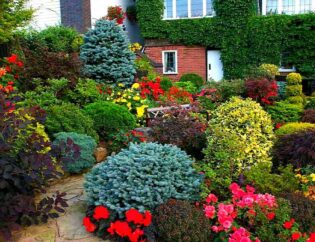
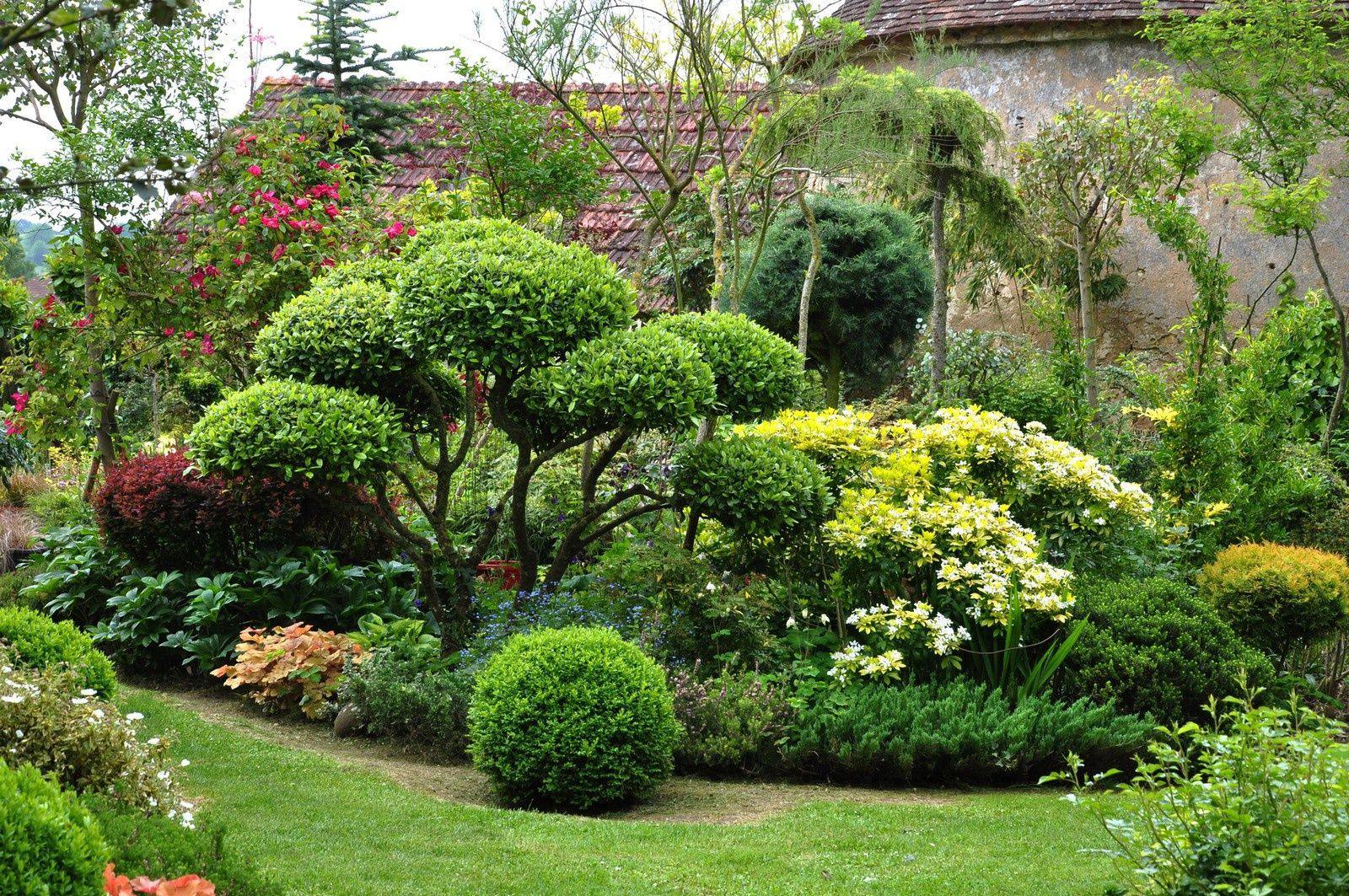
Foliage color makes it possible to shape the visual character of the landscape throughout most of the growing season. Different shades of green establish a calm background, burgundy foliage introduces depth, while lighter and variegated leaves can visually brighten shaded areas. At Ecolandscape Studio, we analyze color not as an isolated feature but in relation to the building façade, paving materials, lighting, and surrounding vegetation. When intense colors are distributed randomly, the garden can become visually restless. Repeating a restrained palette instead creates rhythm and connects distant parts of the property into one coherent composition.
Spring growth introduces the first seasonal scenario of the garden. Certain species attract attention with early flowering before their foliage has fully developed, while others gradually create dense green mass and become a background for bulbs and perennials. This period clearly demonstrates whether the sequence of decorative effects has been planned correctly. When plants are selected exclusively for their summer appearance, individual areas may feel empty in spring. We prefer to distribute periods of visual activity so that the garden reveals itself gradually rather than depending on a single short flowering period.
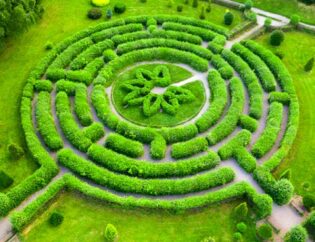
During summer, crown structure and vegetation density become increasingly important. Shrubs can soften rigid fence lines, connect architecture with lawns, and create natural transitions between functional areas. Free growing varieties work particularly well in naturalistic compositions, while plants that tolerate shaping can support a more formal geometry. Specialists at Ecolandscape Studio note that the decision between a natural silhouette and regular pruning should be made during the design stage because it directly determines both the future character of the garden and the level of maintenance it will require.
Autumn allows deciduous shrubs to completely transform the color structure of the landscape. Yellow, orange, red, and purple tones introduce new focal points in areas that appeared as calm green backgrounds during summer. To make this transformation feel natural, the timing of foliage changes and the position of individual plants in relation to primary viewpoints must be considered. Compositions near terraces, entrances, and windows become particularly expressive because their seasonal transformation can be observed as part of everyday life.
Winter requires a different approach to evaluating ornamental value. Once the leaves have fallen, branch architecture, shoot density, and the overall silhouette of each shrub become more visible. Certain species retain decorative fruits or distinctive bark, allowing them to continue contributing to the composition. We believe that a plant should not completely lose its design value after flowering has ended. Even without foliage, it can support the structure of a planting group and create an expressive graphic pattern against snow, stone, or evergreen vegetation.
Compatibility between shrubs and surrounding plants is equally important. Different species compete for space, moisture, and nutrients, which means that an attractive combination in a visualization does not automatically guarantee a sustainable planting scheme. Sun loving varieties should not be positioned beneath dense tree canopies, while plants with significantly different moisture requirements should not share the same irrigation zone. Biological compatibility reduces the need for corrective maintenance and helps preserve the natural density and stability of the composition.
The practical function of shrubs extends far beyond decoration. They can partially protect recreational areas from wind, guide movement through the property, conceal service elements, and create soft boundaries without relying on massive architectural structures. A carefully calculated planting group can replace certain built elements while preserving the feeling of a living garden. At the same time, mature plants must not obstruct lighting, pathways, or important sightlines once they reach their full size.
Within a completed composition, deciduous shrubs become the connecting layer that brings trees, perennials, lawns, and architecture together into a unified environment. At Ecolandscape Studio, we see their greatest value in the combination of practical functionality and continuous visual transformation. Carefully selected forms, dimensions, foliage tones, and seasonal changes allow the garden to remain expressive throughout different periods of the year, gradually mature, and reveal new details with every season without losing its overall architectural logic.