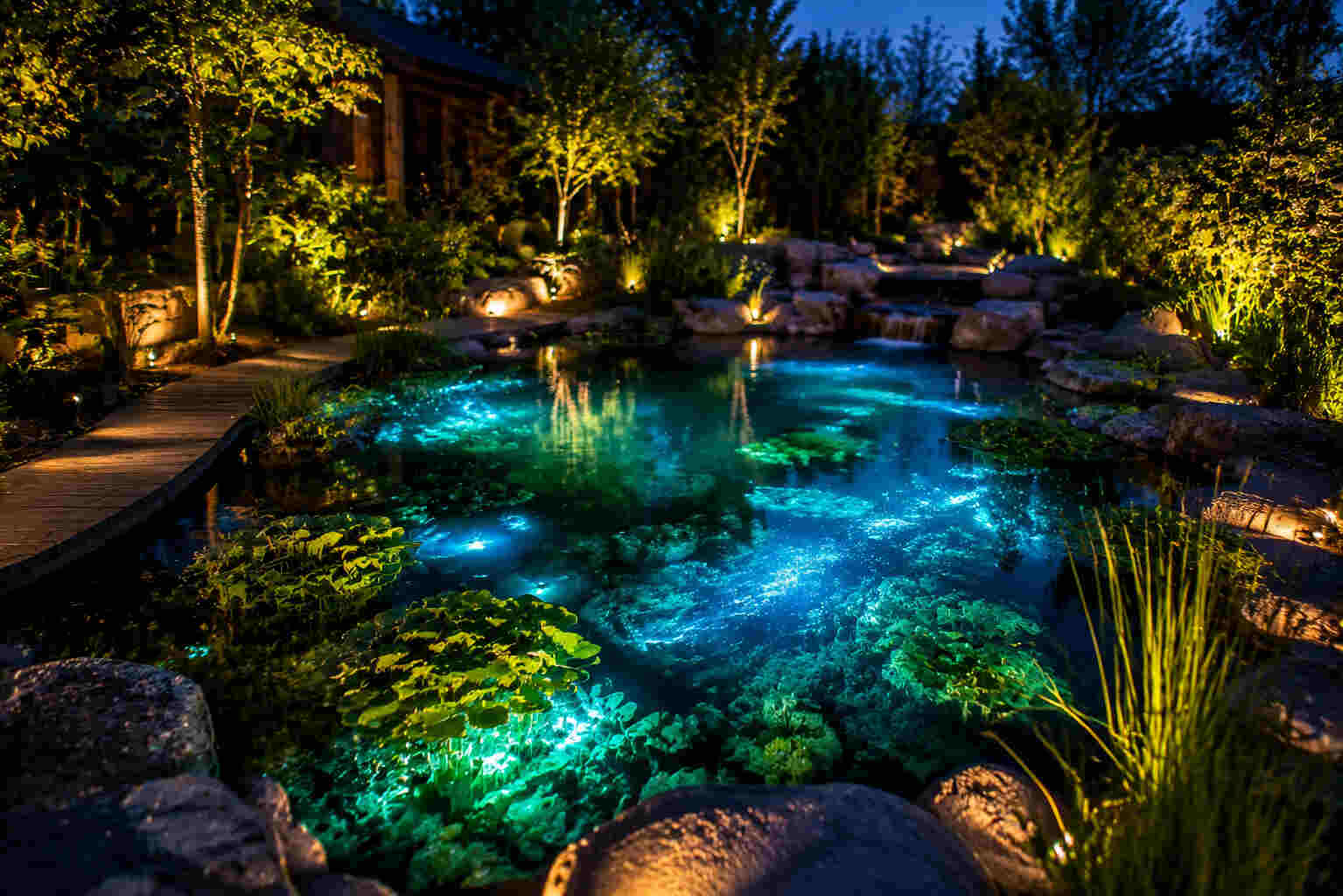
Ecolandscape Studio emphasizes that fluorescent nighttime ponds represent a modern trend in landscape design, where water, plants, and microorganisms merge into a single, glowing ecosystem that comes alive after sunset. The main goal of such ponds is to transform an ordinary pond or decorative pool into the centerpiece of visual and emotional impact, combining aesthetics, science, and ecological sustainability.
The glowing effect is achieved through safe bioluminescent microorganisms, luminescent algae, and specially selected plants that enhance natural luminescence. Bioluminescence the ability of living organisms to emit light creates a soft shimmer on the water that changes depending on movement, temperature, and the condition of the plants.
To implement a fluorescent pond, it is crucial to carefully select the living components. The most commonly used microorganisms include bioluminescent bacteria such as Vibrio fischeri and glowing algae like Pyrocystis fusiformis, which activate with water movement. These organisms are safe for humans and local wildlife, and their glow can last throughout the night.
For plants, it is optimal to use aquatic species that help maintain water quality while enhancing the visual glow. Among the most effective are floating plants, such as Eichhornia crassipes (water hyacinth) and Salvinia natans, as well as decorative submerged plants like Ceratophyllum demersum and Elodea canadensis, which create volume and structure beneath the water’s surface. These plants help microorganisms distribute evenly, maintain biological balance, and amplify the light effect through reflection and refraction.
The methodology for integrating a fluorescent pond requires a thoughtful approach. The first step is water preparation: pH should be maintained between 7 and 8, oxygen levels kept optimal, and water temperature stable. These parameters are critical for the health of microorganisms and plants.
Next comes zoning: glowing microorganisms and algae are placed in the central part of the pond, where water movement is most visible, while plants are positioned along the edges and underwater to create the illusion of depth and dynamics. Rocks, wooden elements, and decorative structures help reflect and enhance the glow, forming complex visual effects. For colder climates or seasonal changes, it is recommended to use thermal containers or adapted microorganisms that maintain bioluminescence even at low temperatures.
Fluorescent ponds serve multiple purposes. Aesthetically, they turn a nighttime garden into a visually alive space; educationally, they demonstrate bioluminescence and the interactions of living organisms; ecologically, they reduce energy consumption and maintain biological balance. They are used in private gardens to create coziness and interactivity, in public parks and waterfronts for educational and recreational purposes, and in commercial spaces such as hotels, restaurants, and spas as focal points and marketing highlights.
According to Martina Palma, founder and CEO of Ecolandscape Studio, “Fluorescent ponds offer the opportunity to see a garden in a new way. When the pond comes alive at night, glowing microorganisms and plants create the feeling that the space has its own life. This is not just a decorative element it’s a way to engage people with the ecosystem, demonstrate the importance of biodiversity, and foster harmony with nature.”
Creating such a pond is a synthesis of art and science, where every element is carefully considered. Proper selection of microorganisms and plants, water parameter control, zoning, and thoughtful design help achieve the effect of “living light,” which changes every night. A fluorescent pond transforms an ordinary garden into a space where water, light, and life intertwine in harmony, creating unique experiences while maintaining ecological balance.
Ecolandscape Studio emphasizes that fluorescent nighttime ponds are not only decorative elements but also tools for educational, emotional, and ecological impact. They combine design aesthetics, modern scientific developments, and natural harmony, setting a new standard for nighttime landscapes that are safe for nature and inspire human interaction with the surrounding world.