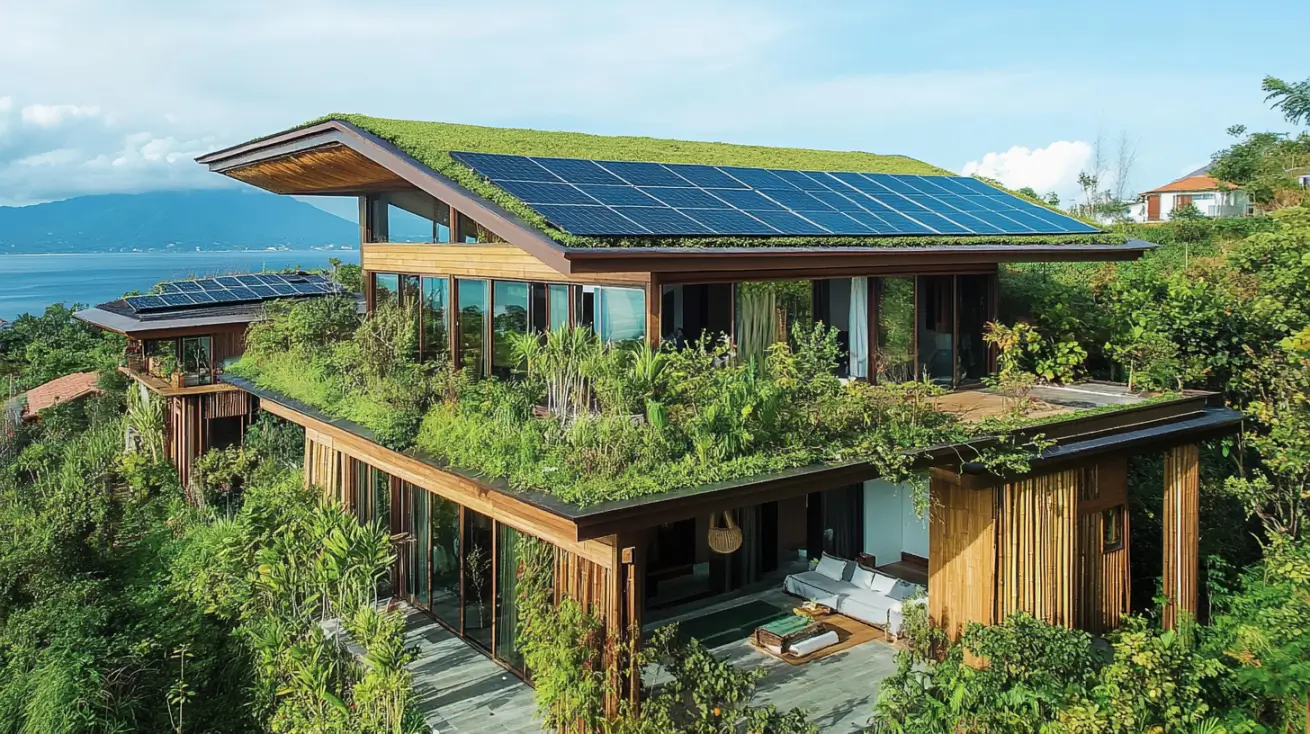
A few years ago, green roofs seemed like something from the realm of futuristic technologies, but today they have firmly entered landscape design as an essential element of sustainable architecture. At Ecolandscape Studio, we believe that the use of green roofs not only improves the ecological situation but also adds aesthetic value to any space, whether it’s a residential home or a public building.
A turning point for this movement came in 2008, when a unique green roof was constructed on the roof of the California Academy of Sciences in San Francisco, created from local plants and wildflowers. This engineering marvel became a landmark example of how design and ecology can work in harmony. Since then, we have witnessed how green roofs decorate everything-from private homes to chicken coops-becoming an important element in both urban and private landscapes.
Diversity of Approaches in Design
Today, the design of green roofs involves a variety of innovative solutions, each aimed at improving functionality and aesthetics. In 2019, architect Steve Martino in Phoenix demonstrated an approach that can be called playful — he used cactus pads, laying them like shingles on the roof. This experiment showed how local plants can become not only useful but also decorative elements.
In other regions, such as the Olympic Peninsula in Washington, architects also show creativity by using local mosses and lichens to create living roofs that do not require soil. These epiphytic ecosystems, collected directly from natural areas, not only minimize maintenance needs but also give the roofs an incredible connection with the surrounding world.
At Ecolandscape Studio, we see the true power of green roofs as the opportunity to integrate nature into architecture with maximum ecological benefit.
We believe that the use of green roofs will only continue to grow in popularity in the future. We recommend that our clients consider this aspect when designing buildings because these roofs offer long-term benefits, despite the initial investment. Green roofs can serve not only practical purposes but also become an important part of unique landscape design.
Advantages of Green Roofs
Green roofs are not only beautiful but also beneficial. They offer a wide range of ecological and economic advantages, which we at Ecolandscape Studio often discuss with our clients. These advantages include:
- Energy Efficiency: A green roof can significantly reduce heat loss in the winter and minimize overheating in the summer. This leads to lower heating and air-conditioning costs.
- Stormwater Management: Green roofs absorb rainwater, helping reduce the load on urban drainage systems and preventing flooding.
- Sound Insulation: Foliage and soil on the roof act as natural soundproofing, reducing noise, which is especially important for homes located in urban areas.
- Ecological Diversity: A green roof becomes a home for many plant and animal species, including birds, insects, and even small mammals.
Green roofs are a real eco-solution that allows for the creation of harmonious and sustainable living spaces. We recommend that everyone interested in landscape design and sustainable construction pay attention to these innovative solutions, as they perfectly align with the concept of environmentally clean and functional spaces.
As the founder and CEO of Ecolandscape Studio, Martin Palma, noted: “Green roofs are not just decorative elements; they are part of a living ecosystem that benefits not only building owners but the entire city as a whole.” At Ecolandscape Studio, we are always ready to offer professional consultations and assist in implementing such projects.