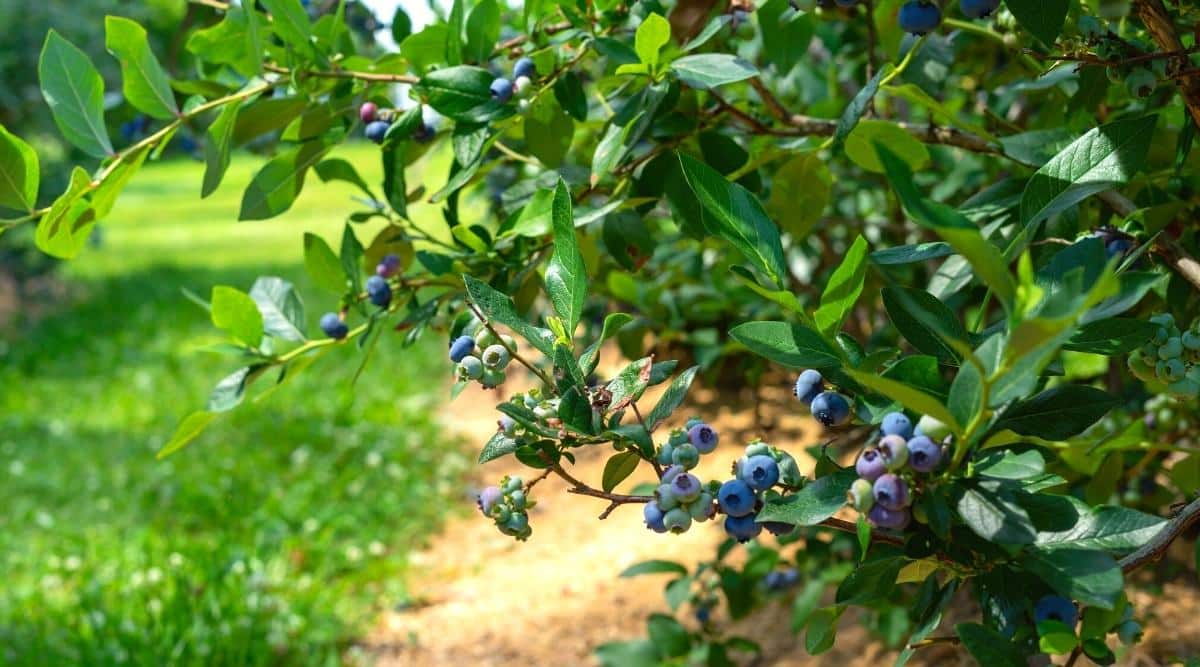
Blueberries are a practical and beautiful plant, making them an excellent choice for various areas of the garden. At Ecolandscape Studio, we recommend blueberries as a versatile plant that will delight you not only with their decorative qualities but also with delicious berries. This plant is perfect for creating functional green spaces as well as for landscaping decoration. Let’s explore why blueberries can be a great choice for your plot.
Why Blueberries Could Be a Great Choice for Your Plot
Blueberries have many advantages that make them an excellent choice for the garden. First, they can be used as a decorative element. Blueberries bloom in spring, and in autumn, their leaves change colors, creating beautiful accents in the garden. This plant will be especially interesting in areas where seasonality is important: in spring, you will get delicate flowers, in summer lush greenery, and in autumn bright-colored foliage. In winter, blueberries will still look stylish even without leaves due to their branching structure.
Additionally, blueberries are relatively low-maintenance plants. They don’t require complicated care and adapt well to various conditions. Blueberries grow well in acidic and moderately acidic soils, making them a good option for plots with specific soil features. They do not require large amounts of fertilizer and can be a good complement to already existing plants without disrupting the ecological balance.
Blueberries will also be useful for the garden. Their berries are rich in vitamins and antioxidants, making them an excellent choice for gardeners who want to not only decorate their plot but also harvest a beneficial crop. Blueberries can be used for making jams, desserts, smoothies, or simply enjoyed right off the bush.
Moreover, blueberries can be part of functional compositions. This plant is perfect for creating live hedges, decorative alleys, or for group plantings. It can also be used to create berry zones that will produce fruit throughout the entire season.
What Blueberry Varieties Are Best for Your Garden?
When choosing a variety of blueberries, it is important to consider climate conditions, soil type, and your preferences regarding plant care. At Ecolandscape Studio, we recommend several blueberry varieties that are suitable for different garden types.
Robitaille is a variety that works well in hot regions as it is resistant to high temperatures and drought. It also adapts well to cold winters, making it versatile for most climates. Robitaille berries are large, sweet, and ripen in mid-summer. This variety is self-pollinating, so you don’t need to worry about having another plant nearby for pollination.
For cold regions, the Tifblue variety is an excellent choice as it is highly frost-resistant and can withstand temperatures as low as -30°C. This is ideal for gardens in northern areas where other varieties may not survive harsh winters. Tifblue has beautiful autumn foliage that turns bright red, adding to its decorative appeal. The berries of this variety are tart-sweet, making them perfect for making jams and jellies.
If you want an early harvest, Climax is an excellent option. This variety produces berries as early as the beginning of June, making it perfect for those who want to harvest fruits earlier. Climax also has beautiful blooming and is resilient to various conditions, making it easy to grow.
For gardens where large berries are needed, the Premium variety is a great choice. This variety produces berries with excellent taste and high yield. Premium is suitable for various soil types and grows well in partial shade, making it versatile for most plots.
The Powderblue variety is ideal for hot and dry regions. It is resistant to high temperatures and drought and ripens later, which helps extend the harvest season. The berries of this variety have a firm texture and sweet flavor, making them excellent for canning and freezing.
How to Create Suitable Conditions for Blueberry Growth
For blueberries to grow successfully and produce good yields, suitable conditions must be created. Blueberries prefer acidic soil with a pH between 4.5 and 5.5. If your soil is neutral or alkaline, you can lower the pH with amendments such as peat or granulated sulfur.
It is important to remember that blueberries do not tolerate waterlogging, so the soil must be well-drained. If the soil on your plot is too clayey, you can improve its structure by adding sand or use raised beds to ensure proper drainage.
Blueberries also need plenty of sunlight. To ensure normal growth and good fruiting, provide the plant with at least 7-8 hours of direct sunlight per day. In partial shade, blueberries will still grow, but the yield will be smaller, and the berries will be less sweet.
Caring for Blueberry Bushes
Blueberries do not require complicated care, but to obtain a good harvest, a few simple rules must be followed. They need regular watering, especially in hot months. Be sure to monitor the soil to ensure it is not too wet, as this may lead to root rot.
Pruning is also beneficial to stimulate the growth of new shoots and improve air circulation. Remove old and damaged branches to prevent disease development and increase yield.
Martin Palma, the founder and CEO of Ecolandscape Studio, says that «Blueberries are a plant that fits well in any garden. We often use them in our landscaping projects because they are not only beautiful but also practical. Blueberries can form a good foundation for creating decorative and fruit-bearing zones in the garden, and they are also perfect for shaping hedges or decorative plantings.»
Blueberries are a versatile plant that can be used for a variety of landscape solutions. They adapt well to different conditions, are easy to care for, and provide a beneficial harvest. Blueberries are suitable for creating both decorative and functional zones on your plot, while requiring minimal care.









