A promenade in the garden is an essential part of landscape design, significantly influencing how the space is perceived. A walking path with unusual curves can become the basis for an aesthetically appealing and functional solution that adds depth, mystery, and complexity to the garden. In this article, the experts at Ecolandscape Studio will share recommendations on how to create such paths and integrate them into any garden style.
As Martin Palma, the founder and CEO of Ecolandscape Studio, noted, “When designing paths with curves, it’s important not only to make them visually appealing but also functional. Curves create an atmosphere of discovery, inviting exploration of the garden from different perspectives and revealing new views of its various parts.”
Why Choose a Path with Curves?
Paths with curves and bends are a powerful tool in landscape design. They give the garden space volume, create a sense of journey, and make it more interesting and multi-layered. Unlike straight lines, which can be harsh and lacking in intrigue, curves open up new perspectives, encouraging movement forward and exploration of the garden.
As Martin Palma pointed out, the curves in a path play a key role in creating dynamic spaces. Turns reveal hidden sections of the garden, offering an opportunity to enjoy every step.
Additionally, such paths visually expand the space, creating a sense of depth. If the garden is small, this solution helps to visually increase its size and make it feel more expansive.
How to Plan a Walking Path with Curves?
For a curved path to be not only beautiful but also functional, several important aspects must be considered.
The first step is to determine how your path will fit with the rest of the garden. Walking paths can be integrated into any landscape design style, from classic English gardens to minimalist or eco-style gardens.
- Classic Style – here, smooth and rounded curves, with stone or concrete tiles laid in mosaic patterns, are preferred. Such paths emphasize the elegance and refinement of the garden.
- Modern Style – modern gardens often use strict geometric shapes and lines. Straight or slightly curved paths made from large tiles or concrete work well to visually connect elements with contemporary sculptures or water features.
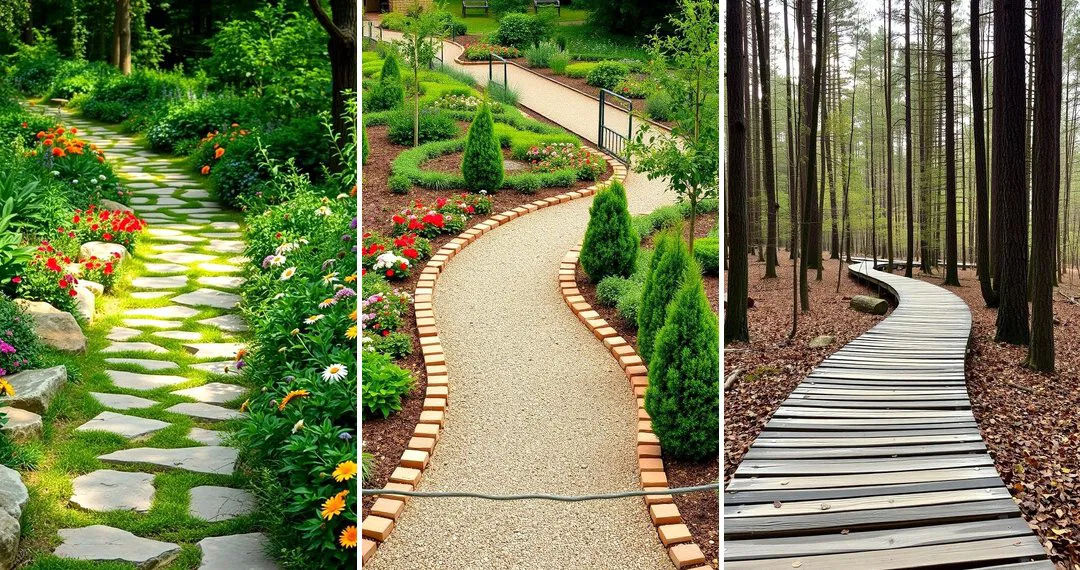
- Natural Style – for gardens that emphasize natural beauty and ecology, paths can be made from natural stone, wood, or gravel. These materials blend seamlessly into any landscape and highlight its organic charm.
When designing a curved path, it’s important to consider not only the aesthetic effect but also the comfort of movement. The curves should be smooth and not too sharp to avoid hindering movement. The more gentle and natural the curve, the more comfortable the path will be. Angles greater than 90 degrees or too frequent turns may make walking uncomfortable.
The optimal radius for a curved path depends on its intended purpose. For casual strolls through the garden, gentle curves will suffice. For greater emphasis and more complex landscape features, sharper angles may be used. However, it’s essential to avoid overloading the path with too many curves — they should be enough to create dynamic movement but not overwhelm the space.
Turns can also be used to create functional zones in the garden. For instance, one bend might lead to a cozy corner with a bench, while another could guide visitors to a flowerbed or decorative sculpture. This creates a sense of journey and discovery as you move along the path.
Materials for a Curved Path
Choosing the right materials for a path plays a key role in both its durability and appearance. Each material has its own characteristics and can set a particular style in the garden.
Stone tiles and natural stone are ideal for creating durable and long-lasting paths with curves. Stone can be laid in various forms and textures, allowing for interesting curves. It fits harmoniously into any landscape and adds aesthetic value that increases over time. Stone is resistant to external factors, making it a perfect choice for paths that see frequent foot traffic.
Gravel and pebbles are materials that are particularly suitable for natural-style gardens. Gravel is easy to lay and allows for smooth curves without disturbing the overall harmony of the space. It also has excellent drainage properties, preventing water accumulation and ensuring better runoff. Gravel paths work well with other natural garden elements and look great in eco-styles.
Wooden decking is a stylish and eco-friendly option. Wood blends harmoniously with vegetation, creating a cozy and warm atmosphere. It can be used to construct paths in gardens with a natural theme. This material is particularly suitable for creating paths in eco-gardens or for building platforms in waterfront areas.
For modern and minimalist gardens, concrete or asphalt surfaces are an excellent choice. Concrete tiles or panels can be laid in interesting geometric shapes to create curves and smooth lines. These materials are easy to clean from debris and can be painted in any color, offering more flexibility in design.
Decorative Elements for the Path
Curves in the path provide the perfect opportunity to install decorative elements that can highlight the bends and add individuality.
- Small Architectural Forms – sculptures, planters, arches, or bridges along the path not only beautify the space but also create interesting focal points. These can be large decorative elements or smaller details that highlight the uniqueness of the landscape.
- Plants Along the Path – planting along the curves adds bright accents and visual depth to the path. Flowering plants like lavender or roses will add color and texture to the path, while tall shrubs or trees on one side can create a «green wall» effect, enhancing the feeling of seclusion.
- Water Features – small ponds, fountains, or streams along the path will give water features dynamism and attractiveness. Water is not only a visual element but also an auditory one. The sounds of trickling water always create a peaceful and relaxing atmosphere.
Designing a curved walking path is a task that requires consideration of many factors, from the garden style and functionality to the choice of materials and decorative elements. A well-designed path will not only connect all areas of the garden but also become a key element in creating an atmosphere of seclusion and harmony.
If you want to create a unique landscape that combines aesthetics and functionality, a path with curves will be an excellent solution. With the professional approach and advice from Ecolandscape Studio, your garden will not only be beautiful but also functional, and walking through it will be a true pleasure.