Creating a Japanese-style garden is an art that not only brings aesthetic pleasure but also fosters inner harmony. Japanese landscape design is based on a philosophy where each plant, water element, and even stones carry symbolic meaning. At Ecolandscape Studio, we believe that such gardens not only beautify the space but also create an atmosphere of peace and serenity, helping restore balance in everyday life. Inspired by nature, a Japanese garden strives to achieve the perfect blend of beauty, nature, and spiritual connection.
Key Principles of a Japanese Garden
- Minimalism and Simplicity
In a Japanese garden, it is not only visual harmony that matters, but also the philosophy of simplicity. This is reflected in the use of minimal decorative elements such as stones, water, and plants. At Ecolandscape Studio, we emphasize the importance of creating a garden that is not cluttered with unnecessary details but rather resembles a natural landscape where every element has its place and significance. - Use of Water
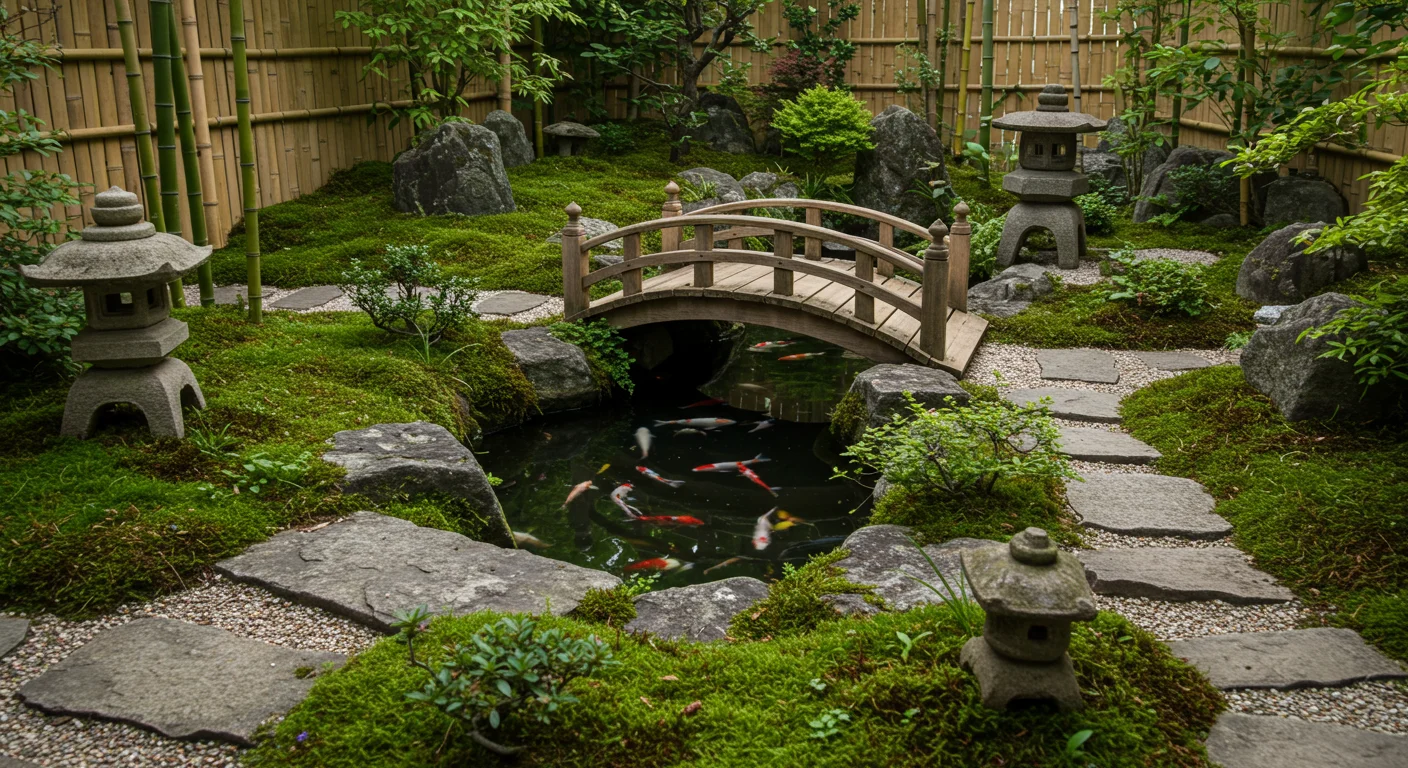
Water in a Japanese garden symbolizes life and movement. It not only serves as a decorative element but also acts as a connecting force, creating a sense of tranquility. Ponds, streams, or small water features surrounded by stones and plants help balance the space. At Ecolandscape Studio, we recommend placing water features in quiet corners of the garden to evoke a sense of calm. - Stones and Stone Elements
Stones play as important a role in a Japanese garden as plants do. They symbolize strength, resilience, and eternity. Often, stones are arranged in compositions that resemble mountains or islands, adding depth and a sense of timelessness. Stone pathways surrounded by plants are another common technique used in Japanese landscaping. - Traditional Japanese Plants
Plants that symbolize different seasons play an important role in a Japanese garden. For instance, the Japanese maple with its vibrant autumn leaves or the blooming cherry blossom (sakura) that takes center stage in spring. At Ecolandscape Studio, we recommend using plants like moss, ferns, and bamboo, which not only look beautiful but also create the desired atmosphere. - Elegance in Detail
In a Japanese garden, there is no room for chaos. Every element, from plants to accessories, should be carefully selected in accordance with the overall design. Tea ceremonies, red bridges over water features, or stone lanterns can serve as important decorative elements. At Ecolandscape Studio, we see how essential it is to add elements that highlight minimalism while also creating a harmonious atmosphere.
The Role of the Japanese Garden in Modern Landscape Design
A Japanese-style garden is perfect for modern urban environments, especially for those seeking a balance between nature and the pace of city life. A Japanese garden helps to escape daily concerns and immerse oneself in an atmosphere of silence and solitude. At Ecolandscape Studio, we predict that the popularity of Japanese gardens will continue to grow, particularly among those looking to create personal spaces for relaxation and energy restoration.
Recommendations for Creating a Japanese Garden
- Choose plants that reflect Japanese philosophy, such as pines, maples, bamboo, and cherry blossoms.
- Create water features that serve as the focal point of your garden, filling it with calming energy.
- Use stones to create focal points and harmony in the garden. They can be part of pathways, walls, or simply placed against the backdrop of plants.
- Avoid overloading the garden with unnecessary elements. Strive for minimalism where each object has a specific purpose.
- Set the right mood with details such as lanterns, bridges, and traditional Japanese sculptures.
A Japanese-inspired garden is not merely decoration; it is a philosophy that helps restore inner harmony and find balance between humans and nature. At Ecolandscape Studio, we believe that such a garden is a place not only for rest but also for reflection, where one can experience peace and unity with nature. Given the changes in contemporary landscape trends, the Japanese style continues to inspire and remains relevant for those seeking a profound connection with nature in their garden.
As Martin Palma, the founder and CEO of Ecolandscape Studio, emphasizes: Creating a Japanese-style garden is not just a decorative process; it is a path to inner balance. The Japanese garden teaches us simplicity, calmness, and harmony with nature.