In today’s urbanized world, cities face significant challenges: dense construction, shrinking green spaces, deteriorating air quality, and urban heat. At Ecolandscape Studio, we believe that landscape design in the city is not just about aesthetics but also a strategic tool for creating sustainable micro-ecosystems. Urban green spaces can help balance nature and human activity, support ecological health, and improve residents’ quality of life.
Creating Miniature Natural Oases in the City
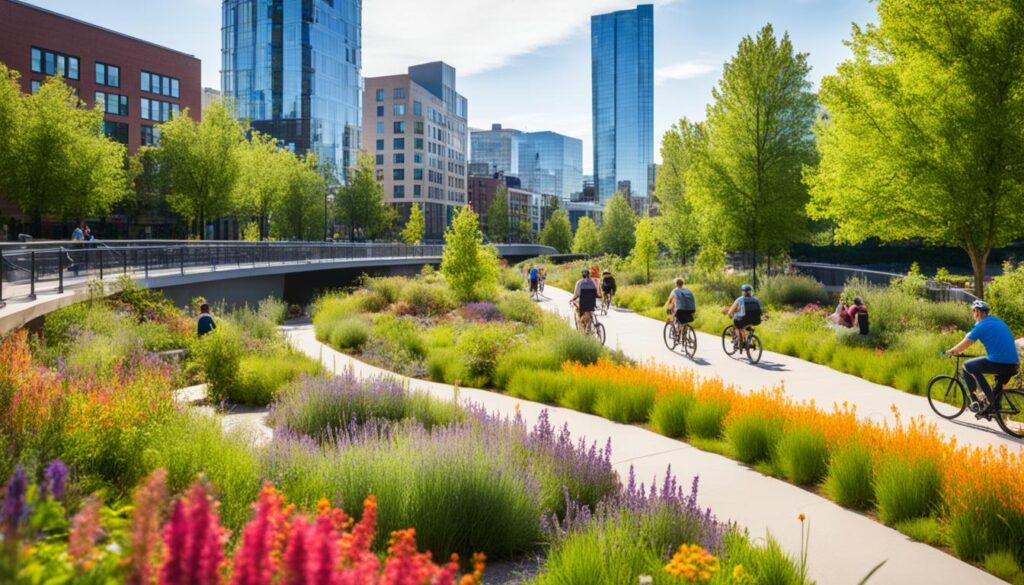
At Ecolandscape Studio, we actively create miniature natural oases areas with ponds, wetlands, wild meadows, and native plants, where every element is designed to support biodiversity. Even a small pond can become a hub for birds, insects, and small animals. Wetlands, integrated into city parks or on rooftops, naturally filter water and provide unique habitats for sedges, irises, and cattails. Wild meadows, where grasses and flowers grow naturally, support bee and butterfly populations, which are critical for urban flora.
Supporting Biodiversity as the Key to Resilience
Biodiversity support is the foundation of resilient urban ecosystems. At Ecolandscape Studio, we observe that the more diverse the plant and animal species in an area, the more stable the ecosystem functions. Diverse flora improves soil quality, regulates the microclimate, and reduces the risk of disease. Fauna ensures natural pollination and organic matter decomposition. By creating ecosystems with high species density, we build ecological infrastructure that adapts to climate changes and urban stressors.
Impact of Micro-Ecosystems on Urban Climate
Miniature natural oases have a tangible impact on city climate. Ponds and wetlands promote evaporation, lowering air temperatures during summer months. Wild meadows and shrubs form natural windbreaks and reduce dust levels. Green islands create “cool spots,” countering the urban heat island effect typical in densely built areas. Plants absorb carbon dioxide and release oxygen, improving air quality and creating more comfortable living conditions.
Social and Psychological Value of Natural Oases
Beyond ecological benefits, miniature natural oases have a significant impact on residents’ social and psychological well-being. People with access to natural areas rich in flora and fauna experience less stress and exhibit greater emotional resilience. On the Ecolandscape Studio blog, we often share our observations: interacting with nature fosters ecological awareness and respect for the environment. As Martin Palma, founder and CEO of Ecolandscape Studio, notes, his personal experience working with urban micro-ecosystems convinced him that every detail of landscape design can enhance human life and support biodiversity.
Principles for Designing Sustainable Urban Micro-Ecosystems
Creating such spaces requires careful selection of plants, water elements, and organization of natural processes. At Ecolandscape Studio, we recommend using native plant species so that the ecosystem can thrive without constant human intervention. Layering vegetation from grasses to shrubs to trees creates complex micro-ecosystems where each species plays a role. Ponds and streams are designed for natural water circulation, minimizing stagnation and promoting self-purification.
The City of the Future as an Ecosystem
In the long term, integrating miniature natural oases into urban spaces transforms the perception of the city. It evolves from a dry concrete environment into a living ecosystem where humans, plants, and animals coexist. Supporting biodiversity becomes not a luxury but a necessity for adapting cities to climate change and improving quality of life. Landscape design by Ecolandscape Studio is a tool that, through green islands, creates an ecologically balanced, climate-resilient, and aesthetically appealing environment for the modern city.