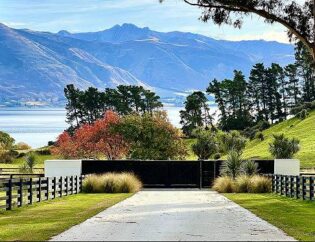
The elite country estate improvement industry has long developed in a paradigm of total unification. Standard projects of expensive estates are still based on large-scale intervention: the massive import of artificial substrates, the laying of conveyor-belt roll lawns, and the planting of identical nursery conifers. We at Ecolandscape Studio completely distance ourselves from this conservative approach and closely explore the progressive philosophy of In-situ design. This method represents an uncompromising manifesto of absolute locality, entirely eliminating budgets for the purchase of external inert materials and imported flora. The whole concept is built around the artistic rethinking and complex engineering transformation of those elements that were originally present in the ecosystem of a particular plot, from the aboriginal seed fund to deep geological stratification.
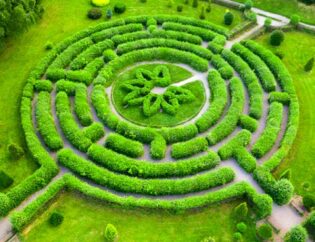
The main vector of the botanical scenario is the deep upcycling of local ruderal vegetation. Instead of the usual total clearance of the territory with chemical reagents and targeted soil replacement, project authors integrate wild plants into the garden structure that have adapted over centuries to the local biocenosis: ground elder, nettle, field horsetail, wild sorrel, and plantain. These species possess unsurpassed viability, formed immunity, and unique natural architectonics. To transfer these «weed» communities into the status of exhibition display gardens, a method of contrasting architectural fixation is applied. Wild masses are enclosed in uncompromising geometric contours made of heavy slabs of local granite or powerful strips of patinated steel. Restricted by strict lines, the wild herbage instantly acquires high aesthetic value, working as a living textured bas-relief. We note that such autonomous phytocenoses do not need supporting irrigation and artificial stimulation, demonstrating an ideal visual balance.
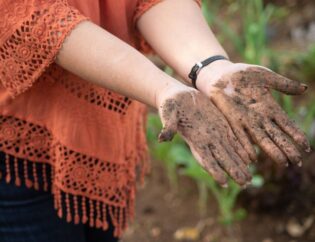
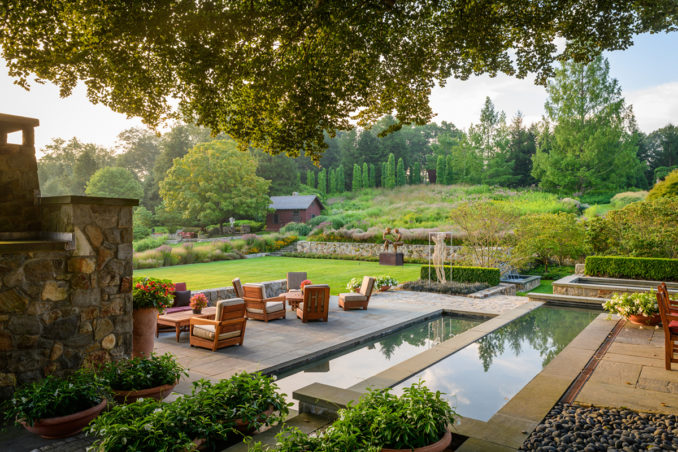
The basis for the formation of the new relief is the principle of a closed geomorphological balance, which excludes the use of cargo machinery for the logistics of earth masses. The design of the territory is carried out according to the strict mathematical rule of zero residue. When excavating soil for functional water features, whether it is a swimming bio-pool, a cascading stream, or a drainage rain garden, all excavated cubic meters of lower horizons (heavy clay, loam, limestone rubble, or sand) are distributed directly within the boundaries of the site. This material serves as the basis for creating complex parametric geoplasty: the creation of viewpoint hills, protective berms, and private terraces. We understand that preserving the upper humus layer is of decisive importance. It is carefully moved to conservation areas and returned at the final stage, which allows for the complete preservation of the unique soil microbiota and mycorrhiza, eliminating the need to purchase artificial fertilizers.
The Founder and CEO of Ecolandscape Studio, Martin Palma, analyzing the practice of creating sustainable spaces, came to a personal discovery: the true status of a country object is determined not by the volume of imported resources, but by the artistic expressiveness of its authentic identity. Studying natural tectonics, Martin Palma determined that the In-situ methodology forms a level of visual truth unattainable with classical commercial landscaping. In his opinion, the ability to detect hidden decorative potential in chaotic piles of native limestone, old fallen trunks, and wild grasses requires the landscape architect to completely abandon the creative ego in favor of the context of the place. Martin Palma emphasizes that a garden created in this way does not compete with the environment, but acts as its logical, honest continuation, guaranteeing the resident owner mental rooting and psychological comfort.
All utilitarian and decorative architecture of the estate is generated exclusively from the tectonic resources discovered during the primary analysis of the site. Instead of using purchased paving or clinker bricks, retaining elements and terraces are constructed from the remnants of old trees that have undergone sanitary cleaning, using the method of dry wooden masonry. Over time, these surfaces are naturally colonized by local lichens, turning into living micro-biotops. From boulders and flint extracted during the development of the pit for the foundation of the main building, brutal gabion modules are formed, responsible for zoning and performing the function of natural heat accumulators. Pedestrian paths and parking zones are backfilled and compacted using drill cuttings and stone chips raised to the surface during the organization of an artesian well. We see that the identical geological origin of these materials ensures the absolute color unity of the entire territory.
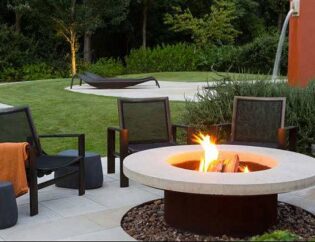
We know how important it is to maintain a balance between a radical ecological approach and premium ergonomics standards, so the final image of the space is complemented by hidden lighting systems and minimalist elements of small architecture. Powerful trunks of fallen trees are transformed into designer outdoor furniture, undergoing only delicate mechanical sanding and conservation with natural wax compositions. Lighting devices are mounted on the principle of an invisible source, masking themselves in the thick of wild herbs and crowns of existing trees. This allows for emphasizing the graphics of the local flora and the monumental volume of local boulders during night hours. As a result, the complex estate, the design specificities of which we study at Ecolandscape Studio, turns into a manifesto of a conscious attitude towards the environment, where each element has a unique local history, and the landscape develops according to the laws of natural evolution.