Lighting is an integral part of landscape design, and the illumination of water features and fountains plays a key role in creating a magical atmosphere in your garden or backyard. If you want to highlight the beauty of water at night, the right lighting will not only add aesthetic appeal to your landscape but also create a unique atmosphere of comfort and magic. In this article, prepared for the Ecolandscape Studio blog, we share valuable recommendations for lighting water features and fountains, as well as personal insights from the founder of the studio, Martin Palma, who shares his life experiences and expertise in landscape design.
Why is Lighting for Water Features and Fountains Important?
Water is one of the most mesmerizing elements in landscape design. It can be calm and soothing or it can bubble, creating dynamic streams and splashes. Lighting helps emphasize these qualities of water, giving the landscape an extraordinary atmosphere. It’s important to understand that the right lighting choice will highlight the movement of water and make water features the focal point.
As Martin Palma, founder of Ecolandscape Studio, noted, «Lighting for water features should not just be functional. It should work with nature, not against it. When choosing lighting, it’s important to think about its impact on the overall look of the garden and the water feature itself, not just the external effect.» This approach is always the foundation of our studio’s work, where we consider every detail when designing lighting.
Water Feature Lighting: How to Choose the Best Solution?
For landscape design professionals, lighting for water features is an additional detail and an important design element that helps emphasize the structure and atmosphere of the water feature. Here are a few key factors to consider when choosing lighting:
When selecting lighting, it is important to understand which lamps to use. LED lamps are commonly used for water feature lighting because they are energy-efficient, long-lasting, and have low heat output. This is especially important when it comes to lighting fountains or pools, where water is in constant contact with electricity. Halogen lamps are also popular; they give bright light but consume more energy and require careful handling.
The color temperature of the light plays a key role in the perception of the water feature. Warm light (yellow and orange tones) creates a cozy atmosphere, while cool light (blue or white) highlights modernity and clarity of form. For ponds and calm water features, soft warm light is ideal, while for fountains, brighter and more dynamic lighting effects can be used.
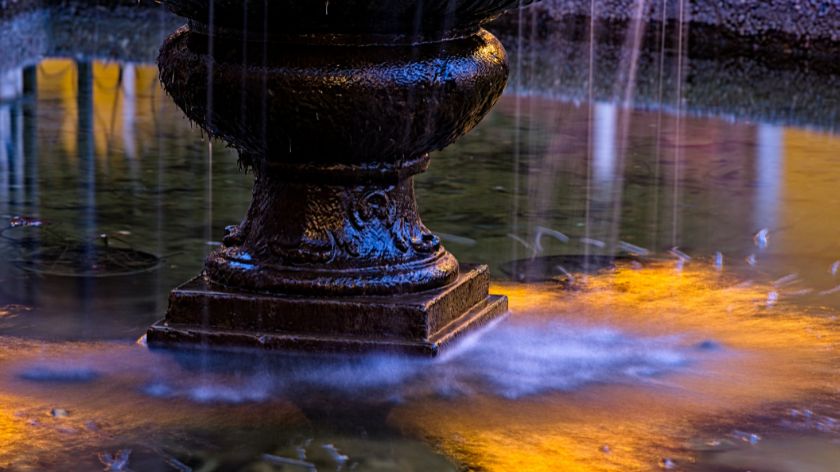
To create a striking visual accent on the water feature, it is important to choose the right placement for the lights. Underwater lights make the water bright and transparent, while lights placed around the water feature highlight its shape and contours. These solutions create a magical atmosphere, especially in the evening when the light plays with the movement of the water.
Modern technologies allow for significant savings in lighting costs, and as landscape design professionals, we always recommend using energy-efficient lamps. LEDs and solar panels are excellent choices for water features because they run on solar energy and minimize the use of electricity, which is especially important for eco-friendly solutions.
Water elements in design require special attention to safety issues. All lights should have a high level of protection against moisture and dust (IP 68 or higher). This ensures that the lighting will work in all weather conditions without the risk of short circuits or damage.
Recommendations from Ecolandscape Studio for Creating Lighting for Water Features
- Integrated Lighting: Placing lights in such a way that they are not noticeable during the day but create a stunning effect at night is a great way to complement a water feature. Using built-in LEDs that are integrated into paths, stones, or the walls of the water feature gives the impression that the light comes directly from the water.
- Use of Colored Lights: For creating dynamic effects, such as on fountains, colored lights can be used that change shades depending on the time of day or your preferences. This creates a unique atmosphere and draws attention to the water feature.
- Illuminated Aquatic Plants and Stones: Lighting aquatic plants and stones in the water feature can add natural charm. Soft lighting will highlight textures and details, giving the water feature a lively, organic feel.
Properly chosen lighting for water features and fountains is not only an aesthetic element but also an important part of landscape design that helps create a unique atmosphere and highlights the beauty of nature. By following the recommendations of Ecolandscape Studio, you can choose the optimal solutions that will match your style and emphasize every detail of the water feature. Thanks to our advice, you will not only make your garden more attractive but also create a space for relaxation and leisure that will delight you every evening.
As Martin Palma noted: «We always strive to create designs that harmoniously blend with nature. Lighting for water features is not just adding light; it’s creating a magical world in which humans and nature exist in perfect balance.»