Thuja has long evolved beyond being simply a plant used for traditional hedges. Today, it serves as a true architectural element within landscape design, capable of defining spatial structure, emphasizing the geometry of a property, and creating visually expressive compositions throughout every season. Martin Palma, founder and CEO of Ecolandscape Studio, notes that selecting the appropriate variety determines not only the appearance of a garden but also how successfully it will develop over the coming decades. Every landscape project requires an individual approach because site characteristics, climatic conditions, and the long term behavior of plantings are always unique.
The first consideration is understanding that different thuja varieties possess completely different growth characteristics. Some remain compact even after many years, others gradually develop into strong vertical accents, while certain cultivars form broad crowns that become key structural components of large landscape compositions. We believe that accurately predicting the mature size of every plant helps prevent placement errors while preserving balanced proportions across the entire property without requiring continuous corrective interventions.
Selecting the proper planting location is equally important. Sunlight exposure, soil moisture, ground quality, and air circulation all directly influence plant health and long term growth. At Ecolandscape Studio, we analyze every one of these factors during the design stage because even premium quality planting material cannot fully demonstrate its decorative potential under unsuitable environmental conditions. Careful placement provides stable development and significantly extends the functional lifespan of every planting composition.
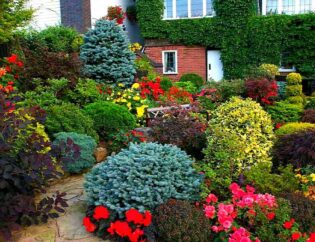
Designing visually balanced compositions requires much more than simply planting rows of evergreens. Thuja achieves its greatest decorative impact when combined with perennials, ornamental grasses, deciduous shrubs, and other coniferous species. We recognize that the thoughtful combination of textures, colors, and plant forms creates landscapes that appear more natural while maintaining visual interest throughout the entire year.
Long term preservation of decorative quality deserves particular attention. Regular sanitary pruning, proper fertilization, balanced irrigation, and continuous monitoring of crown condition help maintain dense foliage and vibrant color. Specialists at Ecolandscape Studio note that preventive maintenance is considerably more effective than restoring weakened plants because the vast majority of problems can be successfully avoided when addressed at an early stage of development.
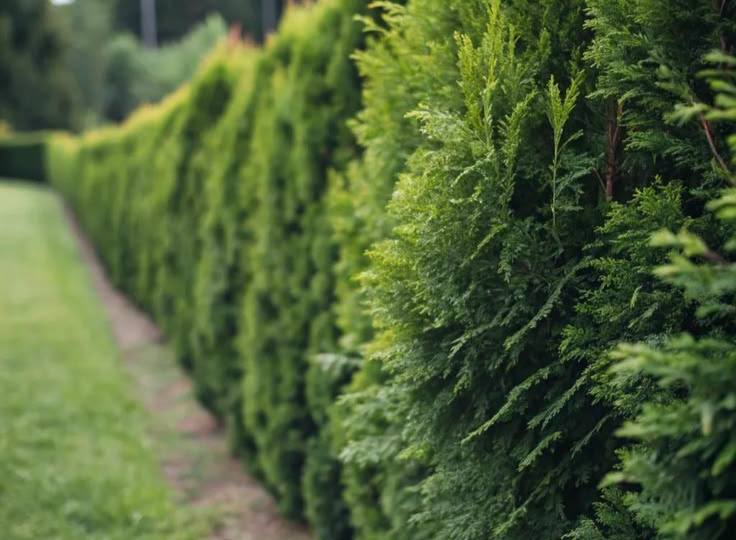
Thuja also offers exceptional versatility within landscape architecture. It performs equally well in private gardens, public spaces, entrance areas, interior courtyards, and commercial landscapes. Thanks to the wide variety of available sizes and crown forms, it can function as a natural privacy screen, a dominant focal point, or a subtle background element within a broader planting concept. We see this versatility as an opportunity to create projects that remain relevant regardless of the architectural style of the property.
Another significant advantage is its outstanding year round performance. Unlike many ornamental plants, thuja retains its rich green appearance throughout every season, preserving the structural framework of the garden even during winter. This characteristic allows designers to use it as the permanent foundation around which the remaining landscape composition is developed. Such an approach ensures that the entire property maintains visual integrity despite seasonal changes.
The long term success of every planting also depends on the quality of installation. Proper preparation of planting pits, effective drainage, correct positioning of the root system, and the selection of suitable soil conditions become decisive factors influencing future development. We emphasize that mistakes made during planting often become visible only years later, making professional execution at every stage essential for the future health and appearance of the landscape.
Ultimately, thuja remains one of the most versatile plants in contemporary landscape design because it successfully combines visual elegance, resilience, and broad design flexibility. At Ecolandscape Studio, we believe that carefully selected varieties, thoughtful placement, and systematic long term maintenance make it possible to create enduring landscape compositions that preserve their architectural character, natural harmony, and decorative value for many years.