Rocky and rugged areas require a special approach in landscape design. Harsh conditions, such as poor soils, limited water availability, and extreme temperature fluctuations, can be a real challenge for gardeners. However, as demonstrated by our years of experience at Ecolandscape Studio, properly selected plants can not only adapt to these conditions but also create a unique and sustainable landscape. We often work with such areas, and today we will share our recommendations and professional advice on choosing plants for rocky and rugged sites.
As our founder and CEO Martin Palma noted, «Rocky areas are often perceived as difficult to green, but with the right approach, they become not only decorative focal points but also sustainable ecosystems that can thrive for many years.»
Mountain Plants: Taming Harsh Conditions
Mountain plants are an ideal choice for rocky sites, as they are already accustomed to living in harsh conditions: they can withstand significant temperature fluctuations, water shortages, and poor soils. At Ecolandscape Studio, we actively use these plants to create landscapes that are not only beautiful but also address soil erosion and adaptation to the conditions.
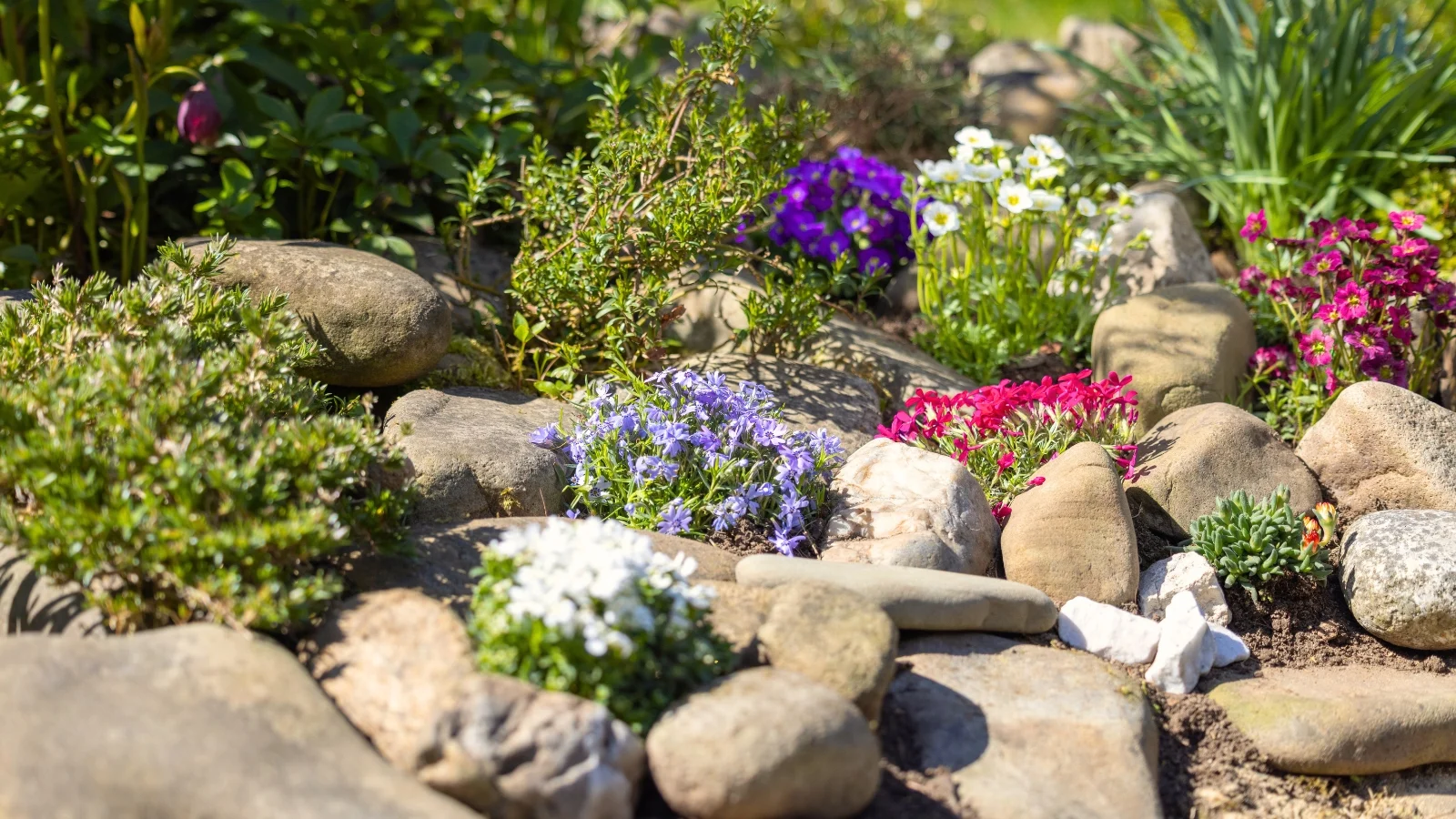
Phlox subulata – This is one of the most popular plants for rocky gardens. It forms dense mats that help stabilize the soil and prevent erosion. This perennial thrives in both drought and cold, and its bright flowers brighten up the garden in late spring and early summer. We often recommend phlox for creating focal points in rocky areas.
Lavender – A plant that not only beautifies the garden but also offers many beneficial properties. Lavender is drought-tolerant, and its ability to attract pollinators bees and butterflies makes it an essential part of any garden aiming to support biodiversity. In rocky gardens, lavender also plays an important role in stabilizing the soil and preventing erosion. Its compact shape and strong fragrance add elegance and harmony to the landscape.
Coltsfoot – This plant is often recommended for slopes or areas with low nutrient levels. It is cold- and drought-tolerant, forms a green carpet, and its early blooming makes it one of the first spring accents. In addition to its decorative role, coltsfoot helps strengthen sloped areas and prevent their washing out.
Succulents and Cacti: Rulers of Drought
Succulents and cacti are plants that are perfect for rocky and dry areas. They have a unique ability to store water in their tissues, which allows them to endure long periods of drought. These plants require minimal care, making them ideal for gardens with limited or no irrigation.
Aloe – This is not only a decorative but also a useful plant. It is well-suited for sunny, rocky soils where water drains quickly. Aloe stores moisture in its leaves, helping it survive the hot summer months. It is also used in medical and cosmetic applications, adding extra value.
Sedum – One of the most versatile and drought-resistant plants for rocky sites. It grows quickly and forms dense mats that retain moisture and help prevent weeds. Sedums also have excellent adaptability to poor soils and hot conditions, making them a great choice for landscapes with limited water availability.
Cacti – These plants, native to deserts, are perfectly suited for rocky areas. At Ecolandscape Studio, we use cacti to create exotic corners in rocky landscapes. Cacti tolerate heat and drought, making them ideal for water-scarce areas. In addition to their resilience, they add drama and texture to the landscape.
Ground-Covering Plants: Protecting and Beautifying
Ground-covering plants for rocky areas are not only a decorative element but also an important part of the landscape that prevents soil erosion, retains moisture, and suppresses weed growth. These plants form dense carpets that help maintain soil integrity and support ecosystem balance.
Cerastium – This low-growing plant with silver leaves forms dense mats that are ideal for rocky sites. Cerastium thrives on poor, rocky soils and is drought-tolerant, making it an excellent choice for such conditions.
Saxifraga – This beautiful and hardy plant is perfect for rocky and mountain gardens. Saxifraga spreads quickly across the site, forming dense carpets with small flowers. It also helps to stabilize the soil and prevent washing out.
Herbaceous Plants: Creating Dynamic Accents
Herbaceous plants bring lightness and freshness to the garden and also draw attention to specific areas. Many of them adapt well to rocky sites, creating vibrant color accents and harmoniously complementing the overall garden picture.
Iris – This vibrant and hardy plant can decorate rocky areas for a long time. Irises thrive in sunny areas with poor soils and do not require frequent watering. They add elegance and sophistication to the garden, especially when combined with other flowering plants.
Thyme – This is not only an aromatic but also a decorative plant. It is ideal for dry, sunny sites, where its small leaves create a green covering, and its flowers attract bees and butterflies. Thyme is also used in cooking, adding extra value to garden care.
Vertical Greening: Using Stone Walls and Pergolas
If your garden has stone walls or fences, using climbing plants for vertical greening is a great idea. Stones and vertical surfaces create ideal conditions for plants like clematis and hydrangea.
Clematis – This climbing plant can be used to decorate walls or arches. Clematis not only creates stunning vertical floral accents but also helps bring life to rocky areas.
Hydrangea – Perfect for vertical greening, especially in semi-shaded conditions created by stone walls. It will bloom beautifully and provide shade on hot areas.
How to Choose Plants for Rocky Areas?
The most important factor when selecting plants for rocky areas is their tolerance to drought and low nutrient levels. At Ecolandscape Studio, we always adhere to the principle that plants should be adapted to the site conditions and require minimal care. Succulents, cacti, lavenders, phlox, and thyme are all excellent candidates for rocky and sunny areas.
Rocky sites can become real gems of your landscape if you choose the right plants. They not only help create a sustainable and beautiful ecosystem but also require minimal care, which is an important aspect when designing such gardens.
Rocky and rugged areas are a challenge that we at Ecolandscape Studio are ready to take on with enthusiasm. With the right choice of plants, these areas can become not only beautiful but also sustainable parts of your garden, requiring minimal maintenance.