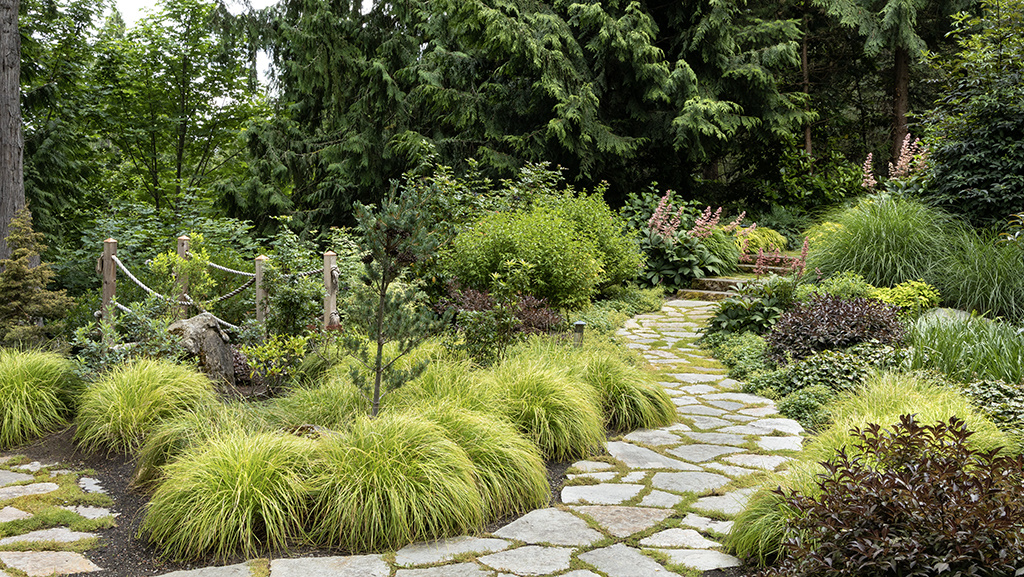
In recent years, more and more people are seeking ways to escape the hustle and bustle of city life and spend time in nature’s peaceful silence. With the rise of the forest bathing trend, interest in woodland gardens is only growing. Returning to nature has a positive impact on both physical and mental health, improving sleep, boosting energy levels, and reducing stress. At Ecolandscape Studio, we believe that by creating a woodland garden in your own yard, you can not only bring harmony into your life but also enjoy a picturesque atmosphere that will provide tranquility throughout the year.
What is a Woodland Garden?
A woodland garden is a fusion of nature and design that recreates the forest atmosphere within your yard. This style doesn’t require strict symmetry or formality. It’s based on the natural arrangement of trees, shrubs, and grasses, which creates a multi-layered structure where plants exist in harmony with one another.
The main goal of a woodland garden is not just to beautify the space but also to create an ecosystem that attracts local wildlife, birds, insects, and beneficial microorganisms. This type of garden also helps improve the microclimate, reduce noise levels, and enhance air quality, creating a harmonious and cozy environment for you.
Benefits of a Woodland Garden
A woodland garden offers a variety of benefits, making it an ideal choice for urban and suburban yards. One of the primary advantages is the natural shade provided by deciduous trees. In the summer, they protect from the harsh sun, while in the winter, when the leaves fall, they allow more light to filter through, providing additional sunlight for plants. This not only helps maintain balance in the garden but also creates a comfortable environment for relaxation.
Moreover, a woodland garden is an excellent solution for creating privacy. In urban settings where space is often limited, this type of vegetation helps shield your personal space from prying eyes and creates a sense of seclusion. The trees and shrubs also act as natural barriers, reducing noise and providing a peaceful, calming atmosphere.
Beyond visual and aesthetic benefits, a woodland garden serves as an important ecosystem that attracts wildlife. Trees and shrubs provide shelter for birds, insects, and small animals, while garden plants become a food source for bees, butterflies, and other beneficial creatures. This environment fosters biodiversity and strengthens the ecosystem’s resilience.
Another advantage is that a woodland garden requires far less maintenance compared to traditional landscaped gardens. Plants that are well-adapted to local conditions are better suited for natural growth and development, making them more resilient and low-maintenance. Despite its natural beauty, this type of garden doesn’t demand constant attention and complex care, allowing you to enjoy its beauty without investing too much time in upkeep.
Key Principles of Woodland Garden Design
Woodland garden design is based on the principles of harmony with nature and minimal intervention in its structure. The use of natural materials such as stone, wood, and gravel helps create paths and landscaping elements that avoid formal constructions like cobblestones. This gives the garden an organic look, perfectly blending with the natural landscape.
The fundamental principle is simplicity. Avoid overcrowding the space with too many elements. Instead, create minimalist zones that will look relaxed and harmonious.
The color palette should be muted, with an emphasis on greens, browns, and greys. Bright colors should be used sparingly as accents to maintain the natural balance of the garden.
Furniture in a woodland garden should be simple yet stylish. Natural wood benches, wicker chairs, or log seating are perfect choices. Water features, such as a small pond or fountain, add atmosphere to the garden and attract not only people but also wildlife.
Selecting the right plants completes the picture, creating a natural and sustainable ecosystem.
How to Choose Plants for a Woodland Garden
When selecting plants for a woodland garden, it’s essential to prioritize native species that are best adapted to the climate of your region. At Ecolandscape Studio, we always recommend choosing plants that can successfully compete for resources such as light and water, especially in shaded areas where growing conditions can be more challenging.
To create a rich and layered structure, a woodland garden should include multiple levels of vegetation: an upper canopy of trees, a middle layer of shrubs, and a lower layer of ground cover plants. This layering will provide natural dynamism and textural diversity to the garden.
To ensure your woodland garden remains attractive throughout the year, it’s important to choose plants that offer interest in all seasons. Include plants with vibrant autumn foliage, flowering shrubs in the spring, and plants that draw attention in winter with their texture or bark.
If your garden is often in the shade, select shade-tolerant plants like hostas, astilbes, and ferns. These species are ideal for such areas, providing green coverage even with minimal sunlight.
Woodland Garden Maintenance
While woodland gardens require minimal care, there are still a few important aspects to consider:
- Pruning: Periodically, trees and shrubs should be pruned to prevent them from becoming too dense and overcrowding one another. At Ecolandscape Studio, we recommend doing this carefully to maintain the natural balance of the space.
- Autumn Cleanup: Fallen leaves and branches are an important part of the woodland garden ecosystem, so it’s best to use them to enrich the soil rather than removing them entirely. If needed, chopped leaves can be used for mulching.
- Spring Maintenance: In spring, clear any leaves from around plants to allow light and air to reach them. Also, don’t forget about regular mulching to keep the garden healthy.
A woodland garden is a space that fosters harmony with nature and creates a secluded atmosphere, making it the perfect retreat for those seeking rest and rejuvenation. At Ecolandscape Studio, we see woodland gardens as a way to maintain ecological balance and enhance the microclimate of your yard.
Founder and CEO of Ecolandscape Studio, Martin Palma, emphasizes: «A woodland garden allows you to combine the natural beauty of the environment with a sustainable approach to landscape design. It creates not only an inviting atmosphere but also supports biodiversity, becoming an essential part of the ecosystem.»
For those looking to make their yard more environmentally friendly and harmonious, creating a woodland garden is a wise step forward.









