Modern technologies are increasingly influencing our daily lives, and landscape design is no exception. With the advancement of technology, gardening and landscape design are gaining new opportunities, allowing us to create spaces that are not only aesthetically pleasing but also functional, convenient, and sustainable. In this article, we will explore how to integrate innovative technologies into your garden and which smart solutions can enhance both the appearance and functionality of your landscape.
Smart Irrigation Systems
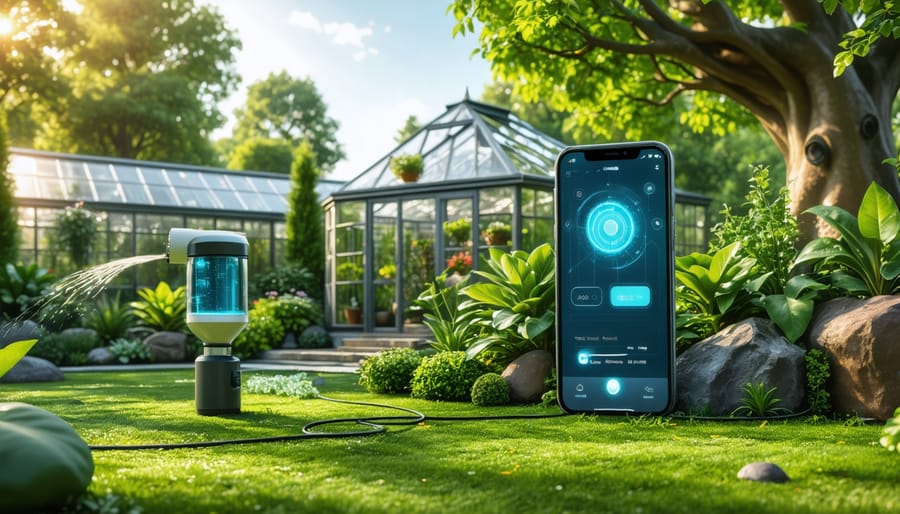
One of the most popular solutions in landscape design is smart irrigation systems. These systems use soil moisture sensors and weather forecasts to automatically regulate the water supply. This helps conserve water, maintain optimal humidity levels for plants, and prevent overwatering or drought. Smart systems can be set to operate only at specific times of the day, such as at night when evaporation is minimal, or during rainy weather to prevent water wastage.
Additionally, integrating these systems with mobile apps allows garden owners to control irrigation from anywhere, which is convenient for those who travel frequently or cannot always check on their garden in person.
Energy-Saving Solutions
Integrating energy-efficient technologies into landscape design not only helps reduce energy costs but also makes the space more eco-friendly. For example, installing solar panels to illuminate the garden is not only an energy-saving measure but also adds visual appeal during nighttime. Solar panels accumulate energy during sunny days, which can be used for lighting paths, gazebos, or decorative elements like fountains or ponds.
Solar lights and lamps can also be equipped with motion sensors, turning the lights on only when someone passes by, saving even more energy.
Interactive and Multimedia Elements
Modern technologies allow for the creation of interactive elements in the garden, making the space even more interesting and innovative. For instance, you can install water fountains that respond to motion or music, or create multimedia panels that display information about plants, the environment, or the history of the garden.
You can also integrate elements such as smart mirrors that interact with external conditions. These mirrors can reflect not only images but also provide useful information, such as the weather or time.
Garden Management Systems via Apps
With the development of mobile technology, it is now possible to manage your garden directly from your phone. There are now a variety of landscape design apps on the market that not only help design your garden but also allow you to monitor its condition.
Many apps provide the ability to visualize your future garden by changing elements and seeing how they will look in real life. Apps for plant health monitoring can provide updates on the condition of plants, as well as recommend suitable fertilizers or ways to deal with pests.
Plant Health Monitoring Systems
For more experienced gardeners, there are plant health monitoring systems available. These systems are equipped with sensors that measure temperature, humidity, light levels, and other factors essential for plant growth. Data from these sensors is transmitted to the garden owner’s mobile device, allowing them to take timely action to care for their plants. For example, the system can alert you to excessively high or low humidity levels or a lack of sunlight.
Garden Maintenance Automation
Garden robots are another step forward in landscape design. Modern robotic lawnmowers, for example, can work on a schedule, mowing the lawn according to selected parameters (e.g., grass length, mowing frequency, etc.). This frees up owners from regular physical labor, making garden maintenance automated and more convenient.
There are also garden robots that collect fallen leaves or debris. These devices can be programmed to operate at specific times, making garden maintenance easier and ensuring the space is always neat.
Innovative Materials and Textures
Technology allows the use of new materials to create functional and aesthetically pleasing landscape solutions. For example, porous materials for pathways or paving allow water to penetrate the ground, reducing surface runoff. This improves drainage and prevents soil erosion.
The use of nanotechnology in materials for building garden elements such as benches, gazebos, and fences can significantly enhance their durability and resistance to environmental factors.
Smart Systems for Lighting and Security
Security technologies can be integrated into landscape design using smart cameras, motion sensors, and lighting systems with presence detectors. These systems automatically turn on lighting along pathways and can also direct video surveillance to key areas of the garden to prevent theft or other incidents.
Additionally, some devices can alert owners through mobile apps about abnormal activities, providing extra security.
Integrating technology into landscape design is not only a way to make your garden more convenient, but also an opportunity to create a sustainable, energy-efficient, eco-friendly, and innovative space. Smart solutions such as automated irrigation, solar panels for lighting, monitoring systems, and robots for plant care help make the garden not only beautiful but also functional, significantly reducing the time and effort spent on maintenance.
At Ecolandscape Studio, we are confident that the integration of technology into landscape design will become an important part of future projects, allowing us to create spaces that are not only visually appealing but also technologically advanced, providing an ideal environment for living and relaxation.