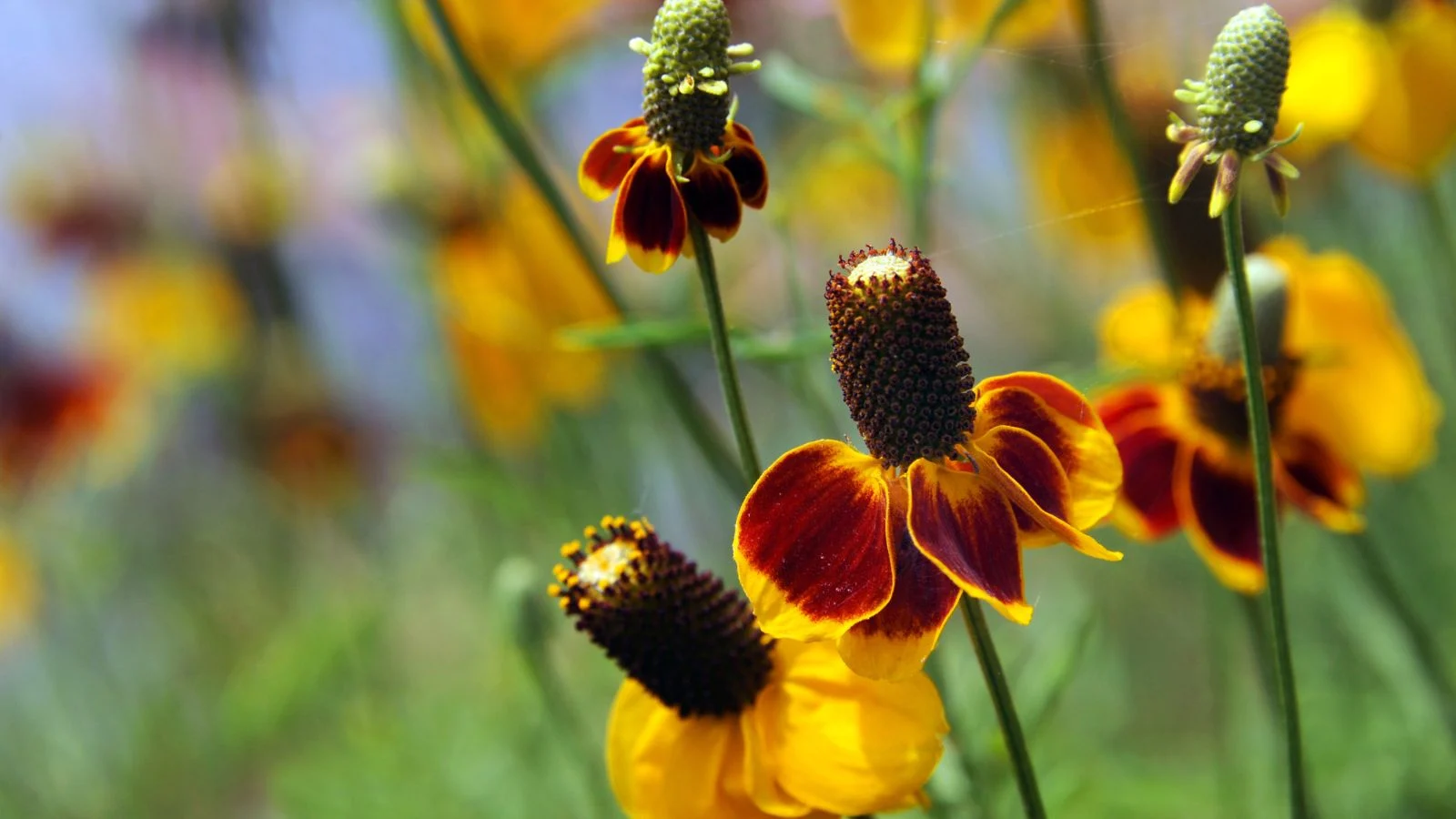
Mexican Hat (Ratibida columnifera), also known as the Prairie Coneflower, is a striking perennial plant that makes a bold statement in any garden. With its unique flowers resembling a Mexican sombrero, Mexican Hat catches the eye in both wild and ornamental landscapes. At Ecolandscape Studio, we believe that this plant is perfect for sunny spots, especially in dry regions. In this article, we will share tips on how to care for Mexican Hat and discuss important factors that will help you achieve successful blooming and a long lifespan for this plant.
Planting Location
The Prairie Coneflower prefers sunny spots where it receives at least 6 hours of direct sunlight per day. In such conditions, it will bloom brightly and for an extended period. At Ecolandscape Studio, we always emphasize the importance of choosing the right planting location: sunlight is the main factor influencing the abundance of blooms. Despite its love for the sun, Mexican Hat can tolerate light shade, although the blooming will be less intense in such conditions.
The soil for Mexican Hat should be light, well-drained, and have a neutral or alkaline pH. We do not recommend planting it in clayey or overly wet soil, as this can lead to root rot and negatively affect the plant’s overall health.
Watering and Humidity
One of the most attractive features of Mexican Hat is its high drought resistance. This makes it an excellent choice for hot, dry regions. At Ecolandscape Studio, we always remind people that despite its drought resistance, watering is important for maintaining the plant’s health, especially during its blooming period. It’s better to water deeply but infrequently, allowing water to penetrate the roots but not stagnate in the soil.
In hot climates, you can use mulch to help retain moisture and prevent soil overheating. During winter months, watering can be reduced, especially if winters are dry.
Fertilization and Feeding
Mexican Hat is a relatively low-maintenance plant that can thrive even in nutrient-poor soils. However, if the soil in your garden is too poor, you can add a small amount of organic compost during planting. At Ecolandscape Studio, we recommend avoiding excessive fertilization, as this can lead to excessive leaf growth at the expense of flowering. In most cases, Mexican Hat will do just fine without additional feeding.
Pruning and Bloom Care
One of the key aspects of caring for Mexican Hat is regularly pruning spent flowers. This helps to stimulate the growth of new blooms and extends the blooming period. At Ecolandscape Studio, we also recommend removing spent flowers before they start to form seeds. This will prevent self-seeding if you don’t want the plant to spread on its own.
After flowering, it is important to leave some of the seed heads for birds, who enjoy eating the seeds during the winter.
Propagation and Dividing Plants
Mexican Hat can be propagated from seeds or by dividing the clumps. If you want to renew the plant, we recommend dividing it every few years. This will help avoid the plant becoming too old and keep its flowering vibrant and abundant.
When the plant grows too quickly, its roots can become overcrowded, which leads to poor health. To divide it, dig up the plant in spring and carefully separate the roots. Plant each part at least 30 cm apart to give them space to grow. Be sure to water the plants immediately after planting to help them establish roots more quickly.
If you prefer to propagate Mexican Hat from seeds, you can sow them directly in the ground. This plant does not require deep seed burial, as it needs light to germinate. Seeds root easily and begin to sprout in favorable conditions.
Problems and Diseases of Mexican Hat
Although Mexican Hat is fairly resistant to diseases, it can still be affected by pests such as Japanese beetles and aphids. In case of minor infestations, we recommend hand-picking the pests, and for more serious problems, you can use organic remedies like neem oil or diatomaceous earth.
Additionally, Mexican Hat does not tolerate waterlogging, so it’s important to monitor the soil conditions to avoid root rot.
How to Stimulate More Blooms
To keep your Mexican Hat blooming, we recommend monitoring the plant’s condition and regularly pruning spent flowers. This helps to stimulate new blooms and prolong the blooming period. It is also helpful to keep an eye on the moisture level in the soil, especially during the hot summer months, to ensure that the plants stay healthy and continue blooming.
Recommendations from Martin Palma, Founder and CEO of Ecolandscape Studio
Mexican Hat is an easy-to-grow and beautiful plant that will brighten your garden for many years with proper care. At Ecolandscape Studio, we believe that selecting the right planting site, watering moderately, and regular pruning are key factors that will allow the plant to bloom for an extended period.
- Choose a sunny location for planting. Mexican Hat prefers at least 6 hours of direct sunlight per day for abundant and prolonged blooming.
- Prepare soil with good drainage. Avoid heavy clay soils to prevent root rot.
Water moderately but regularly. Mexican Hat is drought-resistant, but to achieve bright blooms, it is important to maintain optimal moisture levels. - Remove spent flowers. This stimulates new shoots and prolongs the blooming period.
- Divide the plants every few years. This will refresh the plant and maintain its health and abundant blooming.
- Avoid overwatering. Too much moisture can lead to root rot, so it’s important to keep an eye on drainage and watering.
- Protect from pests. Japanese beetles and aphids can damage plants, so use organic protection methods if needed.
Mexican Hat is ideal for creating meadow gardens and decorative flowerbeds, as well as for those looking for low-maintenance plants. We recommend using it for landscaping in sunny, dry spots, where it will look especially striking.
Remember, timely pruning and dividing the plants will help maintain their health and vibrant blooming. If you need more information or help with planting and caring for this amazing plant, we are always ready to assist you.