Landscape design is the art of creating spaces that are not only beautiful but also functional, reflecting the personality of the owner and harmoniously interacting with nature. One essential tool in this process is geoplastics – a method that allows you to transform a plot by giving it unique shapes and functions. Geoplastics not only enhance the space aesthetically but also solve several practical issues, such as improving drainage, increasing the volume of the plot, improving the microclimate, and delineating functional zones. At Ecolandscape Studio, we understand the importance of geoplastics in landscape design and are sharing our experience and expertise in this area.
Geoplastics in Landscape Design: What It Is and Why It Matters
Geoplastics is the process of shaping and modifying the terrain to create unique landscape features. With geoplastics, you can create hills, terraces, artificial water bodies, water channels, and improve the drainage system. This art not only allows you to change the appearance of a garden but also helps solve problems such as water accumulation, low soil levels, or lack of light in specific areas of the plot. At Ecolandscape Studio, we use geoplastics to create harmonious and functional spaces that will please the eye and serve the owner for the long term.
«Geoplastics is a tool that allows us to unlock the full potential of any plot. It gives us the ability to create not only beautiful but also practical elements. At Ecolandscape Studio, we always pay attention to balancing natural harmony with artificially created forms, and geoplastics plays a key role in this process,» says Martin Palma, founder and CEO of Ecolandscape Studio.
Geoplastics as a Way to Create Voluminous and Functional Landscape Forms
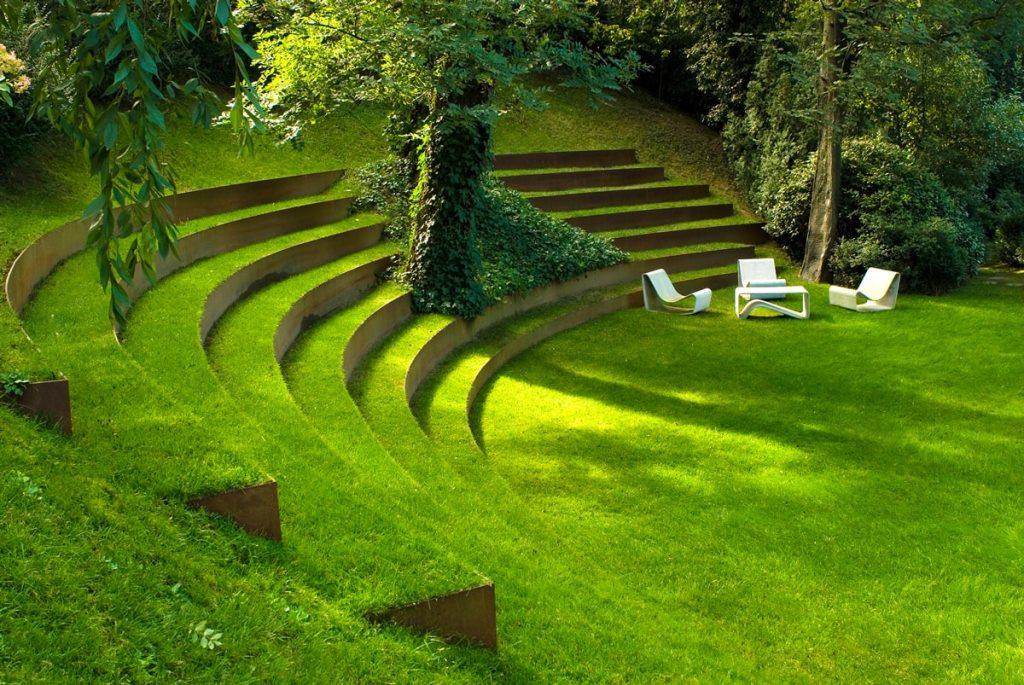
One of the key advantages of geoplastics is its ability to create voluminous forms that significantly change the perception of space. With geoplastics, you can add depth and dynamism to a plot, especially if the original terrain is flat or monotonous. This is especially relevant for small plots, where every element must work to visually expand the space. Hills, terraces, artificial boulders, and water features help create a multi-layered, interesting landscape.
The process of creating these forms is not limited to aesthetics alone. For example, slopes can be used for a relaxation area or an alpine garden, and lower areas can be turned into a water feature. Such height variations not only become decorative elements but also increase the functionality of the plot.
Geoplastics and Solving Drainage Problems
One of the most important issues faced by property owners is drainage and water runoff. Water accumulation on the plot can lead to soil waterlogging, which negatively affects plants and other landscape elements. In such cases, geoplastics is the ideal solution.
By modifying the terrain, you can create natural slopes that direct water into proper channels, preventing water stagnation. For example, on plots with low-lying areas, you can raise the ground level to ensure proper drainage of rainwater. This will help avoid puddles and flooding, while also improving conditions for plant growth, as they will receive the optimal amount of moisture.
Geoplastics can also help create subsurface drainage systems that effectively remove excess moisture and prevent the growth of mold and fungi. We always recommend using geoplastics to create sustainable and durable drainage solutions that will not only keep your plot in excellent condition but also make it more environmentally sustainable.
Integrating Water Features with Geoplastics
Another important aspect of using geoplastics is the creation of water features. Water bodies, whether ponds, streams, or waterfalls, not only decorate the plot but also influence its microclimate. Water helps maintain an optimal level of humidity, improves lighting, and creates a unique atmosphere for relaxation.
Geoplastics allows you to integrate water features into the landscape, regardless of complex elevation changes. Creating water bodies on different levels adds dynamism and depth to the space. We often recommend using geoplastics to make water features an integral part of the landscape and highlight their natural beauty.
Moreover, water bodies on the plot become a source of life for various plant and animal species, creating a true ecosystem. By integrating water features using geoplastics, we can not only improve the aesthetic perception of the garden but also enrich its flora and fauna.
Geoplastics as a Way to Divide the Space
Geoplastics helps to effectively divide the plot into different functional zones. This is especially important for small gardens, where space must be used as efficiently as possible. For example, creating terraces allows you to designate zones for relaxation, vegetable gardens, flower beds, and playgrounds. These zones can be separated by smooth height variations that serve as both aesthetic and functional boundaries.
Using geoplastics to divide the plot helps avoid the need for bulky and disproportionate fences or barriers. Instead, we use natural terrain forms that harmoniously fit into the space, creating a sense of unity.
How to Implement Geoplastics in Landscape Design Correctly
The first step in successfully implementing geoplastics is to carefully assess the terrain of your plot. You need to study its features, such as the presence of slopes, low-lying areas, moisture levels, and lighting. Only by doing this can you properly plan future changes and determine where artificial forms should be placed so they harmoniously blend with the natural surroundings.
Geoplastics must work in harmony with nature. We always recommend using local materials such as stone, gravel, sand, and other natural components to achieve the most natural and organic result. These materials not only reduce the ecological footprint but also fit beautifully into the landscape, creating a sense of integrity and harmony.
Plants are an important element of geoplastics, especially when it comes to stabilizing slopes and terraces. Perennials with deep roots are excellent for strengthening the soil and preventing erosion. Additionally, plants help create natural hedges and decorative elements, adding texture and greenery to your garden.
Geoplastics also impacts the microclimate of the plot. Changing the terrain can help improve lighting, reduce the impact of strong winds, and increase humidity levels. It’s essential to carefully calculate which elements will work to improve conditions for plant growth and the comfort of people.
Geoplastics is a powerful tool that not only transforms the appearance of a plot but also solves significant practical issues such as improving drainage, creating functional zones, and enhancing the microclimate. At Ecolandscape Studio, we are confident that using geoplastics allows us to create truly unique and harmonious landscapes that will delight the eye and serve their owners for many years.
«Geoplastics allows us to unlock the potential of any plot, creating not only beautiful but also practical solutions that will last for many years,» concludes Martin Palma.