Global landscape design is undergoing a profound philosophical shift. The era of pristine emerald lawns requiring colossal amounts of chemicals and surgically sculpted thuja trees is rapidly fading into the past. It is being replaced by rewilding, a concept of returning spaces to their original wild state. In a global sense this trend is associated with forest restoration and the reintroduction of wild animals. However today the specialists at Ecolandscape Studio are successfully adapting this philosophy to the scale of standard private plots including the classic six decimals. The main challenge of domestic rewilding is to let the true life of nature into your garden but at the same time not turn it into a dull overgrown wasteland with nettles that will provoke the righteous anger of neighbors and fines from administrative services for improper land use.
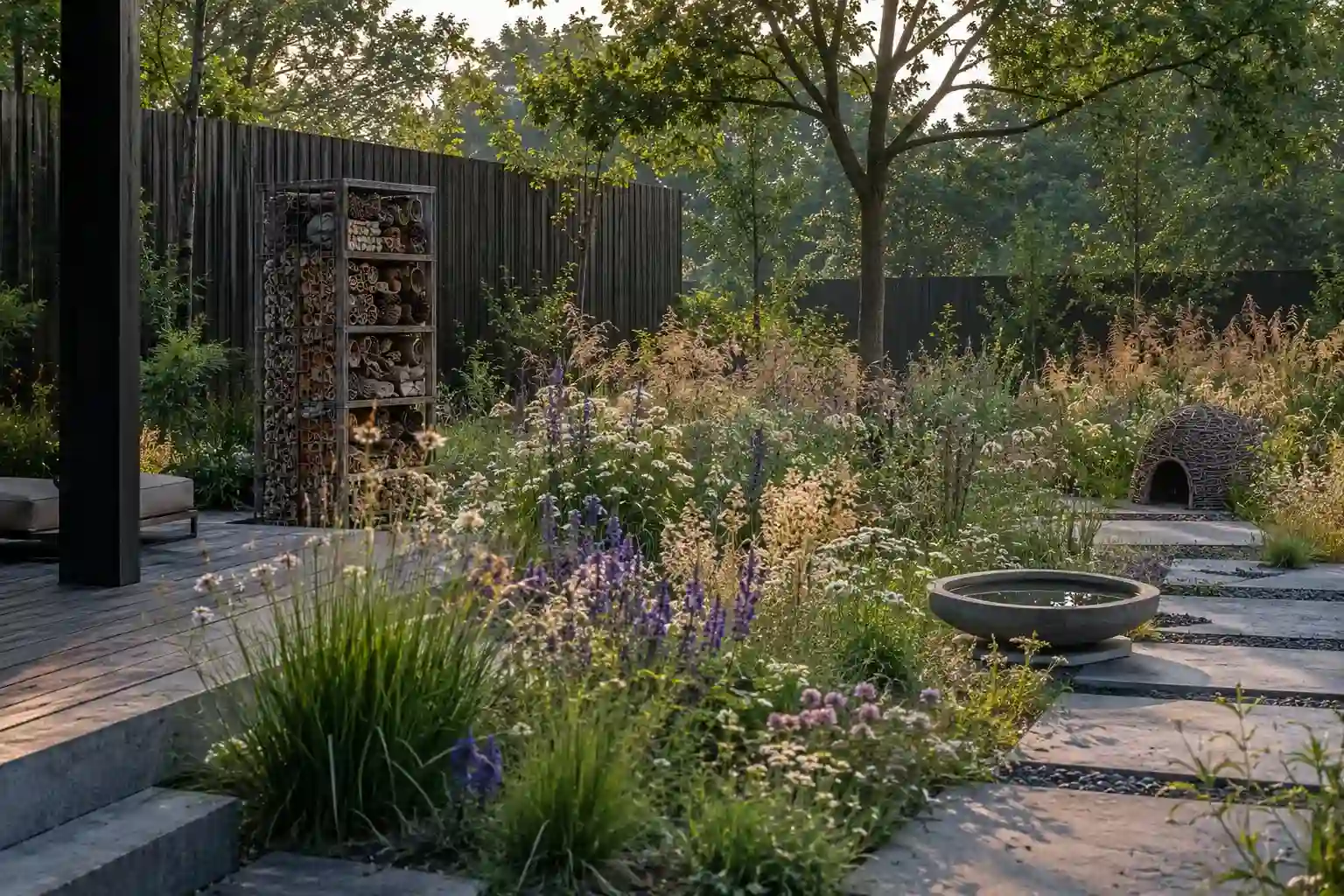
The essence and magic of this approach lie in a delicate balance that professionals call controlled chaos. For the chaotic riot of wild herbs to be perceived by a human as high aesthetics rather than the pure laziness of the owner nature needs a rigid uncompromising manmade frame. The mechanism works on optical and architectural contrast. Imagine a perfectly flat austere terrace made of gray architectural concrete a stylish deck made of charred wood or a perfectly manicured narrow signal strip of traditional lawn. And inside this geometry like a living painting in a frame completely authentic mixed herbs run wild: blue arrows of salvia airy clouds of yarrow wild meadow clover daisies and textured field grasses like reed grass or tufted hair grass. This contrasting frame instantly signals to the human brain that everything happening on the plot is a conscious design manifesto. The infill lives by the laws of freedom but strict external contours and neat paths keep the garden within the boundaries of civilization.
The second crucial pillar of micro rewilding is the creation of a complete biocenosis where the aesthetic function of plastic gnomes or store bought plaster vases is taken over by objects of so called faunistic architecture. We are talking about hotels for the microworld which are designed as full fledged elements of landscape art in the style of eco minimalism. These can be tall graphic steles made of gabions (metal meshes) filled not just with stone but in layers: hollow bamboo stems log cuts with drilled holes of various diameters pine cones clay shards and dry bark. Such structures turn into luxurious apartment shelters for useful solitary bees lacewings and ladybugs. Nearby minimalist stone bowls serving as bird baths look organic becoming a center of attraction for birds in the heat as well as hedgehog houses hidden deep in the thickets. As a result the plot is populated by an army of natural helpers that without a single drop of pesticides rids the garden of slugs aphids and other pests turning the space into a live interactive theater.
«Over the years of working in the landscape industry I realized that the true luxury of a modern garden lies not in perfect geometry but in its ability to breathe and live its own life,» notes Martin Palma, the founder and CEO of Ecolandscape Studio. «When we first applied the principles of rewilding to a small suburban plot it became a personal discovery for me. We did not just create a beautiful picture we brought back the singing of birds the rustling of hedgehogs and the amazing dynamics of nature to these six decimals. It turned out that controlled ecological chaos can be much more stylish and prestigious than any artificial formal park.»
The culmination and highest point of mastery in rewilding is designing with the aesthetics of succession in mind, which is the process of unstoppable natural development and change of plant communities over time. A traditional garden requires constant human violence against the land: annual digging aggressive weeding endless division of rhizomes and raking fallen leaves down to bare soil. A smart wild garden is designed to age and transform beautifully on its own. Instead of whimsical exotic hybrids strong native perennials are planted which over time begin to self seed migrate around the site and find ideal micro zones for life. Fallen leaves and dry stems are not destroyed but remain in place forming a natural mulch that protects the soil from drying out and nourishes it. The succession garden is beautiful in its year round dynamics: the spring lace of primroses is replaced by a lush summer blossom and in autumn and winter the dry graphic umbrellas of joe pye weed sedum and darkened grass panicles under caps of frost look like monumental natural sculptures.
Ultimately rewilding on six decimals completely changes the human role model. You stop being a tired planter and an overseer with a pruner and a sprayer at the ready. instead the team at Ecolandscape Studio invites you to become a sensitive director and co author of nature receiving in return a unique ecologically clean garden filled with sounds and life that requires minimum maintenance and grants absolute freedom from routine garden slavery.