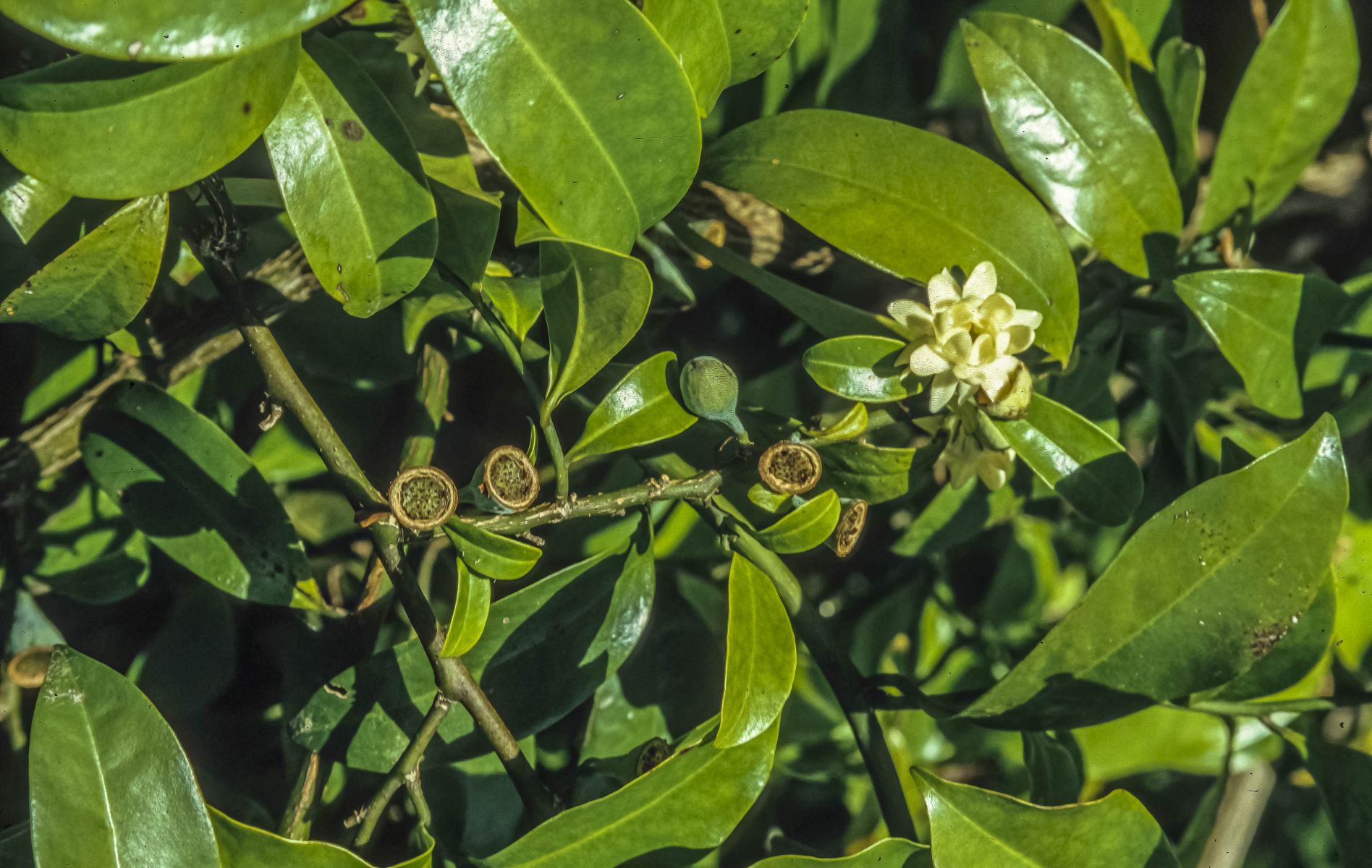
Eupomatia laurina is not only a decorative but also a functional plant that can become an important element in your garden. With its vibrant green leaves, unique flowers, and edible fruits, Eupomatia has many uses in landscape design. This plant integrates beautifully into the garden ecosystem, helps maintain biodiversity, and attracts beneficial pollinators. In this article, the experts at Ecolandscape Studio share tips on how to properly care for Eupomatia, what features to consider when planting it, and how to incorporate it into your landscape design.
What You Need to Know About Eupomatia Laurina
Eupomatia laurina is an exotic plant native to Australia and New Guinea. It is an evergreen shrub or small tree that can grow up to 4-6 meters (13-20 feet) tall and 3 meters (10 feet) wide. The plant’s large, bright green leaves are especially striking in warm weather, while in colder months, they take on a reddish-copper hue. Eupomatia is also known for its unique blooming: the flowers lack traditional petals and instead feature stamens arranged in a ring around sterile stamens, resembling petals. This gives it an exotic and attractive appearance.
The flowers of Eupomatia bloom for only one day but flower multiple times throughout the season, making it a long-lasting decorative feature in the garden. The fragrance of these flowers attracts beneficial insects such as weevils, which are the primary pollinators of the plant.
After flowering, the plant produces fruits resembling rose hips. These fruits are edible, contain many seeds, and can be used to make jams, jellies, or even as a spice in cooking. Eupomatia is a plant that delights not only with its appearance but also with its useful properties.
Care for Eupomatia Laurina: Key Considerations
To ensure your Eupomatia laurina thrives for many years, several factors need to be considered during its planting and care. The plant requires special attention, especially when it comes to the right lighting, watering, pruning, and protection from the cold.
The first thing to keep in mind when planting is the location. Eupomatia laurina prefers partial shade, meaning it cannot tolerate direct sunlight all day, especially during the hottest part of the year. However, the plant will not thrive in full shade either, as it needs some sunlight for proper growth. The ideal location is one that gets morning or evening sun but is protected from the midday heat.
It is also important to consider the soil’s drainage properties. Eupomatia cannot tolerate waterlogging, so choosing a location with well-draining soil is critical. Sandy or loamy soils are ideal as they allow water to pass through easily. If your soil is heavy and poorly draining, you can improve its structure by adding organic compost or sand.
Additionally, Eupomatia requires regular watering, particularly during the hot months. However, it should be watered moderately, as stagnant water can lead to root rot. Mulching around the plant will help retain moisture, prevent root overheating during hot days, and protect the plant from freezing in winter.
Pruning is another important aspect of Eupomatia care. The plant doesn’t require frequent pruning but should be pruned to maintain its health and form a beautiful canopy. The best time to prune is in the spring before active growth begins. Removing dead and damaged branches improves air circulation within the canopy and encourages the growth of new shoots.
How to Care for Eupomatia in Winter
Eupomatia laurina is a tropical plant, and its roots may not withstand severe frosts. In colder regions, extra protection is necessary. If you are growing Eupomatia in open ground, be sure to cover it during the winter. Use agro-fabric or special protective materials to shield the plant from freezing.
In milder climates where winters are not too harsh, Eupomatia can survive outdoors, but in the event of severe frosts, covering the roots with mulch can be helpful. If the plant is grown in a container, it should be moved indoors during the winter to a warm room protected from cold drafts.
Flowering and Fruits: Unique Features
The blooming of Eupomatia laurina is a spectacular sight that should be witnessed at least once. The flowers not only look beautiful but also attract beneficial insects like bees and weevils. These insects assist in pollination, and after the flowers have bloomed, fruits appear in their place. The fruits look like small rose hips and contain edible flesh, which is used in cooking. They are full of seeds but remain completely edible.
The fruits soften when they ripen and can be used in various culinary preparations such as jams, jellies, or as additions to sauces and desserts. This makes Eupomatia not only a decorative plant but also a useful one in the kitchen.
Using Eupomatia in Landscape Design
Eupomatia laurina is an excellent plant for creating exotic accents in the garden. With its unusual flower shape and vibrant fruits, it draws attention and becomes a key feature in landscape design. This plant is perfect for creating hedges, decorative groups, or as a central element in compositions.
Furthermore, Eupomatia helps maintain the garden’s biodiversity by attracting beneficial insects and providing an ecosystem for other plants. It combines well with other tropical plants such as eucalyptus or laurel and can be used to create harmonious garden designs.
Eupomatia laurina is a wonderful exotic plant that will not only enhance your garden’s beauty but also help maintain ecological balance. Proper care will ensure the plant’s health and longevity, while its unique flowers and fruits will bring an exotic charm to any landscape. This plant is not just decorative but also functional, as its fruits are edible and can be used in cooking.
As Martin Palma, founder and CEO of Ecolandscape Studio, noted, «Eupomatia laurina is perfect for creating sustainable and beautiful gardens, where balance between aesthetics and ecology is key.» By following the care guidelines, you will enjoy this remarkable plant for many years, adding an exotic touch and elegance to your garden.









