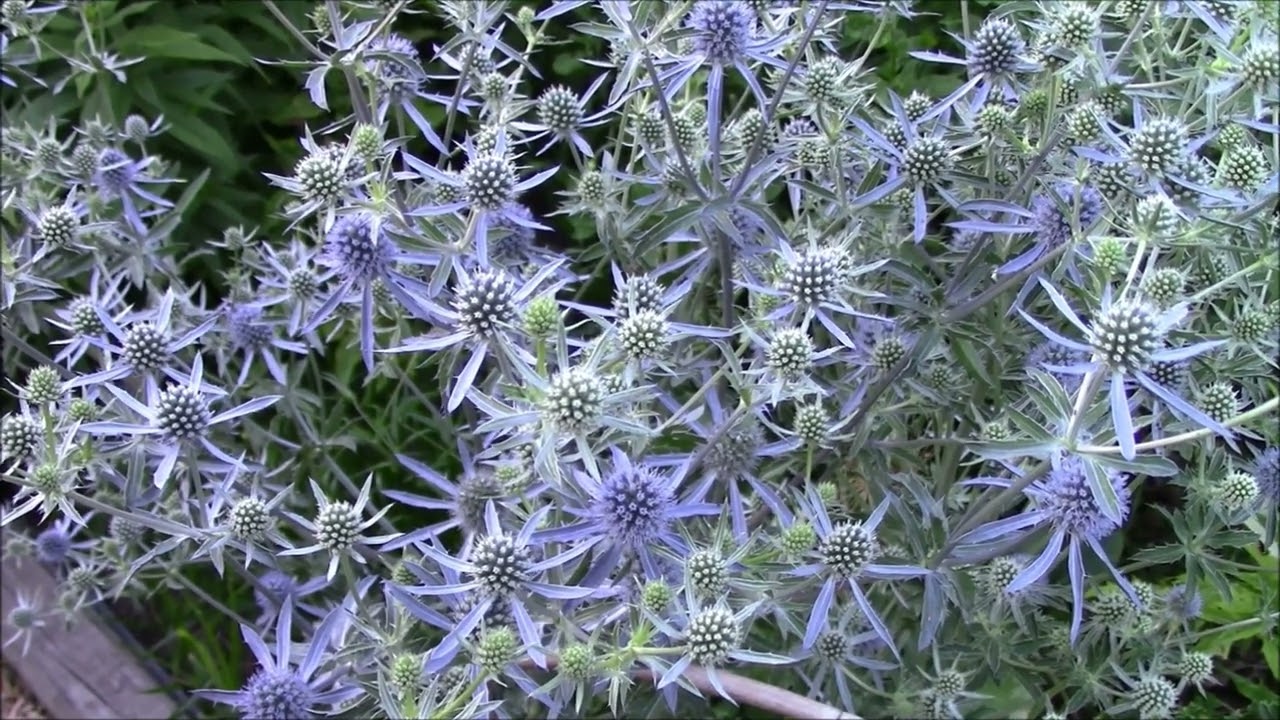
When it comes to landscaping, achieving harmony between aesthetics and plant functionality is crucial. Eryngium alpinum, known in horticulture as Alpine Sea Holly, is one of those plants capable of transforming the perception of a space. Its distinctive form, rich flower color, and structure make it a valuable element for landscaping, creating stylish flower beds, and sculptural plant groupings.
At Ecolandscape Studio, we aim to select plants that not only beautify but also add depth, structure, ecological resilience, and visual expressiveness to the garden. Alpine Sea Holly, thanks to its architectural form and ability to interact with other plants, has long earned a prominent place in our landscape projects.
How Alpine Sea Holly Works in Landscape Composition
One of the key advantages of Eryngium alpinum is its ability to create striking vertical accents in the garden. These accents help establish compositional points, guide visitors’ attention, and form visual axes. In spacious yards, Sea Holly can serve as a backdrop for lower-growing plants or as a contrasting element alongside ornamental grasses, shrubs, and other perennials.
When designing a landscape, it is important to remember that plants with unusual flower shapes and leaf textures increase the visual complexity of plantings. This is particularly noticeable in mixed borders, where Sea Holly becomes the «anchor» around which other plants are arranged. Its rich blue hue pairs beautifully with greenery, soft pastel tones, and even warm, saturated colors, creating interesting seasonal color transitions.
Alpine Sea Holly enhances the sense of space, making it dynamic and layered. Combined with ornamental grasses or low-growing perennials, it helps balance vertical and horizontal lines in the garden, which is a crucial aspect of yard design.
Soil, Planting, and Care Practical Recommendations
For successful cultivation of Sea Holly in garden landscapes, it is important to provide conditions close to its natural habitat. The plant prefers sunny, open areas with ample light. In shaded areas, flowering is less impressive, and its decorative appeal diminishes.
Regarding soil, Sea Holly thrives in well-drained conditions. If the site has heavy, compacted soil, Ecolandscape Studio recommends improving drainage by incorporating sand or gravel. This preparation is especially effective for dry borders, rock gardens, or modern minimalist compositions.
Moderate watering is needed during the establishment phase, but once adapted, the plant becomes drought-tolerant. This makes it suitable for areas with limited water resources or for projects where low-maintenance landscaping is a priority.
Proper placement of Sea Holly in a composition helps avoid conflicts with neighboring plants, especially regarding light and space competition. Planting too close to sensitive species may suppress their growth, so it is important to consider the mature size when planning flower beds, mixed borders, or garden layouts.
Alpine Sea Holly and Garden Ecology
From the perspective of sustainable landscaping, Eryngium alpinum plays an important role as a plant that attracts beneficial insects. Its vividly blue flower heads act as a magnet for bees, bumblebees, butterflies, and other pollinators. Their presence naturally stimulates pollination, improving the health and productivity of all flowering plants, including fruit crops.
Integrating such plants into the garden makes it part of a living ecosystem functioning according to natural laws. Sea Holly helps create resilient plantings that not only delight the eye but also support ecological balance. In modern landscape design, caring for biodiversity has become an essential part of thoughtful yard planning.
Moreover, Sea Holly’s dense root system stabilizes soil and helps reduce erosion on slopes or loose ground. This is important for areas with varying terrain, where maintaining soil structure without compromising aesthetics is a key objective.
Best Pairings and Stylish Solutions
In garden landscape design, Alpine Sea Holly looks especially striking when paired with other elements that support a natural garden concept. It blends organically with lavender, sage, ornamental grasses, and can be combined with soft pastel flowers to create visual balance.
In rock gardens or dry slopes, Sea Holly becomes a central feature, drawing attention with its texture and rich color. It can serve as a focal point around which other plantings are arranged, helping to establish rhythm, depth, and layering, important for the harmonious perception of the garden.
Sea Holly also fits well in modern landscaping styles that favor natural forms, asymmetrical lines, and sustainable solutions. In such projects, it can be used as a standalone accent or in combination with other resilient plants.
«Alpine Sea Holly is a unique plant that adds not only visual expressiveness but also living dynamism to the garden. For me, landscape design has always been about creating connections between plants, forms, colors, and nature. In Ecolandscape Studio projects, Sea Holly functions as an architectural element, enhancing the design structure and supporting the ecological balance of the garden,» shares Martin Palma, founder and CEO of Ecolandscape Studio.
This approach reflects the studio’s philosophy of creating gardens that live, evolve, and inspire interaction with nature.
Eryngium alpinum is a plant that makes the garden more expressive, resilient, and lively. It adds unusual texture, rich color, and ecological value to any composition. In yard landscape design, Sea Holly helps create visual accents, strengthen plant relationships, and support natural garden processes.
If your goal is to create a space that delights the eye, works in harmony with nature, and requires minimal maintenance, Alpine Sea Holly is an excellent addition to any garden project. It is perfect for modern, naturalistic, rock, and soft plantings, enhancing both the aesthetics and functionality of green spaces on your property.