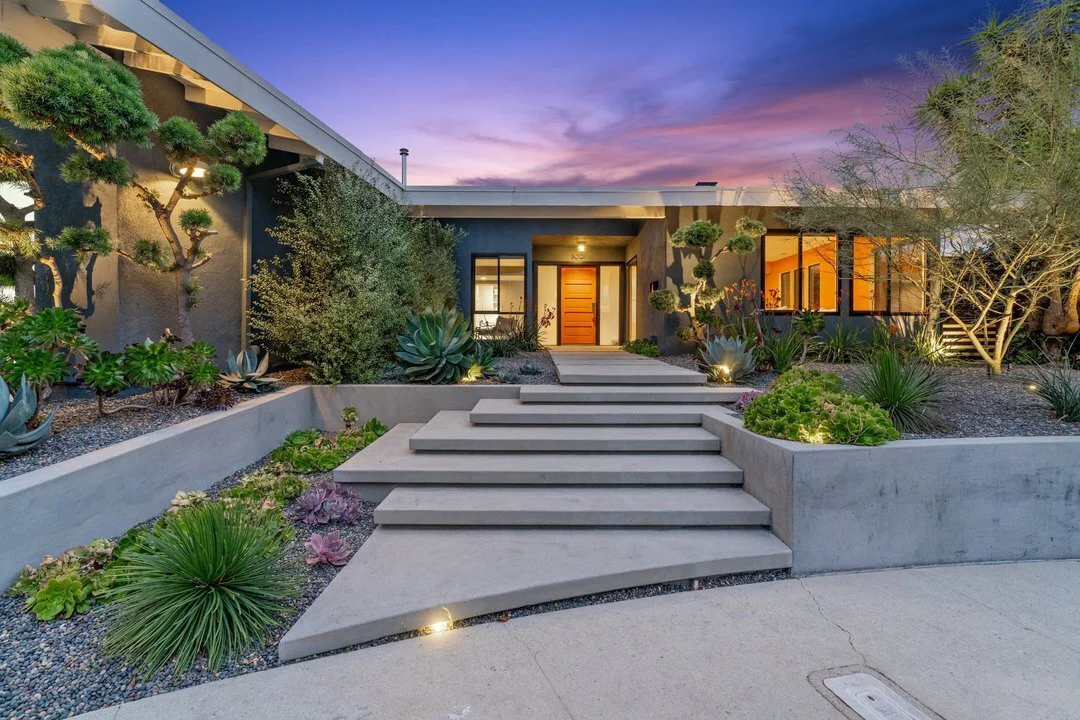
Minimalism in landscape design is a philosophy that helps create spaces filled with harmony and simplicity. This style combines elegance with functionality, making it perfect for those who want to reduce effort while still creating a beautiful and well-maintained space. In this blog, Ecolandscape Studio shares tips and recommendations on how to make your landscape as simple, stylish, and convenient as possible.
What is Minimalist Landscape Design?
Minimalism in landscape design is a style that involves using a limited number of plants and decorative elements to create a space where every detail has its meaning. This approach helps create an open and spacious environment without visual overload, fostering harmony and calm. Martin Palma, founder and CEO of Ecolandscape Studio, argues that minimalist landscape design is a way to change our perception of the world around us. He emphasizes that a minimalist landscape should be functional, not simply aesthetically pleasing. «The less we add, the more space we have for living and relaxing on our property,» says Martin.
Why is Minimalism so Popular in Landscape Design?
One of the key advantages of minimalism in landscape design is its ability to reduce the time and effort required to maintain the property. A minimal number of plants and elements decreases the need for regular pruning, watering, and cleaning. For example, succulents and ornamental grasses require little maintenance and adapt well to various climates. This helps homeowners save time and resources, freeing them from extra garden maintenance work. At Ecolandscape Studio, we always select plants that are best suited for minimalist landscapes and require minimal care, allowing our clients to enjoy their gardens without unnecessary effort.
Another advantage of minimalist landscapes is the significant cost savings in landscaping. Since only a limited number of plants and materials are used, the costs of creating such a garden are usually much lower than for more traditional landscape projects with many decorative elements. Additionally, minimalism reduces long-term expenses on watering, fertilizers, and other resources, making it a more economical option.
Furthermore, minimalist landscapes are an environmentally sustainable solution. By choosing native and drought-resistant plants, you can significantly reduce water usage and the need for chemicals, making your property more eco-friendly. This is particularly important in the context of climate change, where efficient water use is becoming a priority. At Ecolandscape Studio, we support nature’s sustainability by working with plants that are not only beautiful but also beneficial to the ecosystem.
Finally, minimalism helps create a visually attractive and peaceful space. The simplicity and clarity of shapes, a restrained color palette, and neat lines create an atmosphere of harmony and comfort. This type of landscape is ideal for those seeking tranquility and quiet in their garden, where every element contributes to the overall sense of order and lightness.
How to Implement Minimalism in Landscape Design?
To make minimalism work on your property, it’s important to plan the space carefully. Before starting the project, it’s worth creating a clear layout of the area. This will help you properly place focal points, create relaxation zones, and ensure easy access to every corner of the garden. We always recommend that our clients develop a detailed plan to avoid overloading the space with unnecessary elements and make the most efficient use of the available area.
Once the plan is ready, focus on selecting plants and materials. For minimalist landscapes, plants with simple shapes and textures are ideal. Ornamental grasses, succulents, and trees with clean outlines will look harmonious and won’t overwhelm the space. When choosing materials, simplicity is key. Stone, concrete, and wood are perfect for minimalist landscapes, creating a sense of naturalness and harmony.
To create harmony and balance in the design, proportions must be considered. Although minimalism doesn’t always mean symmetry, the correct distribution of elements across the property helps create a harmonious space. It’s important to remember that every element, whether it’s a plant or a stone pathway, should be placed so that it doesn’t compete for attention with other features. Instead of multiple details, minimalism calls for the use of a few key accents that draw attention but do not overload the space.
Focusing on focal elements is another important aspect of minimalist design. This could be a stylish sculpture, a water feature, or an unusual tree that serves as the central element of the garden. These accents highlight the overall style and create a unique touch but don’t distract from the overall harmony.
Martin Palma, founder of Ecolandscape Studio, emphasizes that minimalism is not just a passing trend but a way to create a space that is perfect for living. «A simple, yet thoughtful landscape helps people feel more connected to nature, and better understand what really matters in their surroundings. Minimalism allows people to create spaces that are easy to maintain, without spending too much time or energy on them,» says Martin. His experience confirms that a minimalist landscape can be just as beautiful and functional as more complex, layered designs.
Minimalism in landscape design is not only a style but also a practical solution for those who want to create a beautiful, functional, and eco-friendly garden. It helps save time and resources on maintenance, reduces landscaping costs, and creates a space filled with harmony and calm. At Ecolandscape Studio, we are confident that minimalism is not just an approach to design but a philosophy that helps create spaces for living, where it’s a pleasure to spend time every day.









