In recent years, the concept of transforming old factories and industrial plants into green spaces has become increasingly relevant. Every year, we see how unused industrial sites can be turned into eco-friendly and aesthetically appealing spaces for urban residents. At Ecolandscape Studio, we are actively working on projects that involve the revitalization of such areas, creating comfortable and beautiful places for recreation, socializing, and restoring nature in urban environments.
In this article, we will discuss how to transform old factories and industrial sites into green oases, what principles are important when designing such spaces, and how landscape design can make urban areas more eco-friendly and comfortable for living.
Why Transform Old Factories into Parks and Gardens?
Converting abandoned factories into green spaces offers not only aesthetic benefits but also ecological and social advantages. When considering the transformation of such sites, it is important to understand that it significantly improves the quality of life in cities. Abandoned areas are typically environmentally polluted and are underutilized for public needs. By converting them into green spaces, we create an area that benefits both the environment and the people.
Natural zones help to purify the air, absorb carbon dioxide, reduce noise levels, and create comfortable and pleasant places for recreation. For example, studies like those presented in the Green Building Advisor confirm that the creation of green spaces in cities helps improve air quality, lower temperatures, and increase ecosystem resilience.
Additionally, such projects create new social spaces. Converted factories become places where people can walk, exercise, spend time with children, or simply relax in nature. This is also important for mental health, as these areas provide urban residents with opportunities for relaxation and social activity.
We should also not overlook the economic impact. Transforming old industrial sites into public green spaces increases the value of nearby real estate and creates jobs in both landscape design and site management.
As Martin Palma, founder of Ecolandscape Studio, noted: «We see tremendous potential in transforming abandoned sites. They offer not only aesthetic solutions but also the chance to create sustainable and eco-friendly urban areas that truly improve people’s lives.»
How to Transform an Old Factory into a Green Space?
The process of turning an old factory or industrial area into a green space is a multifaceted project that requires a comprehensive approach and careful planning. To create a space that is not only beautiful but also environmentally sustainable, several key factors must be considered.
The first step is always a thorough assessment of the site’s condition. The buildings may be damaged, and the soil may be contaminated. Therefore, before starting any work, environmental remediation is necessary. This may include removing polluted soil, restoring the ecosystem, and dismantling old, unnecessary buildings.
If the structures can still be used, it is important to strengthen or repair them. In some cases, demolition may be required for buildings that cannot be restored, but often, old industrial elements can become part of the design, adding a unique character to the project. For example, old brick walls or metal structures can be integrated into the new concept.
When designing these spaces, it is crucial to preserve elements of historical heritage. Industrial architecture has a particular charm and atmosphere that cannot simply be ignored. Remaining elements such as steel beams, brick walls, or even parts of machinery can be used as decorative accents to create a harmonious blend of the old and the new.
Choosing Plants for Industrial Gardens
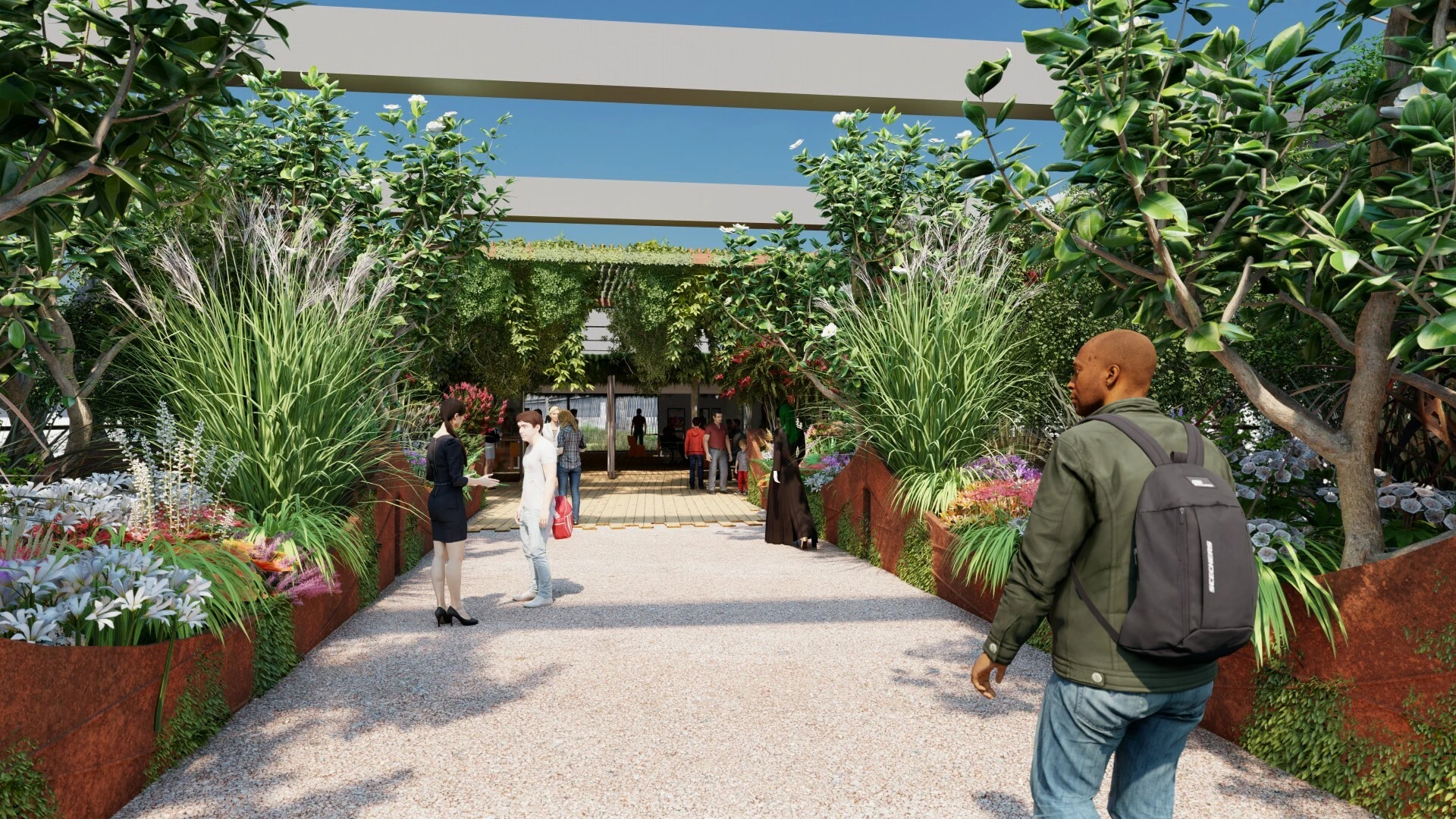
When it comes to transforming old factories, selecting the right plants is of utmost importance. This is not only an aesthetic consideration but also an ecological one. Plants must not only fit the style of the space but also perform vital functions, such as air purification and supporting ecosystem sustainability.
Using native plants is always the best choice. They adapt well to local climate conditions, require minimal care, and support local biodiversity. Such plants also help maintain ecosystem balance, which is especially important when rehabilitating polluted areas.
Moreover, it is important to choose plants that will purify the air and reduce noise. Decorative trees such as viburnum, cherry, lime, and perennials like lavender, echinacea, and grasses are perfect for such projects. They not only improve the microclimate but also add green accents to the space.
As Martin Palma emphasizes: «Our experience shows that plants must serve two main functions: they should be both beautiful and ecologically beneficial. For example, we actively use plants that absorb carbon dioxide, help purify the air, and create a comfortable atmosphere for relaxation. This is an essential factor when designing such spaces.»
Transforming old factories into green spaces is not only a step toward improving urban ecology but also a profitable investment. These projects not only increase the ecological sustainability of cities but also create comfortable spaces for people. They enhance quality of life by providing accessible areas for relaxation and social activities.
Ecolandscape Studio takes pride in participating in such projects, creating sustainable and attractive urban spaces. We believe that abandoned industrial sites have immense potential to be transformed into convenient and green zones that will benefit and delight urban residents for many years.