Landscape design is undergoing significant changes thanks to the introduction of the latest technologies. From smart irrigation systems to vertical gardens, new technological solutions are greatly enhancing the efficiency of landscaping and beautifying spaces. In this blog by Ecolandscape Studio, we will take a detailed look at how technology is changing approaches to landscape design, territory development, and site greening.
Smart Irrigation Systems: How to Save Water and Care for Your Garden
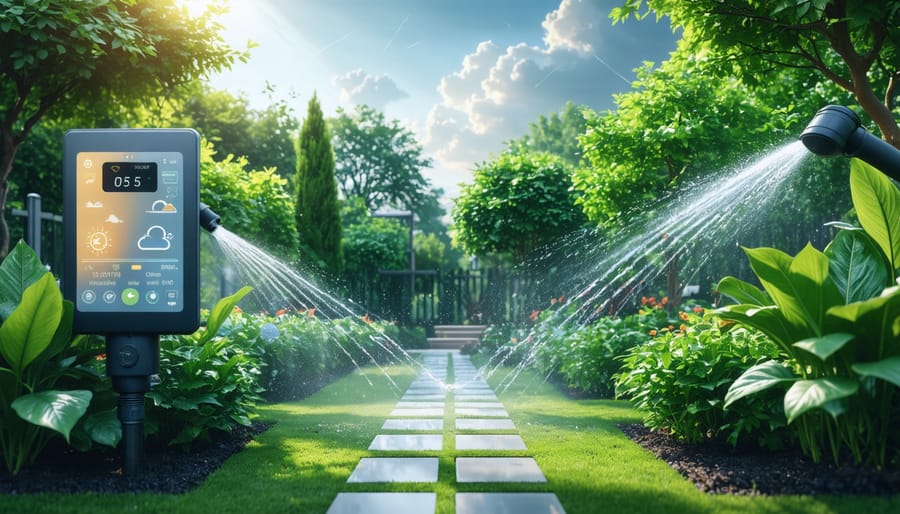
Smart irrigation systems are one of the most popular innovations in landscape design. These technologies allow for a significant reduction in water consumption and ensure optimal conditions for plant growth. Modern smart irrigation systems use moisture sensors to automatically adjust irrigation based on weather conditions and soil moisture.
According to research by Rachio, using smart irrigation systems can reduce water consumption by up to 50%, which is especially important in the context of global water shortages. These systems help manage water effectively, providing plants with the necessary moisture. Martin Palma, the founder and CEO of Ecolandscape Studio, states: «Integrating smart irrigation systems is not only a way to save resources but also a step toward sustainable development.»
Smart irrigation systems help not only reduce water consumption but also lower maintenance costs. These technologies are indispensable for private homes, gardens, and public spaces, as they provide automation in plant care.
Vertical Gardens: A Green Revolution in Urban Landscape Design
Vertical gardens are not just a trendy idea but a real solution for urban landscapes, where space for traditional greening is limited. Vertical garden systems can be installed on building walls, creating living green walls that not only beautify facades but also purify the air, contribute to insulation, and absorb noise.
Research in major cities like London and Tokyo has shown that vertical gardens significantly improve urban ecology. They absorb carbon dioxide, filter the air, and provide additional space for plants. Vertical gardens have become essential elements of landscape design in metropolises with limited space for greening.
Martin Palma asserts: «Vertical gardens are the perfect solution for urban areas where every square meter of space must be used to its maximum potential.»
When designing vertical gardens, it is important to consider the region’s climate conditions and the building’s facade features. The selection of plants also plays a key role in successfully integrating a green wall into the urban environment.
Lawn Mowing Robots: Automating Yard Care
Lawn mowing robots are becoming increasingly popular for maintaining lawns in gardens, homes, and public spaces. These devices not only automate the lawn mowing process but also provide efficient and precise lawn care. Modern lawn mowers are capable of operating in various conditions, including sloped areas and hard-to-reach spots.
According to Frost & Sullivan, the market for lawn mowing robots is growing by 20% annually, driven by their convenience and economic benefits. These devices run on electricity, reducing carbon footprints and making them environmentally friendly.
Martin Palma adds: «Lawn mowing robots not only reduce the time spent maintaining a lawn but also allow you to use free time for other landscaping projects.»
Lawn mowing robots are suitable for yards of various sizes; however, for larger areas, multiple devices or more powerful models may be required. This solution is perfect for people who want to optimize yard care without wasting time.
Plant Health Monitoring: A New Approach to Garden Care
Plant health monitoring technologies are becoming an integral part of modern landscape design. The use of sensors and mobile applications helps gardeners monitor the state of plants in real-time. Monitoring systems track soil moisture, temperature, lighting, and other factors affecting plant health.
According to Parrot, using such technologies can increase yield by 30% and significantly improve plant health. This is especially important for large gardens, country homes, and public green spaces, where plant care requires a lot of attention.
Implementing plant health monitoring allows for precise control over growing conditions and timely responses to changes. This technology helps gardeners avoid plant diseases and manage resources efficiently.
Technological innovations are becoming an essential part of landscape design, making site care simpler and more efficient. Smart irrigation systems, vertical gardens, lawn mowing robots, and plant health monitoring systems are all actively being integrated into landscape design and beautification. These technologies not only simplify garden care but also help reduce the environmental footprint and improve the quality of life in cities.
As Martin Palma mentioned: «The use of technology in landscape design is not just a trend but a necessity that helps create sustainable and environmentally friendly spaces for future generations.»
Helpful Tips from Ecolandscape Studio Experts:
- For effective use of smart irrigation systems, conduct a preliminary soil analysis and choose the right sensors.
- When designing vertical gardens, take lighting requirements and climate conditions into account.
- Lawn mowing robots are suitable for small and medium-sized yards, but for larger spaces, choose more powerful models.
- Plant health monitoring helps reduce fertilizer costs and improve the quality of care.