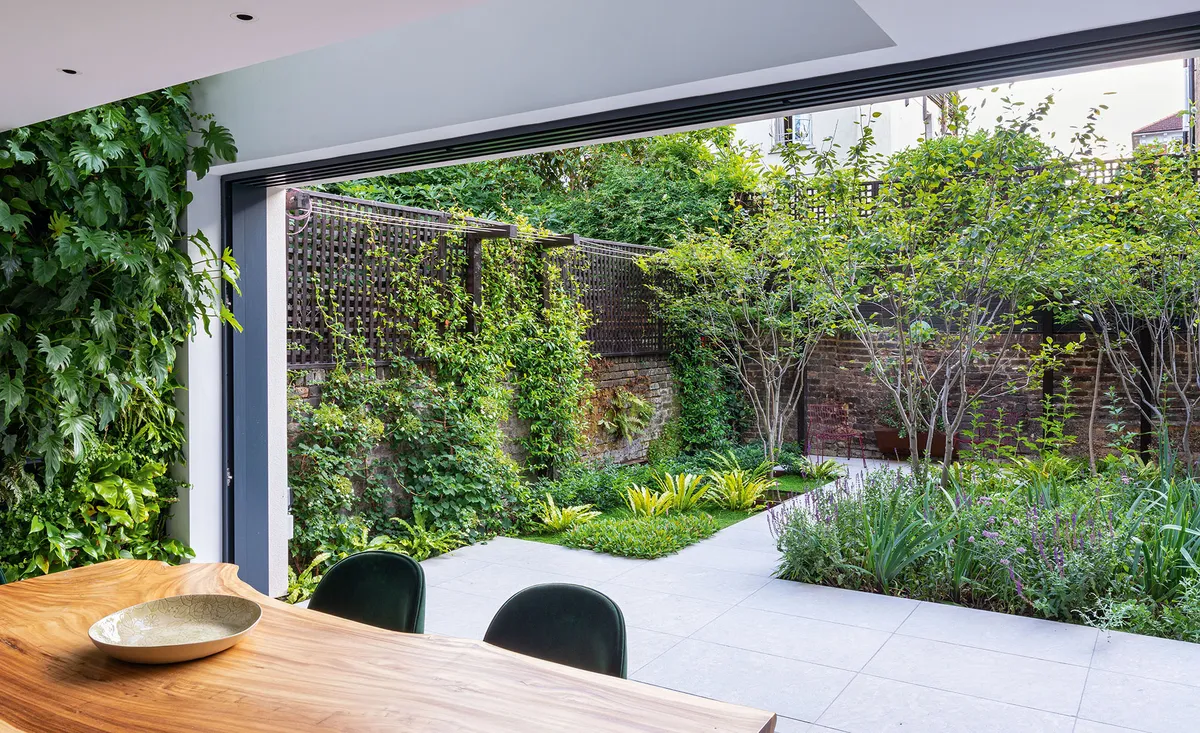
In the Ecolandscape Studio blog, we regularly explore landscape design not as a collection of separate solutions, but as a holistic architectural system. One of the key elements that defines the quality of an entire project is the entry point to the garden. It is the entrance zone that creates the first impression, sets the emotional tone, and initiates the spatial perception scenario.
From a professional design perspective, the garden entrance is not merely a functional gate or fence. It is an architectural landscape transition where entrance zone design, site composition, and the overall garden design concept come together. In our landscape design recommendations, we always emphasize that this is where the architectural dialogue between a person and space begins.
The Entrance Zone as the Foundation of Landscape Perception
In the practice of Ecolandscape Studio, analyzing the entrance zone is the starting point of any project. This is because it is where the initial visual structure is formed and the logic of perceiving the entire landscape design is established.
A well-designed entrance zone creates a gradual spatial unfolding effect. This approach makes the garden design feel more layered: the space is not perceived all at once, but revealed progressively through perspectives, focal points, and transitional areas.
In our landscape design projects, this principle is especially common in high-end private gardens, where not only functionality but also emotional spatial architecture is essential.
The First Step into the Garden and the Psychology of Spatial Perception
The first step into the garden is the moment when the quality of the space is instantly perceived. In that split second, the sense of harmony, scale, and architectural logic is formed.
In professional landscape architecture, this is called threshold perception. It determines how naturally a person transitions from the external environment into a private garden, and how convincingly the entrance zone design performs.
In our design recommendations, we always consider behavioral scenarios: how a person moves, where they look first, where their gaze pauses, and how their emotional response to the space is formed.
Entrance Architecture as Part of a Holistic Garden Design
The entrance zone is not an isolated element but part of the overall composition of landscape design. It functions as a system in which architecture, paving, planting, and lighting reinforce one another.
Gates and fences form the first visual boundary and define the character of the garden design. Paving creates direction and rhythm of movement. Transitional elements pergolas, portals, fragments of walls add spatial depth and strengthen the architectural structure of the garden entrance.
Together, these elements create a cohesive entrance design that becomes the logical starting point of the entire landscape project.
Planting and the Multi-Layered Structure of the Entrance Zone
In landscape design, vegetation plays a key role in creating depth and volume. This is especially important in the entrance zone, where plants act as tools for spatial composition.
At Ecolandscape Studio, we use a multi-layer planting strategy: the lower layer creates density and visual support, the middle layer builds structure and volume, and the upper layer introduces vertical accents and enhances the sense of scale.
This approach turns the entrance zone into more than a decorative feature—it becomes a spatially functional part of the overall site design, influencing the perception of the entire composition.
Landscape Lighting as a Narrative Tool
Entrance zone lighting is one of the key instruments of modern landscape design. It shapes the nighttime identity of the site and preserves architectural expressiveness after dark.
In our projects, we use multi-level lighting: navigational lighting for movement, accent lighting for architectural features, and soft ambient lighting to create depth. This approach makes the garden entrance expressive and legible at any time of day.
Movement Scenario in Landscape Design
Modern garden design is built on the principle of narrative perception. The entrance zone defines the first step of this narrative and determines how the journey through the site unfolds.
Straight axes create a sense of order and structure. Curved lines enhance the feeling of spatial unfolding. More complex trajectories introduce intrigue and layered perception.
Thus, the garden entrance becomes the beginning of an architectural story that continues throughout the entire landscape design.
Martin Palma’s Perspective
Martin Palma, founder and CEO of Ecolandscape Studio, notes: “Over years of practice, I have come to understand that the perception of a garden is formed not inside the space, but at the moment of crossing its boundary. The garden entrance is the point where trust in the landscape is established, and it determines the entire experience of interacting with the site.”
Common Mistakes in Designing the Entrance Zone
In our landscape design consultations, we often observe typical mistakes: lack of compositional logic at the entrance, random selection of materials, incorrect scaling of architecture and planting, and insufficient lighting design.
These errors result in the entrance losing its architectural role and no longer functioning as a connecting element of the overall site design.
The entry point to the garden is a fundamental element of landscape design that shapes perception structure, defines the movement scenario, and establishes the emotional foundation of the entire space.
In the Ecolandscape Studio blog, we share practical advice and professional insights based on real design experience. And in every project, we confirm that the entrance zone is where the architectural dialogue begins one that defines the character of the entire garden design.









