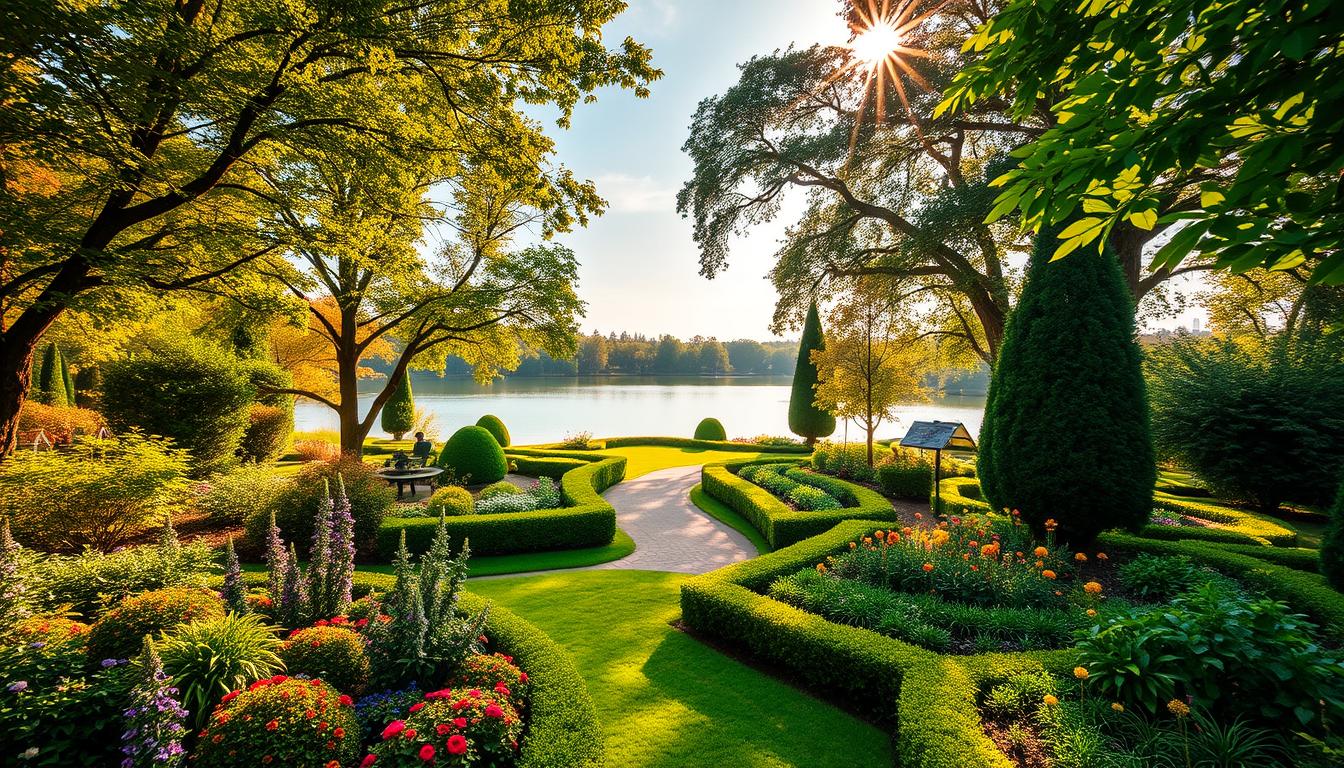
At Ecolandscape Studio, we approach landscape design as the work with a complex system of natural, climatic, and spatial processes. A site is understood as a multi-layered environment in which every characteristic influences the formation of the future structure and behavior of space.
Parametric landscape design forms the foundation of our design thinking. The geometry of a site evolves through data, algorithms, and defined rules that reflect the real behavior of the environment.
The Landscape as a Multi-layered Digital Model
Work on a project begins with the creation of a digital model of the territory. We treat the site as a system of interconnected layers, each carrying functional and ecological information.
The analysis includes solar radiation studies with seasonal dynamics, a digital elevation model with precise topography, wind data accounting for local microclimate, hydrological scenarios of surface and subsurface runoff, soil structure and composition, existing biotopes and vegetation. Additionally, movement patterns of people, transportation logic, visual corridors, and key perception points of space are analyzed.
This approach enables the formation not of an abstract concept, but of a precise behavioral model of the territory, where each element influences spatial organization.
Parametric Design as a System of Logical Dependencies
In the parametric approach, a key role is played by the shift from fixed form to a system of dependencies. Space is formed through parameters that interact with each other.
Solar exposure zones determine the density and structure of planting, as vegetation is distributed according to levels of solar radiation. Topography influences water flow and forms a natural drainage system, which directly affects the layout of functional zones. Pedestrian and service flows define the structure of the circulation network and key spatial nodes. Wind characteristics shape comfort zones and determine the placement of sheltered and open spaces.
Thus, design becomes a process of tuning interconnected variables, where changing one parameter restructures the entire system.
Algorithmic Modeling and Solution Generation
At Ecolandscape Studio, algorithms are used as a tool for spatial analysis and solution generation. They enable a shift from a single design option to multiple possible scenarios that meet defined conditions.
Optimization algorithms are applied to find a balance between slopes, distances, engineering efficiency, and spatial visual logic. Evolutionary computation generates series of alternative solutions that gradually approach an optimal system state. Agent-based modeling is used to simulate the movement of water, air, and users, enabling the analysis of site dynamics under real conditions. Graph structures form a connected spatial network, ensuring logic and readability of routes.
This method allows us to treat space as a computable system rather than a fixed composition.
Generative Design and Scenario-Based Territorial Planning
Generative models enable the creation of multiple development scenarios for a site based on a single set of parameters. This opens the possibility of scenario analysis, where a project is viewed as a system evolving over time.
We analyze territorial behavior under different conditions, including seasonal changes in solar exposure, moisture fluctuations, vegetation growth, increased anthropogenic load, and potential climate change. This allows adaptability to be embedded already at early design stages.
In this logic, a project ceases to be a finished form and becomes a system that continues to evolve after implementation.
Integration of GIS, BIM, and Computational Design
At Ecolandscape Studio, we use an integrated digital environment combining GIS analysis, BIM modeling, and computational design tools. These systems operate together and form a unified design space.
GIS provides spatial and ecological analysis of the territory, including topography, climate, and natural constraints. BIM enables coordination of architectural and engineering sections of the project, including drainage, lighting, and structural solutions. Computational design environments such as Grasshopper and Rhino are used for geometry generation, scenario testing, and linking form with environmental parameters.
This integration creates a continuous connection between data and form.
Ecological Logic as a Form-Giving Principle
In our practice, ecological processes define the structure of space. Water management shapes terrain solutions and surface runoff organization. Biotic zones influence planting composition and the structure of ecological communities. Climatic parameters determine the distribution of functional zones and the level of comfort of different spaces.
The landscape is viewed as a system in which natural processes are not manually corrected but instead used as the foundation for architectural logic.
Multi-Criteria Optimization of Design Solutions
Parametric design makes it possible to consider multiple factors simultaneously, which in traditional approaches are often treated separately.
We balance functionality, ecological sustainability, engineering feasibility, visual structure, and economic efficiency. Algorithms enable the identification of solutions in which these parameters are in a consistent state, even in the presence of internal contradictions.
This ensures high precision in design decisions and reduces uncertainty at the implementation stage.
Transformation of the Role of the Landscape Architect
Within the parametric approach, the role of the architect shifts toward system management. The architect no longer defines form directly but defines the rules of its emergence.
They set parameters, scenarios, and constraints on the basis of which the system generates spatial solutions. At Ecolandscape Studio, this process is understood as a transition toward working with the logic of environmental behavior.
As noted by Martin Palma, founder and CEO of Ecolandscape Studio, a key insight in his practice was the understanding that a sustainable landscape is not the result of a final composition, but a system of processes capable of maintaining functionality and development in the long term.
Parametric landscape design at Ecolandscape Studio forms the foundation of our approach to creating spaces. We work with data, algorithms, and generative models to design landscapes that possess functional precision, ecological resilience, and spatial logic.
This method defines a new level of landscape architecture, where a site is treated as an adaptive computable system, and design becomes a process of managing its evolution over time and under changing environmental conditions.