Permaculture in landscape design is a methodology that focuses on creating sustainable ecosystems while minimizing human impact on nature. It is based on a deep understanding of natural processes and their harmonious use to create self-sustaining spaces. At Ecolandscape Studio, we are delighted to integrate these principles into our projects, ensuring the creation of gardens and landscapes that are not only beautiful and functional but also ecologically sustainable. In this article, we share our approaches and recommendations for incorporating permaculture into landscape design.
What is Permaculture in Landscape Design?
Permaculture is a concept and methodology aimed at designing sustainable ecosystems with minimal human intervention. In the context of landscape design, permaculture suggests that all elements of the landscape should work in harmony with nature, improve its health, and support the ecosystem. It is important that each element of the site performs multiple functions, which contributes to the creation of efficient, self-sustaining systems.
At Ecolandscape Studio, we believe that an approach based on permaculture principles not only helps create beautiful and functional landscapes but also ensures long-term ecological sustainability. As Martin Palma, the founder and CEO of Ecolandscape Studio, noted, «Permaculture not only contributes to the creation of natural gardens but also changes the approach to interacting with nature, transforming the space into an organic ecosystem where humans and nature coexist in harmony.»
Principles of Permaculture Applied in Landscape Design
The process of implementing permaculture principles begins with careful observation of natural processes on the site. This stage allows us to understand how natural resources such as sunlight, water, wind, and soil influence the ecosystem. At Ecolandscape Studio, we pay special attention to analyzing the microclimate, soil composition, humidity levels, and sunlight activity throughout the seasons, using this data to create a sustainable landscape.
This approach helps us not only to accurately design each zone but also to determine in advance how plants will interact with the surrounding environment and each other. Based on the gathered information, we can select optimal plant species and placement, minimizing the need for artificial watering, fertilizers, and mechanical soil treatment.
A key principle of permaculture is the multifunctionality of all landscape elements. Every object whether a tree, shrub, or water feature should serve multiple roles. For example, a tree may not only produce fruit and provide shade but also act as a natural windbreak, shelter for animals, a source of timber, or even construction material. At Ecolandscape Studio, we always strive to design spaces so that each element is useful on multiple levels, and their interaction benefits the entire ecosystem of the site.
Permaculture actively encourages the use of local plant species that are best suited to the region’s conditions. Such plants require less maintenance since they are already adapted to the climate and soil. This also helps preserve and restore biodiversity, improve soil quality, and protect local ecosystems from invasive species.
In our design approach, we at Ecolandscape Studio prioritize using native plants that are best suited for specific sites. We also prefer using natural materials such as stone, wood, clay, and other components that harmoniously fit into the landscape and enhance its ecological properties.
The principle of closed-loop systems in permaculture means that all resources on the site should work within a unified cycle. For example, waste materials, such as organic matter, can be processed into compost, which in turn improves soil structure. Water collected in rainwater tanks is used to irrigate plants. At Ecolandscape Studio, we actively incorporate these principles into our projects, creating systems that do not require constant human intervention but instead help restore and maintain the ecosystem in the long term.
This approach significantly reduces dependence on external resources such as chemical fertilizers, artificial irrigation, and external energy, while contributing to the creation of self-sustaining and ecologically sustainable gardens and landscapes.
Efficient Use of Water and Energy in Permaculture
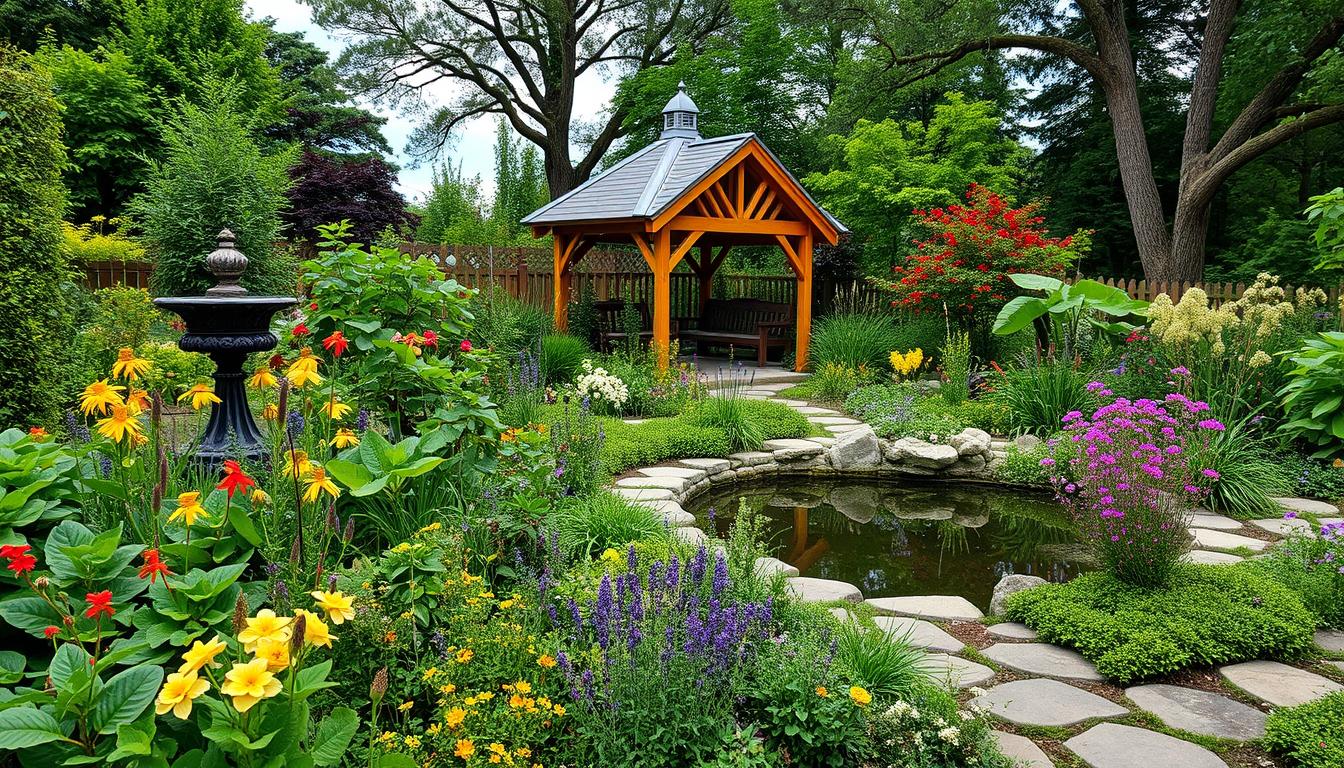
One of the most important aspects of permaculture is the efficient use of water resources and energy. We actively integrate rainwater harvesting systems and drainage systems that help retain moisture in the soil and minimize the need for artificial watering. It is also important to consider the placement of plants to ensure they use sunlight as efficiently as possible, reducing the need for additional lighting and heating.
At Ecolandscape Studio, we actively incorporate elements like solar panels, water features for rainwater storage, and other systems that help minimize the use of external resources and reduce carbon footprints.
Recommendations for Implementing Permaculture in Landscape Design
Transitioning to permaculture principles in landscape design requires a comprehensive approach and careful attention to every aspect of the site. At Ecolandscape Studio, we recommend starting with a detailed analysis of the site and its characteristics to understand which natural resources and conditions can be used most effectively.
We also suggest creating multi-layered plantings to maximize vertical space and increase biodiversity. It is important to consider which plants will work in harmony, which can create shade, or serve as windbreaks.
Additionally, we strongly recommend including systems for collecting rainwater and creating water features, which will allow for efficient use of natural resources without relying on external sources.
Benefits of Applying Permaculture
Applying permaculture principles in landscape design offers numerous benefits, from reducing maintenance and upkeep costs to creating sustainable ecosystems that require little intervention.
Landscape design based on permaculture also helps improve the ecological state of the site, enhance soil and water quality, and create a healthy environment for local animals and insects.
Furthermore, this approach contributes to the development of local communities, as integrating elements of community gardening and shared land use fosters stronger social ties and collective responsibility for nature.
Permaculture in landscape design is a path to creating sustainable, ecologically clean, and self-sustaining ecosystems. At Ecolandscape Studio, we are confident that applying these principles not only improves the state of the environment but also creates spaces that work for people, nature, and future generations. Permaculture helps us design landscapes that seamlessly fit into natural processes, restore ecosystems, and reduce the strain on natural resources.