With the rapid growth of cities and urbanization, growing your own food is becoming increasingly relevant. At Ecolandscape Studio, we see urban farming not only as a way to ensure access to fresh produce but also as an essential part of sustainable urban development. In this article, we will explore key aspects and methods of landscape design for urban farmers, as well as offer advice on incorporating innovative technologies into urban garden design.
Container Gardens: Opportunities for Everyone
Container gardening is an excellent way for people with limited space to create their own small garden. But container gardening is not just about balconies and windowsills. Today, container gardens are being actively integrated into public spaces such as rooftops, terraces, and urban park concepts.
At Ecolandscape Studio, we view container gardening as a way to enhance space while creating unique, eco-friendly zones right in the heart of the city. Containers come in various shapes and sizes, ranging from traditional pots to more creative solutions such as old wooden crates, shelves, hanging baskets, and even recycled construction materials. Containers can be easily moved, allowing for flexible garden arrangements based on sunlight or seasonal changes. This makes it possible to adapt gardens even in the most limited spaces.
The advantages of container gardens include not only their mobility but also the ability to better control soil composition. For each plant, an optimal mix can be selected, which is especially important for those wanting to grow specific crops, such as herbs, greens, or exotic plants. Moreover, multi-level container systems help make efficient use of space by placing plants not just on the ground, but also on walls and balconies, thus creating entire «green oases.»
Vertical Farms and Walls: The Evolution of Gardening in the City
Vertical farms are becoming one of the most popular solutions for urban gardening. In limited spaces, where every square meter counts, vertical farms allow for the efficient use of vertical surfaces walls, fences, pergolas, and even building facades. These farms significantly save space, which is an important factor for those living in apartments or homes with limited land area.
Vertical farms come in various types. For example, modular systems that allow individual panels to be connected to form entire vertical gardens. These systems can be equipped with drip irrigation, as well as automatic humidity and lighting systems, making them suitable for use in closed environments such as offices or conservatories. Another option is hanging vertical systems, which can be placed along walls or in areas where traditional containers cannot be installed.
At Ecolandscape Studio, we view vertical farms not only as a way to grow vegetables and greens but also as a way to create unique and functional elements of landscape design. Vertical gardens increase the number of plants in limited spaces and can also serve as important decorative elements in urban environments. Furthermore, these systems help clean the air, reduce noise levels, and create a favorable microclimate.
Rooftop Gardens: A Strategy for Sustainable Cities
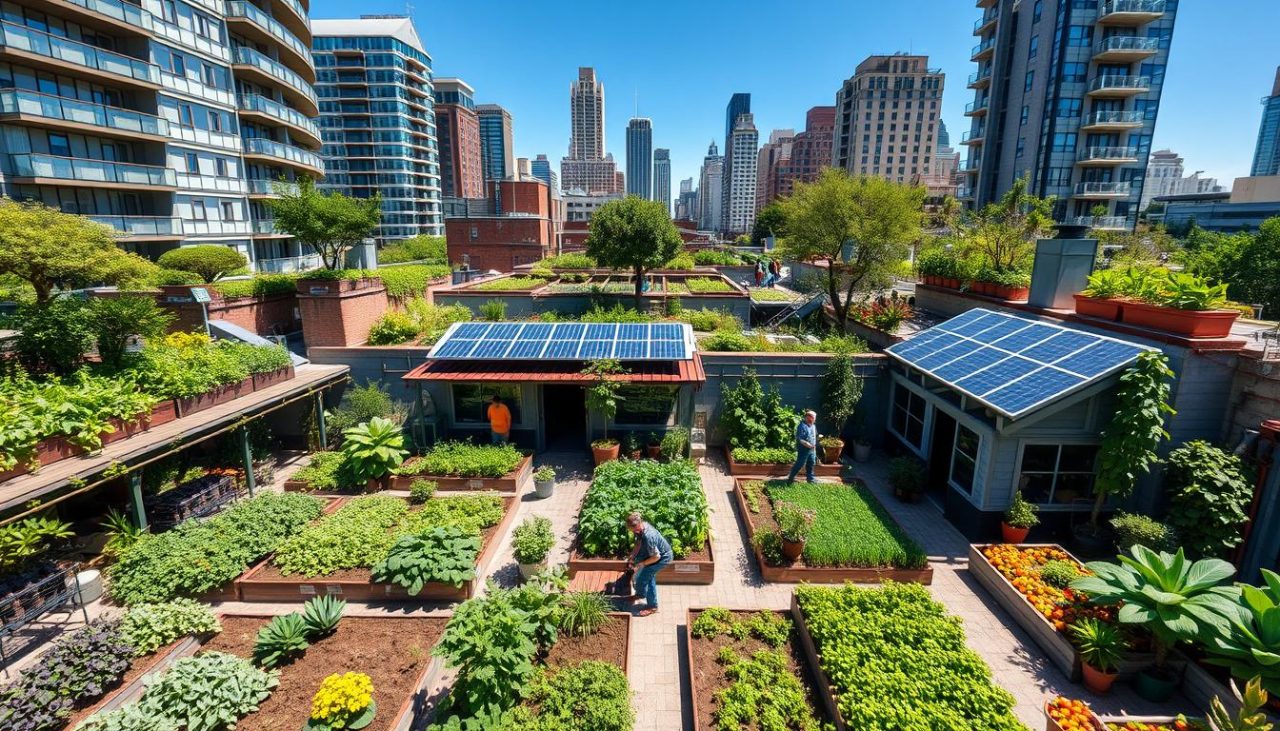
Rooftop gardens are becoming increasingly popular because they not only help utilize unused spaces but also address a variety of environmental issues. At Ecolandscape Studio, we believe that roofs with green plantings can become a key element of the urban ecosystem. These gardens help significantly reduce the «heat island effect» one of the main phenomena in megacities, where higher temperatures are created due to concrete and asphalt surfaces. Roof gardens help mitigate this effect and provide natural insulation for buildings.
Rooftop gardens can also serve as spaces for creating small oases with vegetables, greens, and even fruit trees. This offers not only increased ecological sustainability but also improves the quality of life for city residents by providing them with fresh, healthy produce right on their rooftops. Such gardens are actively used in cities worldwide, and we at Ecolandscape Studio are happy to incorporate these solutions into our projects.
For effective rooftop garden creation, it is important to consider several factors. First, the weight-bearing capacity of the roof is critical. Our specialists always perform the necessary calculations to understand the load capacity of the structure. Another key point is choosing the right plants. We recommend using lightweight plants such as herbs, greens, and ornamental shrubs, which do not require deep roots and can easily withstand temperature fluctuations.
Hydroponics and Aquaponics: Innovative Urban Gardening Methods
Modern technologies like hydroponics and aquaponics are becoming increasingly popular in urban farming. These methods not only boost yields but also significantly reduce water and fertilizer consumption, which is especially important in urban areas where resources are often limited.
Hydroponics allows plants to grow without soil, using a water solution with nutrients. This reduces the amount of water required for irrigation and accelerates plant growth. Hydroponics is ideal for vertical gardens and rooftops where space is limited. At Ecolandscape Studio, we often use hydroponics to create highly productive and sustainable urban gardens where plants receive all the necessary nutrients directly through the water.
Aquaponics is a system that combines hydroponics and aquaculture. In this system, fish release nutrients through their waste, which is then used by plants for nourishment. In turn, the plants clean the water for the fish. This closed-loop ecosystem helps minimize waste and resource consumption. We actively integrate aquaponics into our projects to create eco-friendly and productive gardening solutions that are perfectly suited for urban environments.
Sustainability and Biodiversity: Creating Eco-Friendly Gardens
At Ecolandscape Studio, we adhere to principles of environmental sustainability and believe that creating green spaces in cities is an important step toward a healthier and more sustainable future. Effective water resource management, the use of organic fertilizers, and plants that support biodiversity all help maintain ecological balance and improve the quality of life for city dwellers.
Using native plants that are adapted to the city’s climate helps create harmonious and sustainable ecosystems. In our projects, we always choose plants that not only look beautiful but also support local flora and fauna. This contributes to preserving biodiversity and improving the ecological situation in megacities.
Martin Palma, the founder and CEO of Ecolandscape Studio, says: «Urban farming is a vital part of sustainable city development. We see the future in integrating natural elements into urban infrastructure, and this is key to creating a healthy and sustainable urban environment. Implementing technologies such as hydroponics and aquaponics, along with creating green rooftops and vertical gardens, helps not only increase food security but also improve the quality of life for city residents.»
Landscape design for urban farmers is a crucial step in creating sustainable and eco-friendly cities. At Ecolandscape Studio, we are always ready to offer innovative solutions for creating urban gardens that are not only productive but also seamlessly fit into the urban landscape. By incorporating technologies such as vertical farms, hydroponics, and aquaponics, as well as using eco-friendly materials and sustainable gardening practices, we can help you create your own small farming oasis in the metropolis.