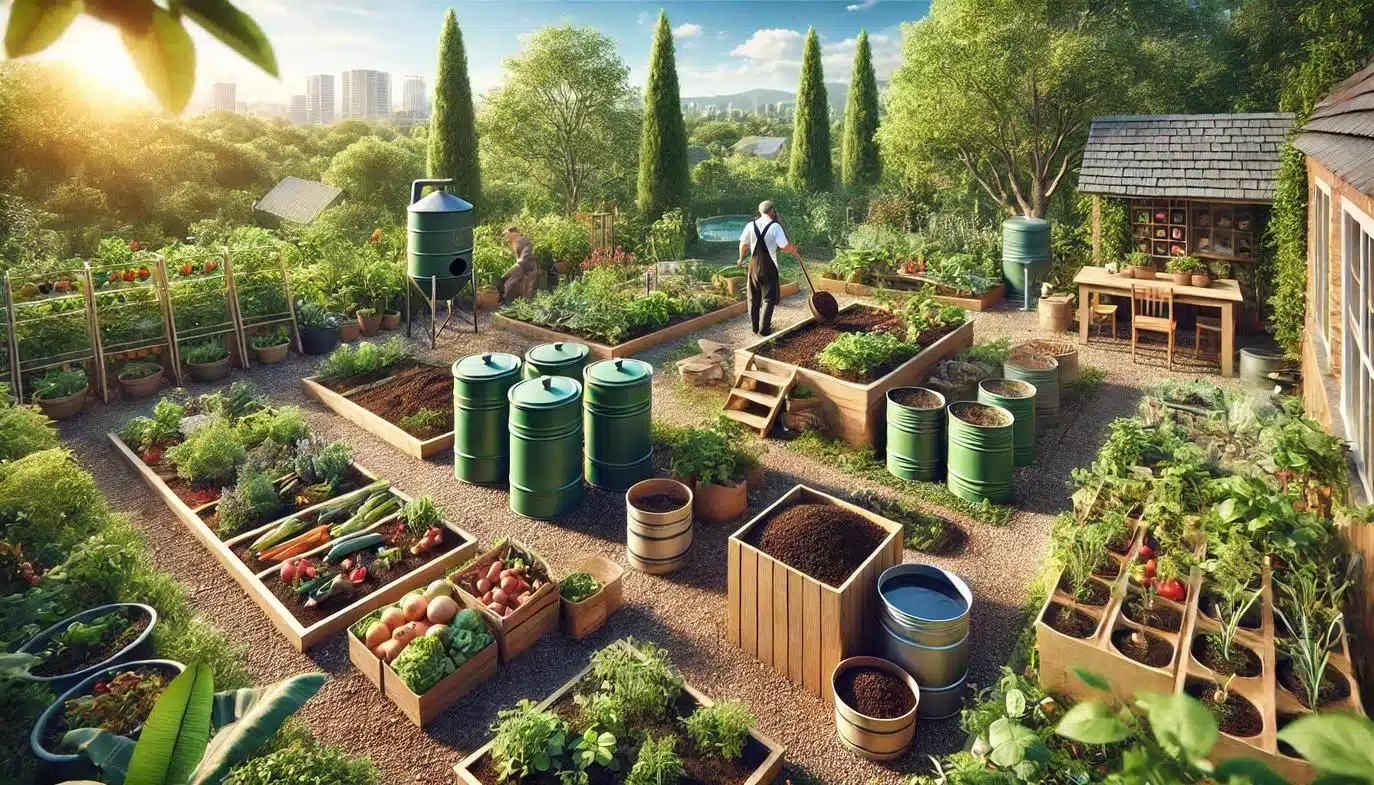
Sustainable development is becoming increasingly relevant in the field of landscape design every year. Against the backdrop of global environmental issues, the concept of Zero Waste is gaining more significance. At Ecolandscape Studio, we strive not only to create aesthetically pleasing but also environmentally safe and functional landscapes. In this article, we will share our professional knowledge on how to implement Zero Waste in landscape design, what recycling and sustainable resource usage methods can be useful, and how this affects the durability and harmony of your plot.
Why the Zero Waste Concept Is Important for Landscape Design?
The principles of Zero Waste in landscape design go beyond mere waste recycling. It is a philosophy that encompasses the entire process — from design to garden maintenance. Every element — from the choice of plants to the materials used — must be eco-friendly and aim to minimize the impact on nature.
The main goal of Zero Waste is to reduce energy consumption, reuse materials, minimize waste, and reduce carbon footprint. Given the growing environmental challenges, such as climate change and pollution, landscape design must be flexible and able to adapt to local conditions while reducing the burden on nature.
Recycling Materials in Landscape Design: A Deep Dive
One of the most effective ways to integrate Zero Waste principles into landscape design is through material recycling. This is not just about waste disposal but also about creating new materials from old, using secondary resources, and finding unconventional solutions to improve the functionality and aesthetics of the plot.
One of the most popular recycling methods in landscape design is using organic waste to create compost. Composting is not only a way of disposal but also a method of enriching the soil. During the composting process, organic materials (such as leaves, branches, grass, and plant remnants) turn into humus, a valuable fertilizer that improves soil structure.
According to ecological studies, composting can reduce waste volume by 25-30% that would otherwise end up in landfills. Moreover, compost not only enriches the soil but also improves its water retention capacity, which is especially important in the face of changing climate conditions.
Instead of using new construction materials to create paths, walls, fences, or decorative elements, old materials can be recycled. For example, concrete left over from the demolition of old structures can be repurposed and used for paving garden paths. This significantly reduces the need for new building materials and decreases the carbon footprint.
The process of recycling concrete materials is not only environmentally friendly but also economically beneficial, allowing for resource savings and reducing atmospheric pollution.
Wood obtained from old buildings or discarded trees can become a valuable construction material. We actively use recycled wood to create garden furniture, fences, paths, and other elements. This material is not only eco-friendly but also gives the plot a unique and natural appearance. Using recycled wood also significantly reduces the carbon footprint, as the production of new wooden products requires significant energy costs.
Ecosystems on the Plot: Creating a Closed Loop
Creating a closed ecosystem on the plot is a crucial aspect of Zero Waste in landscape design. In such an ecosystem, every element works for the benefit of the other, and the waste from one process can become a resource for another. The approach to creating closed ecosystems in landscape design helps minimize waste and rationally use resources.
Water bodies on the plot can serve not only as decorative elements but also as an important part of the water purification system. Instead of using chemicals to purify water, plants and filters can be used to clean the water naturally. For example, aquatic plants such as reeds, water lilies, and cattails can filter water and remove organic matter.
These water bodies create a micro-ecosystem where various species of animals and insects can live, helping to maintain biodiversity. The use of biological water purification helps avoid the use of chemicals that could pollute the soil and groundwater.
Mulch is a layer of organic or inorganic material laid on the soil surface to retain moisture, prevent weed growth, and improve soil structure. Recycled materials such as wood chips, grass clippings, straw, or even cardboard can be used as mulch. This helps reduce the need for watering, prevents soil erosion, and improves soil structure.
Additionally, mulch retains carbon in the soil, which helps reduce carbon dioxide emissions into the atmosphere. This is an important step in combating climate change, as it helps keep carbon in the soil and prevents its release into the air.
The Importance of Wildlife and Biodiversity in Landscape Design
Creating sustainable ecosystems on the plot is impossible without considering biodiversity. At Ecolandscape Studio, we actively employ approaches that support and increase biodiversity by creating favorable conditions for various species of plants, animals, and microorganisms.
Attracting native plant species and creating homes for birds, insects, and other animals helps maintain the ecosystem on the plot. For example, placing birdhouses or bat boxes helps increase the population of beneficial insects and protects plants from pests.
Using native plants not only reduces the need for artificial watering and fertilizers but also supports the resilience of the ecosystem. Native plants adapt better to climatic conditions and create a natural habitat for local species of animals and microorganisms.
Martin Palma, founder and CEO of Ecolandscape Studio, shares his thoughts: «Zero Waste in landscape design is a necessary step to preserve the planet for future generations. Our projects are always focused on minimizing waste, rational use of resources, and creating durable, environmentally safe solutions. We are proud to offer our clients not only beautiful but also functional spaces that benefit both nature and people.»
How to Implement Zero Waste in Your Landscape?
Zero Waste is a philosophy that requires attention and mindfulness at every stage of working with a plot. To implement this concept in landscaping, it is not only necessary to recycle waste but also to think about long-term sustainability. We recommend selecting materials that can be recycled, as well as considering the ecosystem of the entire plot to create a harmonious and sustainable space.
- Use Recycled Materials: Choose materials that can be recycled or reused, such as recycled concrete, wood, and stones.
- Create a Closed Ecosystem: Use water bodies, water filtration, and mulch to create harmony between the elements of the plot.
- Attract Wildlife: Place birdhouses, plant native species, and create habitats for animals to help maintain ecological balance.
- Plan for the Future: Choose plants that will be resilient to local climate conditions and require minimal maintenance.
The Zero Waste approach in landscape design is the path to environmentally clean, sustainable, and durable landscapes. At Ecolandscape Studio, we place great importance not only on the external beauty but also on the ecological safety of our projects. We believe that using recycled materials, supporting biodiversity, and creating closed ecosystems will help you create a garden that will not only delight you but also our planet.









