Climate change, increasing extreme weather events, and global migration due to climate disasters are some of the key challenges humanity faces in the 21st century. Every year, more and more people are forced to leave their homes to escape floods, droughts, and other environmental catastrophes. In these circumstances, landscape design becomes not just an aesthetic solution but an integral part of infrastructure that ensures resilience, safety, and harmonious coexistence between people and nature. At Ecolandscape Studio, we place great emphasis on designing landscapes for climate migrants, focusing on the principles of ecological sustainability, inclusivity, and adaptability.
Adaptive Ecosystems and Landscape Resilience: Designing with Climate Change in Mind
One of the key tasks in landscape design for climate migrants is creating adaptive ecosystems that can dynamically respond to changing climatic conditions. At Ecolandscape Studio, we apply the principles of ecosystem resilience, which involve designing stable, self-regulating natural systems capable of withstanding the impacts of extreme weather events. This includes designing hydrologically balanced areas, where special attention is given to water resource management and water infiltration.
In these projects, we use periodic water retention systems such as infiltration basins, rain gardens, and natural ponds, which help regulate water balance, prevent flooding, and enhance biodiversity. Water management systems and ecological drainage have become crucial elements of the landscape, which must be not only resilient but also functional in a changing climate. These solutions are aimed at maximizing the conservation of natural resources and minimizing human impact on the ecosystem.
Social Integration Through Space: Creating Inclusive Public Areas
Designing landscapes for climate migrants must take into account not only ecological sustainability but also social inclusivity. It is important to create not only functional but also socially integrating spaces that will foster interaction between different cultures, improve the quality of life for migrants, and help them adapt to their new surroundings.
We apply the principle of multifunctional public areas by creating spaces for social and cultural interactions, as well as for economic activities and education. Communal gardens, green squares, and public spaces for events become centers where migrants can develop local economies, build connections with locals, and integrate into the new community. Such spaces can also include therapeutic landscape solutions that help reduce stress and social isolation.
Martin Palma, founder and CEO of Ecolandscape Studio, notes: «Designing for climate migrants is not just about creating beautiful spaces. It’s about creating conditions for their full social adaptation and integration into a new environment. The landscape must be an active participant in this process, creating not only a comfortable environment but also spaces that foster new social bonds.»
Water Resource Management: A Hydrological Approach in the Context of Climate Change
Water resource management is one of the cornerstones of landscape design for climate migrants. With climate change and the increasing frequency of extreme rainfall events, designing effective water retention and drainage systems becomes critically important. At Ecolandscape Studio, we use infiltration technologies to manage surface water effectively, preventing flooding and soil erosion.
Infiltration landscape solutions include elements such as permeable surfaces, absorbing materials, and molecular barriers that help water penetrate the soil, restoring natural water cycles. Water absorption also helps prevent the pollution of water sources and restores ecosystem balance. These solutions provide not only natural drainage but also actively participate in managing the micro-ecosystem, ensuring more sustainable water supply and flood protection.
Use of Natural Materials and Energy Efficiency: Enhancing Resilience Through Eco-Friendly Technologies
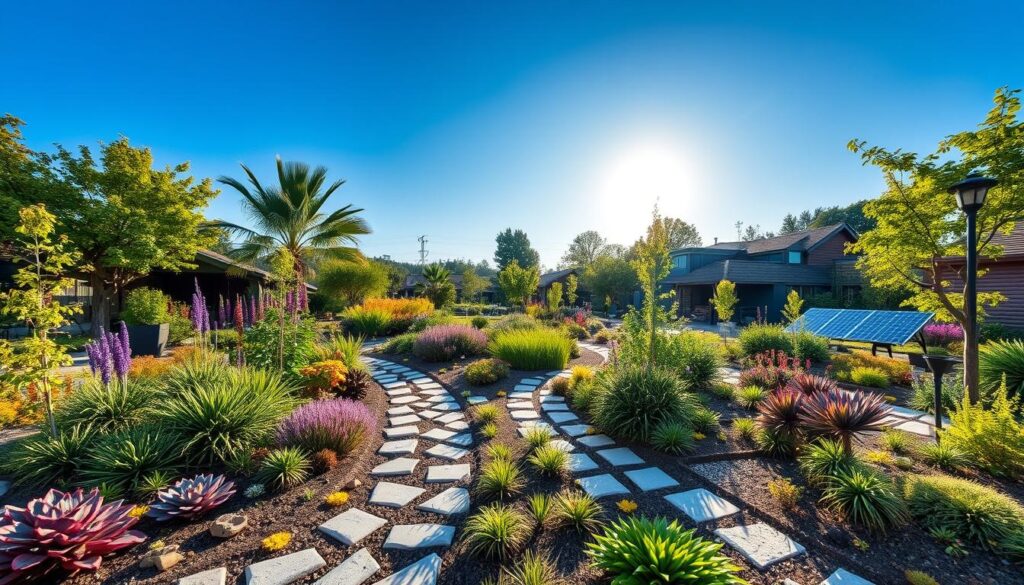
One of the priorities in designing landscapes for climate migrants is the use of environmentally friendly and local materials. At Ecolandscape Studio, we aim to use natural materials such as local stone, wood, and clay, which not only reduce the carbon footprint but also have good thermal insulation properties, helping to reduce energy consumption for heating and cooling. These materials also blend harmoniously with the natural landscape and contribute to the creation of a unique aesthetic environment.
In our projects, we actively implement energy-saving technologies, such as solar panels, heat pumps, systems for passive heating, and natural cooling. These solutions allow for significant reductions in operating costs, minimizing energy consumption, and creating energy-independent and sustainable ecosystems.
Examples of Successful Projects and Global Practices: Inspiration for Future Solutions
There are already successful examples of integrating sustainable landscape solutions for climate migrants in countries like Bangladesh, Indonesia, and the Netherlands. These projects include water infiltration systems, natural water management solutions, and multifunctional public spaces. Ecological centers and cultural hubs play a significant role in these projects, promoting not only ecological sustainability but also social integration.
At Ecolandscape Studio, we actively adopt the best global practices, adapting them to our conditions. An example is our project in the Netherlands, where innovative water retention solutions are integrated, enabling effective management of rainwater and restoration of natural hydrological processes, significantly reducing the risk of flooding.
Resilience and Inclusion Strategy for Climate Migrants
Designing landscape spaces for climate migrants is a complex and multifaceted task that requires the application of innovative ecological solutions, social responsibility, and an inclusive approach. At Ecolandscape Studio, we are confident that landscape design can and should be a tool for creating resilient and adaptive spaces capable of meeting the needs of people in the face of climate change.
We design not only for today but for the future, where ecosystems, architecture, and people will interact based on mutual respect and sustainability.