In landscape design, every element must be not only beautiful but also harmoniously integrated into the overall picture. The Japanese spirea (Spiraea japonica) is one of those plants that helps create unique and natural corners in the garden. At Ecolandscape Studio, we share expert recommendations on selecting, caring for, and optimally combining this wonderful shrub, as well as personal insights from our founder and CEO, Martin Palma.
Why Choose Japanese Spirea for Your Garden?
Japanese spirea is not just a decorative shrub, but a true ornament for any garden. Its variety of cultivars allows for finding the perfect option for any plot, whether it is a small backyard or a spacious landscape. Spirea brings not only visual enjoyment to the garden but also helps create a living ecosystem by attracting beneficial pollinators like bees and butterflies.
Among the many reasons why Japanese spirea is perfect for your garden, its versatility stands out. Spirea thrives both in bright sunny spots and partial shade. It grows well in different soil types and does not require special growing conditions. In landscape design, spirea works well for creating borders as well as forming harmonious combinations with other plants.
Additionally, Japanese spirea is drought- and frost-resistant, making it an excellent choice for a variety of climates, including colder regions. Its ability to withstand weather changes minimizes maintenance and allows you to enjoy its beauty for a long time.
How to Choose Japanese Spirea for Your Garden?
It all depends on what you want to achieve in your garden. If your garden is small and you want to create a neat border or emphasize lines and shapes, compact varieties like Little Princess are ideal. This cultivar does not exceed 80 cm in height and is perfect for small spaces.
If you’re aiming to add a larger accent to your garden, consider taller varieties such as Shirobana or Anthony Waterer. These plants can grow up to 1 meter in height and will look impressive in more spacious gardens or at the back of flower beds.
For vibrant garden accents, you can add spirea with unusual foliage, such as the Golden Princess cultivar, which has golden leaves and will look particularly beautiful in sunny spots.
Caring for Japanese Spirea: Tips from Ecolandscape Studio
At Ecolandscape Studio, we always recommend selecting plants that are easy to adapt to garden conditions and require minimal maintenance while remaining strikingly decorative. Japanese spirea is one such plant. To ensure that your spirea blooms profusely and stays healthy, follow our care recommendations:
Choosing a Planting Location: Spirea prefers sunny spots but also grows well in partial shade. We always advise selecting a location where it will receive at least a few hours of sunlight each day. This ensures bright and prolonged blooming.
Watering and Soil Moisture: Although Japanese spirea is drought-tolerant, during hot summer months we recommend maintaining moderate soil moisture. Avoid waterlogging, as this can lead to root rot.
Pruning and Shaping: Pruning is an essential part of spirea care. This shrub blooms on new growth, so regular pruning encourages the development of new branches and increases the number of flowers. We recommend pruning spirea in early spring or late autumn, removing old and damaged branches. This will not only improve the shape of the shrub but also enhance its decorative appearance.
Fertilizing: Spirea does not require frequent feeding, but to stimulate blooming, you can apply fertilizer in early spring. It’s best to use a balanced fertilizer that contains all the necessary micronutrients for healthy plant growth.
Wintering: While Japanese spirea is quite frost-resistant, we advise covering the shrubs in areas with harsh winters using pine branches or agrotextile. This helps to protect the plant and keep it in excellent condition until the next season.
Combining Japanese Spirea with Other Plants
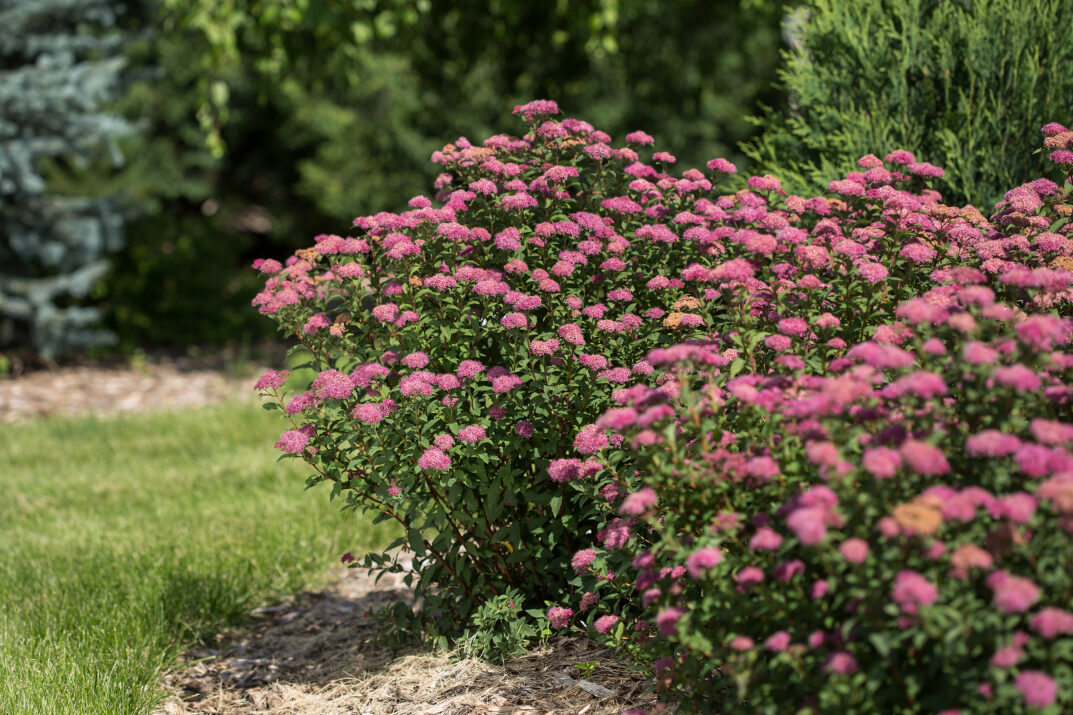
Japanese spirea complements other plants beautifully, adding lightness and grace to the garden. From our experience at Ecolandscape Studio, spirea is often used to create stunning compositions with evergreen plants like thuja or spruce, as well as with ornamental grasses and perennials.
Martin Palma, the founder and CEO of Ecolandscape Studio, shares his experience: “One of the brightest discoveries in my professional journey has been using spirea in combination with grasses and perennials. For example, combining spirea with lavender or echinacea creates a stunning visual effect, especially in mixed borders. It always gives the garden a natural, yet thoughtfully structured look.”
In our projects, we often use spirea to create transitions between plants, adding natural accents to the garden. It also pairs beautifully with roses, viburnum, or barberries, highlighting the vibrancy of other shrubs.
Japanese Spirea: A Versatile, Low-Maintenance, and Aesthetically Appealing Plant
Japanese spirea is a versatile, low-maintenance, and aesthetically pleasing plant that is perfect for any garden. With its variety of cultivars, minimal care requirements, and year-round decorative appeal, spirea is an excellent choice for any landscape design.
At Ecolandscape Studio, we are always happy to help you create harmonious and sustainable garden compositions. With spirea, you can not only enhance your garden’s beauty but also its resilience, as this plant easily adapts to any environment. By following our planting and care tips, you’ll be able to enjoy a blooming and healthy garden for many years to come.