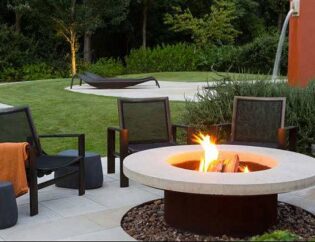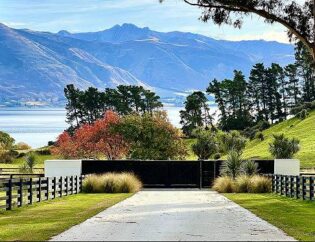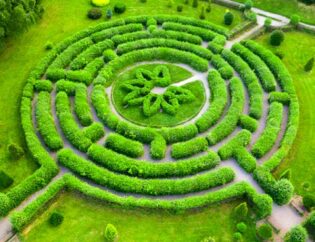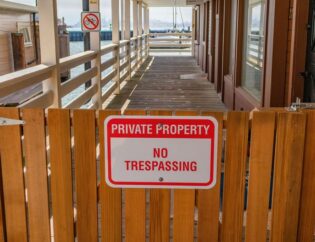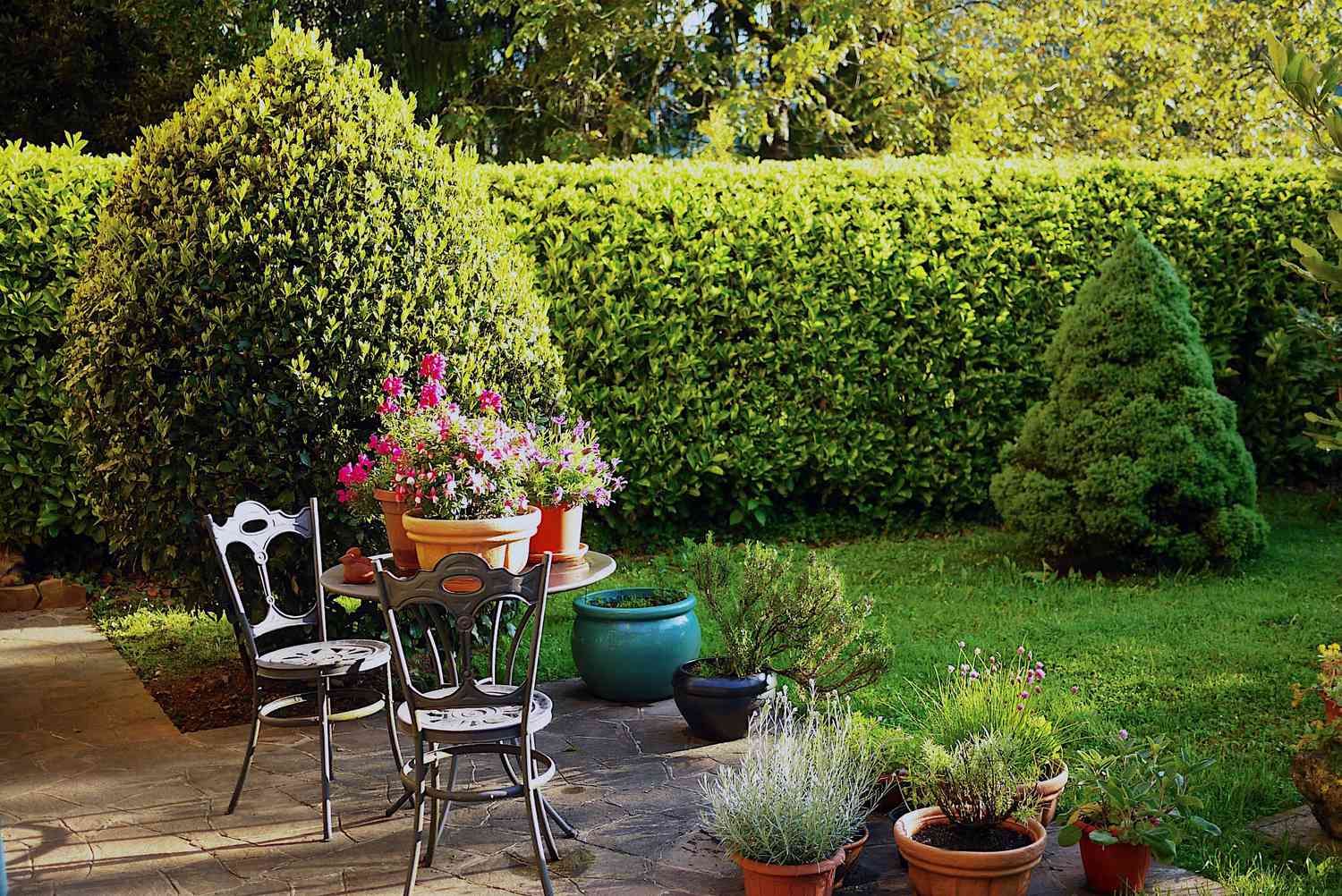
Creating secluded zones in the garden with trees and shrubs is an important element of landscape design that requires a thoughtful approach. At Ecolandscape Studio, we understand that creating such zones is part of the overall garden composition aimed at improving the microclimate and aesthetics of the space. We share professional recommendations for shaping trees and shrubs so that they become an integral part of your garden, creating an atmosphere of privacy and harmony.
Hedgerows as the Foundation for Seclusion
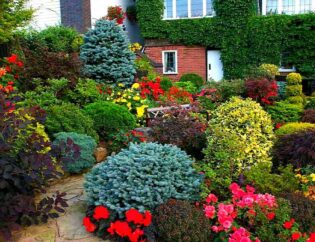
Hedgerows are an effective way to create barriers and visual boundaries in the garden. However, this requires the correct choice of plants, careful planting, pruning, and maintenance. To form dense and long-lasting hedgerows that maintain their decorative appeal year-round, it is best to use evergreen species such as thuja, cypress, and junipers. For decorative hedgerows, deciduous shrubs like spirea, dogwood, and physocarpus are great choices as they attract attention with their flowers and foliage throughout the seasons.
When selecting plants for hedgerows, it’s important to consider the climatic features of your region. In cold climates, evergreens such as thuja withstand frost well, while deciduous shrubs require more care during the winter months.
Expert Insight from Martin Palma, Founder and CEO of Ecolandscape Studio «Creating secluded zones not only solves the issue of privacy but also focuses on creating a favorable microclimate. This helps improve the garden’s atmosphere, reduce noise levels, and create a space that will be enjoyable year after year.»
How to Form a Hedgerow in Practice
Proper planting is key to successfully forming a hedgerow. Plants should be spaced with their future growth in mind. For thuja, the optimal distance between plants is 50–70 cm, while for larger shrubs, this distance increases to 80–120 cm. The soil should be loose, organic, and well-drained to provide the necessary conditions for growth.
After planting, the process of shaping the structure begins. For the first 2-3 years, regular pruning is required to stimulate lateral growth and form a dense foundation. This ensures that the hedgerow gradually becomes thick and solid. As the plants grow, they will provide full coverage from external views.
Pruning and Maintaining Shape
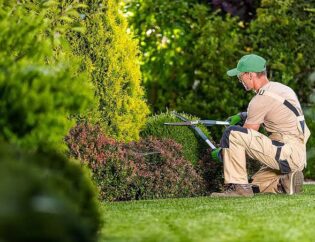
Pruning is a crucial element in shaping hedgerows and trees. Regular pruning helps plants grow in the desired direction, maintaining their shape and density. Secateurs, hedge trimmers, and garden shears are used for this purpose. For working at height, for example, with tall hedgerows or trees, pole pruners are used to access the upper levels without the need for a ladder.
Pruning should be regular and gentle to avoid damaging the plants. Aggressive pruning can slow their growth and harm their decorative qualities. It is better to perform “gentle” pruning several times a year rather than making drastic changes to the shape all at once.
Using Trees to Create Vertical Screens
Trees are ideal for creating tall barriers and privacy zones. Maple, linden, ash, and ornamental apple trees are species with dense crowns and wide leaves that ensure a high level of privacy. These trees provide shade and serve as protection from external views, enhancing the garden’s atmosphere.
Tree shaping involves sanitary pruning, formative pruning, and growth correction. This takes time, as trees grow slower than shrubs, and it may take several years to form a vertical screen.
Green Rooms: Architecture of Seclusion
A «green room» is a space fully or partially surrounded by plants, becoming a retreat for tranquility. To create such a space, multilayered compositions are used: the outer layer consists of tall trees, the middle layer is made up of shrubs, and the inner space is filled with ornamental plants. This design creates a space with controlled visibility and soft, diffused light, which is especially important for relaxation areas.
Creating a «green room» requires considering the seasonality of plants and their ability to form dense green walls. Combining different types of plants and arranging them according to the seasons will add a unique atmosphere of seclusion to the space.
Tools and Challenges of the Process
Creating secluded zones with trees and shrubs requires the use of standard gardening tools, such as secateurs, garden shears, hedge trimmers, and saws. For working with larger areas and tall plants, pole pruners and branch saws are useful. Additionally, a platform may be necessary for safely accessing the upper branches of trees.
The main challenges arise during pruning and shaping the plants. Incorrect pruning can disrupt the plant’s natural development, leading to deterioration of its decorative qualities and slowed growth. Therefore, it is crucial to not only select the right plants but also understand their physiology and growth characteristics.
Shaping secluded zones in the garden with trees and shrubs requires attention to detail, patience, and a proper approach. This is a process that unfolds over time and requires regular maintenance. Proper planning, careful plant selection, correct planting, and regular pruning will ensure the creation of beautiful, harmonious, and lasting secluded corners in your garden. At Ecolandscape Studio, we believe that every garden is a living ecosystem, where plants play a key role in creating comfort and privacy.