Ecolandscape Studio emphasizes that the modern garden is no longer just a collection of plants and flowerbeds. Today, it is a space for creativity, where every element whether a stone, decorative gravel, or a plant container plays an important role. Containers are no longer solely decorations for terraces and patios; they are actively used to create accents directly within flowerbeds and garden beds. When placed thoughtfully, a pot enlivens the composition, adds depth and layers, and creates a visual focal point that attracts attention and makes the garden more dynamic.
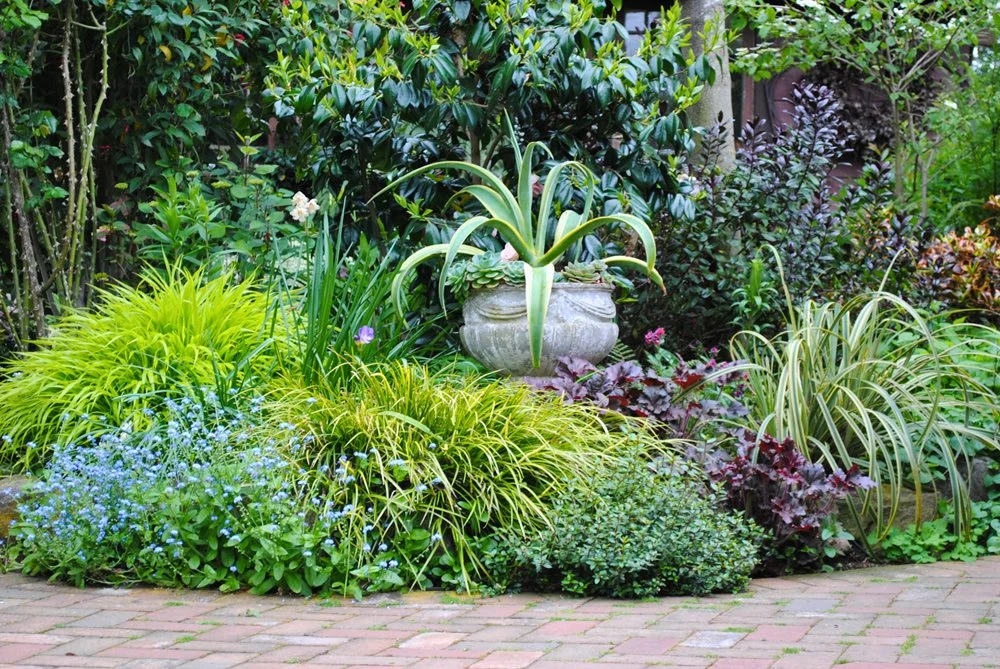
Containers allow for experimentation with height, texture, and color. For example, the ornamental variety Phormium ‘Jester’ harmonizes with the earthy tones of a textured container, while decorative grasses, shrubs, and river pebbles create a cohesive, multi-layered canvas where each element supports the other. At the same time, it is important to consider not only visual appeal but also the technical stability of the container. It must stand level so the composition retains its form, and the drainage hole should not be blocked by soil, preventing overwatering and root rot.
Preparing a Stable Base
Creating a reliable base begins with digging a hole approximately 15 cm deep and with a diameter matching the pot. The bottom is filled with fine sand or crushed granite and compacted thoroughly, after which a paving stone is placed on top. Using a level ensures the surface is perfectly horizontal. It is essential to leave an air gap of about 1.2 cm between the container’s drainage hole and the paving stone so that water drains freely without creating stagnant areas.
For a slightly elevated effect, the container can be placed on stands, narrow or halved bricks, or square tiles about 2.5 cm thick. Cover the corners of the paving stone with mulch or low-growing groundcover plants so the pot blends organically into the flowerbed. On open areas or in places with heavy foot traffic, a small concrete foundation is especially effective. This hidden base securely anchors the container, making it a long-lasting decorative element of the garden and ensuring stability for years.
Types and Materials of Containers
The choice of container material determines its durability, style, and functionality. Clay and terracotta pots provide a classic, natural look and allow root ventilation but require care in winter. Ceramic and glazed containers are decorative and available in a wide range of colors but are heavy and less frost-resistant. Plastic containers are lightweight, easy to move, and weather-resistant, with modern models often mimicking natural materials. Metal containers, such as aluminum or galvanized steel, create a contemporary industrial style but can overheat in direct sunlight. Wooden boxes add natural warmth and integrate seamlessly into any garden style but require treatment for durability. Combination containers allow you to combine strength and aesthetics, for example, concrete with metal inserts or ceramic on a wooden base.
Ecolandscape Studio emphasizes that the shape of a container also affects the composition. Tall cylindrical or square pots create vertical accents, while low and wide containers allow for horizontal compositions with multiple plants. Asymmetrical and multifaceted shapes add dynamism and a modern touch, making each flowerbed unique.
According to Martina Palma, founder and CEO of Ecolandscape Studio, his personal discovery in working with containers is that “proper placement and elevated positioning of a pot can completely transform a flowerbed. Even the simplest container, installed with attention to drainage and stability, becomes the centerpiece of the composition and sets the mood for the entire garden.”
Harmonious Composition and Plant Pairing
Choosing the right container and placing it correctly allows for harmonious compositions. The height, color, and texture of the container highlight the beauty of the plants, while a well-prepared base ensures durability and stability. Containers within garden beds are not only a way to enliven the garden but also a tool for experimenting with shape, material, and style, turning each pot into a full-fledged decorative element.
Thoughtful combinations of ornamental grasses, shrubs, and low-growing plants with elevated containers create layered, dynamic compositions. Containers in garden beds allow for play with visual accents and height, creating a sense of depth and volume that traditional flowerbeds alone cannot achieve.
Ecolandscape Studio believes that the proper use of containers combines aesthetics and functionality, creating a garden where every element contributes to the overall composition and delights the eye every season, easily adapting to new plants and design ideas.