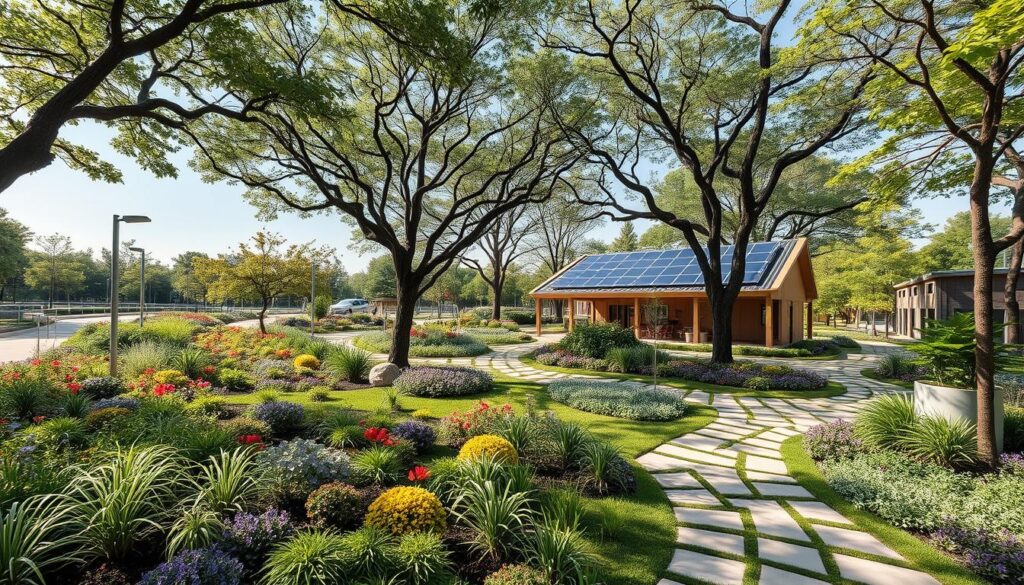
At Ecolandscape Studio, we share knowledge, experience, and practical advice on the modern landscape design of the future. Today, we want to introduce a concept that is changing the way we think about traditional parks, exhibition areas, and urban recreational zones the landscape transformer.
What is a landscape transformer?
A landscape transformer is a space that changes before your eyes. It responds to the presence of people, events, or even the mood of the surrounding environment. In such projects, paths can extend or disappear, platforms can rise or lower, and zones can open or close, creating new routes and experiences. For us at Ecolandscape Studio, this is not just a design idea but a philosophy of working with nature and urban environments: the space should be alive, interactive, and functional at the same time.
Dynamics and flexibility in design
The main advantage of a transformable space is its mobility. Using modular structures and movable elements allows for easy modification of the terrain, creation of new levels or hidden corners, and adaptation of the space for different scenarios: exhibitions, cultural events, or educational programs. This approach helps implement the concept of ecological and sustainable design, where every element is conceived not only aesthetically but also practically.
Interactivity and technology
A modern landscape transformer is impossible to imagine without technology. Sensors, robotic platforms, AR, and VR make the space interactive. It responds to human movement, changes visual and sound effects, and creates a personalized experience for each visitor. According to Martin Palm, founder and CEO of Ecolandscape Studio, “The most valuable aspect of a transformable space is the ability to observe how people interact with the design. Personally, I discovered that such spaces do more than beautify the city they inspire people to explore and create.”
The aesthetics of living space
A landscape transformer is not only about technology but also about aesthetics. Changing paths, the play of light and shadow, and unexpected terrain levels create the feeling that the space breathes and evolves on its own. Our projects show that a transformable landscape can tell stories, engage visitors, and provide unique visual experiences.
We often recommend clients start with simple modular elements: movable platforms, extendable paths, and flexible zones. It is important to consider how these elements will interact with people and with the surrounding nature this is key to sustainable and ecological design. For cultural or educational projects, adding interactive sensors and visual effects makes the space lively and memorable.
The future of transformable spaces
In the coming years, landscape transformers will become even more technological and autonomous. The use of smart materials, artificial intelligence, and robotics will allow spaces to adapt to human needs, turning urban parks, educational zones, and residential complexes into living and dynamic environments. For us at Ecolandscape Studio, this represents a new language of interaction between humans, nature, and the urban environment, where every step and glance becomes part of a living dialogue with the space.









