At Ecolandscape Studio, we always focus on natural principles when designing gardens and parks. Biomimicry – the study and application of nature’s patterns in human environments – has become a key tool for us, allowing the creation of sustainable, functional, and visually appealing landscapes. In our blog, we want to share how this approach helps transform spaces, making them organic and long-lasting.
Nature has long been a source of unique solutions. Leaf structures, root systems, winding streams, and natural landforms have all been optimized over millions of years of evolution for resource distribution, erosion prevention, and biodiversity support. At Ecolandscape Studio, we study these principles and apply them in urban and private garden design to create spaces that are not only pleasing to the eye but also function as self-regulating ecosystems.
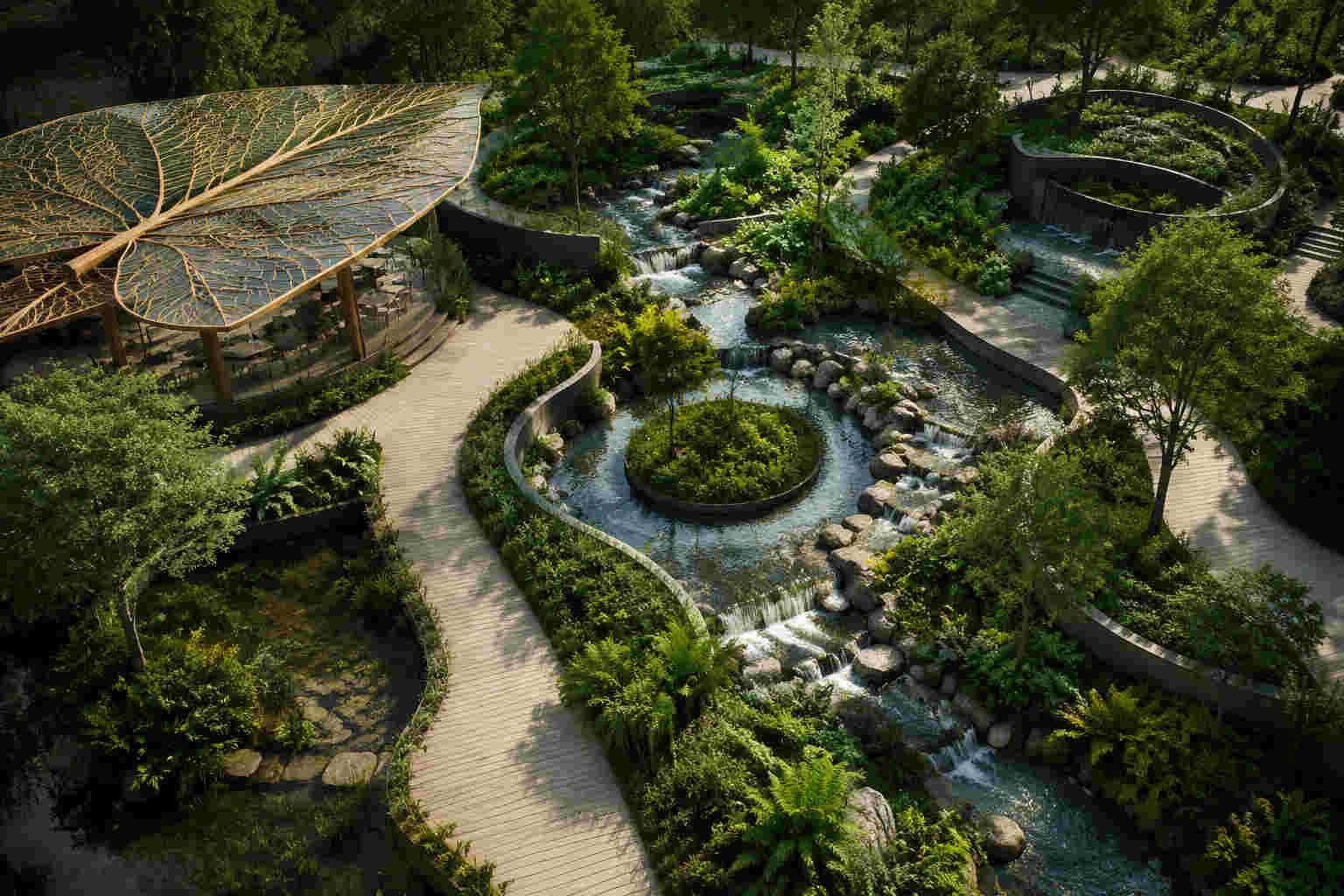
For example, studying leaf structures inspires us to design lightweight, durable, and aesthetically pleasing canopies, pergolas, and decking. The venation patterns of leaves help us understand how to distribute load and energy within a structure, making our installations both long-lasting and ecologically efficient. Similarly, landform shapes allow us to create microclimates, optimize water drainage, and maintain comfortable conditions for plants and people. The use of digital modeling and geographic information systems (GIS) helps us predict water flow, sunlight exposure, and microclimatic features – critical elements for sustainable design.
A crucial aspect of biomimicry is working with water elements. We create winding streams, cascades, and filtering lagoons that mimic natural water processes. These solutions help support ecosystems, purify water, and create living spaces where plants and wildlife thrive in harmony. This reduces the need for artificial irrigation, minimizes maintenance costs, and ensures the ecological sustainability of the project.
Ecolandscape Studio founder and CEO, Martin Palma, notes: “My personal revelation in working with biomimicry is that nature itself provides solutions we often seek through complex engineering methods. Once you start observing the forms and processes around you, design becomes organic, and the result – alive.” His experience demonstrates that integrating natural principles into landscape design is not just about aesthetics; it’s about deep functionality that lasts for years.
At Ecolandscape Studio, we always strive for each project to be not only beautiful but sustainable. Biomimicry helps us create dynamic ecosystems where plants grow naturally, water circulates without excessive intervention, and visitors experience harmony with nature. We advise our clients to consider natural landforms, select plants based on their ecological functions, and design water systems to operate like living organisms.
Applying biomimicry in modern landscape design is a strategic approach that combines technology, ecology, and aesthetics. At Ecolandscape Studio, we see that this approach allows the creation of spaces that adapt to climate change, reduce environmental impact, and provide joy to anyone spending time in the garden. Our blog aims to share this experience, inspire, and offer practical guidance so that everyone can understand the value of harmony with nature in their own space.