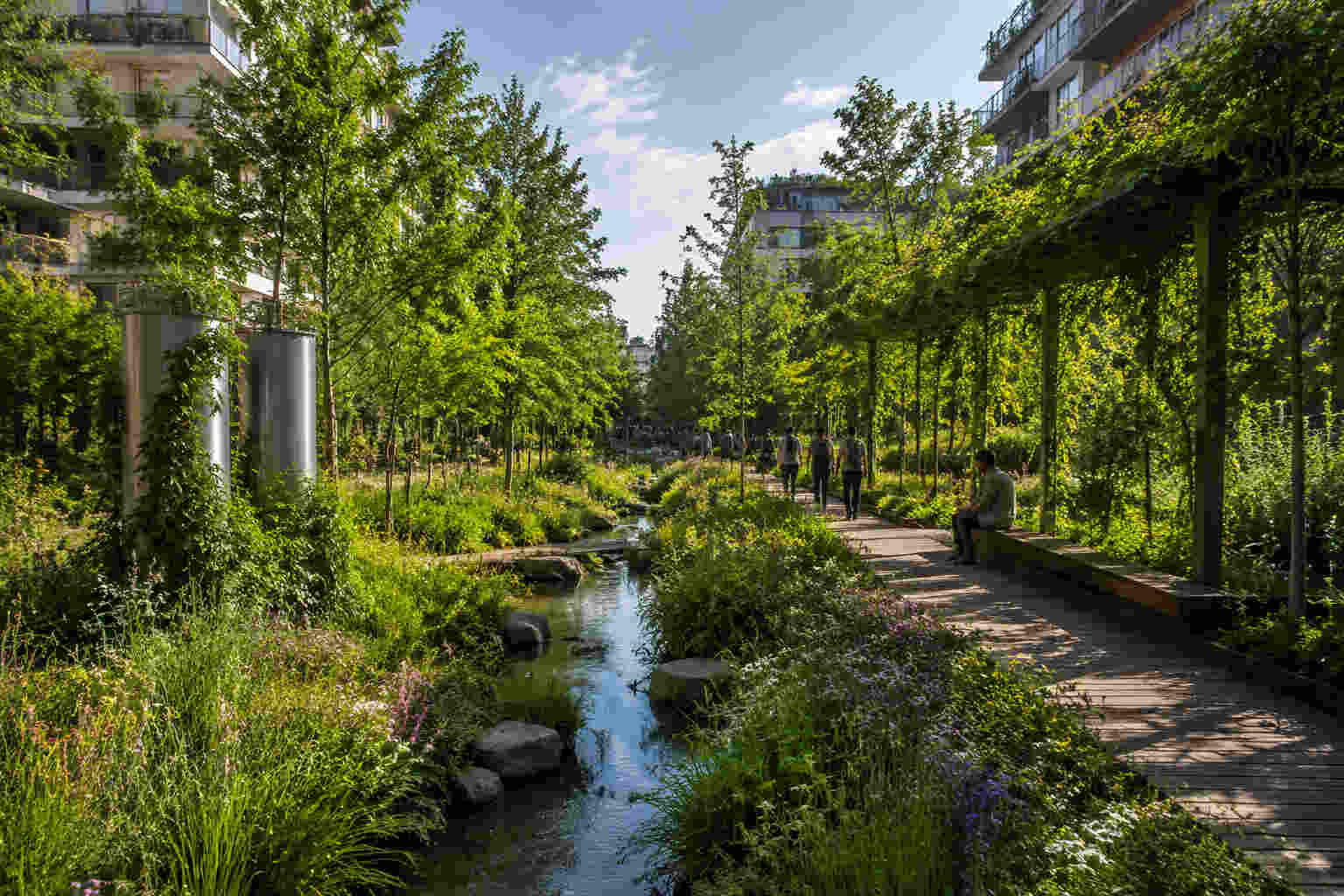
In 2026, Berlin and Amsterdam launched pilot projects for climate gardens — spaces that demonstrate how modern landscape design can help cities adapt to climate change. For Ecolandscape Studio, such projects are a vivid example of how nature, technology, and design can work together for the benefit of people and urban environments. Climate gardens are no longer just decorative areas: they become living, breathing spaces that moderate extreme temperatures, capture rainwater, and support biodiversity.
The distinctive feature of climate gardens is that every element is carefully considered. The foundation of the project consists of plants capable of withstanding drought and sudden temperature changes, as well as trees and vines that provide shade and cozy spots for relaxation. Rainwater reservoir systems allow natural precipitation to be used for irrigation, conserving resources and creating a healthier ecosystem. In Berlin, the projects are integrated into the Grün Berlin 2030 program and help reduce the urban heat island effect, creating comfortable recreational areas for residents. In Amsterdam, the focus is on biodiversity: the gardens are designed to attract birds, insects, and small animals, making the urban environment more lively and harmonious.
Climate gardens serve multiple functions at once. They regulate temperature, purify the air, store rainwater, and support plant growth even in hot conditions. For residents, these gardens become places for walks, meetings, and relaxation. Studies show that the presence of green spaces in the city reduces stress and encourages an active lifestyle, while the economic benefits include reduced expenses for irrigation and maintenance, as well as increased attractiveness of neighborhoods.
International experience confirms that climate gardens work in all conditions. In Singapore, Urban Heat Mitigation Gardens help regulate street temperatures using multi-level greenery and rain gardens. In New York, Resilient Landscapes projects create parks with drought-tolerant plants and water features that protect the city from flooding. These examples demonstrate that climate gardens are a versatile solution capable of combining ecology, comfort, and technological innovation.
At Ecolandscape Studio, we also see a major role for technology in creating these spaces. Automated irrigation systems, humidity and temperature sensors, and digital plant monitoring all help build sustainable gardens where every drop of water is used efficiently and plants thrive. For residents, interactive apps bring the gardens to life: they can monitor plant health and participate in the care of green spaces, fostering a sense of responsibility and engagement.
According to Martin Palma, founder and CEO of Ecolandscape Studio, “For me, climate gardens are a revelation that changes the way we view urban environments. They do more than beautify the city — they help regulate microclimates, preserve biodiversity, and create comfort for residents. In every project, we aim to integrate nature and technology so that they work together for the benefit of people.” His approach inspires our team to create gardens that benefit both people and nature.
The climate garden projects in Berlin and Amsterdam demonstrate that modern urban landscape architecture is more than decoration. It is a strategic tool that helps cities adapt to climate change, creating comfortable, vibrant, and resilient spaces. At Ecolandscape Studio, we are confident that climate gardens are an essential part of the cities of the future, capable of setting new standards for quality of life and environmental responsibility.









