The struggle against excess moisture on a residential property is traditionally associated with costly engineering solutions: installing hundreds of meters of polymer drainage pipes, constructing concrete catch basins, and maintaining complex drainage systems that require regular flushing. Specialists at Ecolandscape Studio offer a fundamentally different approach based on the principles of sustainable landscape design. Instead of burying substantial budgets underground in an attempt to fight nature, we work with the natural contours of the land and create advanced Rain Gardens. This method allows stagnant puddles, rain-damaged lawns, or uncontrolled roof runoff to be transformed into a striking visual centerpiece and a source of pride for any property owner.
In international urban planning, as well as in private landscaping practices across Germany and the United States, this engineering-botanical approach is widely recognized as a benchmark within environmental Stormwater Management programs. The concept involves creating a shallow, engineered depression that intentionally collects water from roofs, patios, driveways, and other hard surfaces during heavy rainfall events. A rain garden functions as a natural bio-drainage reservoir, temporarily storing incoming water before gradually and safely directing it into deeper soil layers.
The technical implementation of such a feature combines engineering precision with visual elegance. To ensure reliable performance, engineers at Ecolandscape Studio calculate the exact dimensions and storage capacity of the basin based on the total catchment area and the permeability of the native soil. Within the excavated depression, a specialized three-layer filtration profile is installed. The bottom layer consists of coarse gravel for rapid drainage, the middle layer is made of coarse sand, and the top layer contains a balanced growing medium composed of sand, mature organic compost, and local soil. This carefully engineered porous structure allows even peak stormwater volumes to be fully absorbed within 24 to 48 hours. This timeframe is critically important because it prevents sediment accumulation and eliminates the risk of mosquito breeding, as mosquito larvae require prolonged standing water to develop.
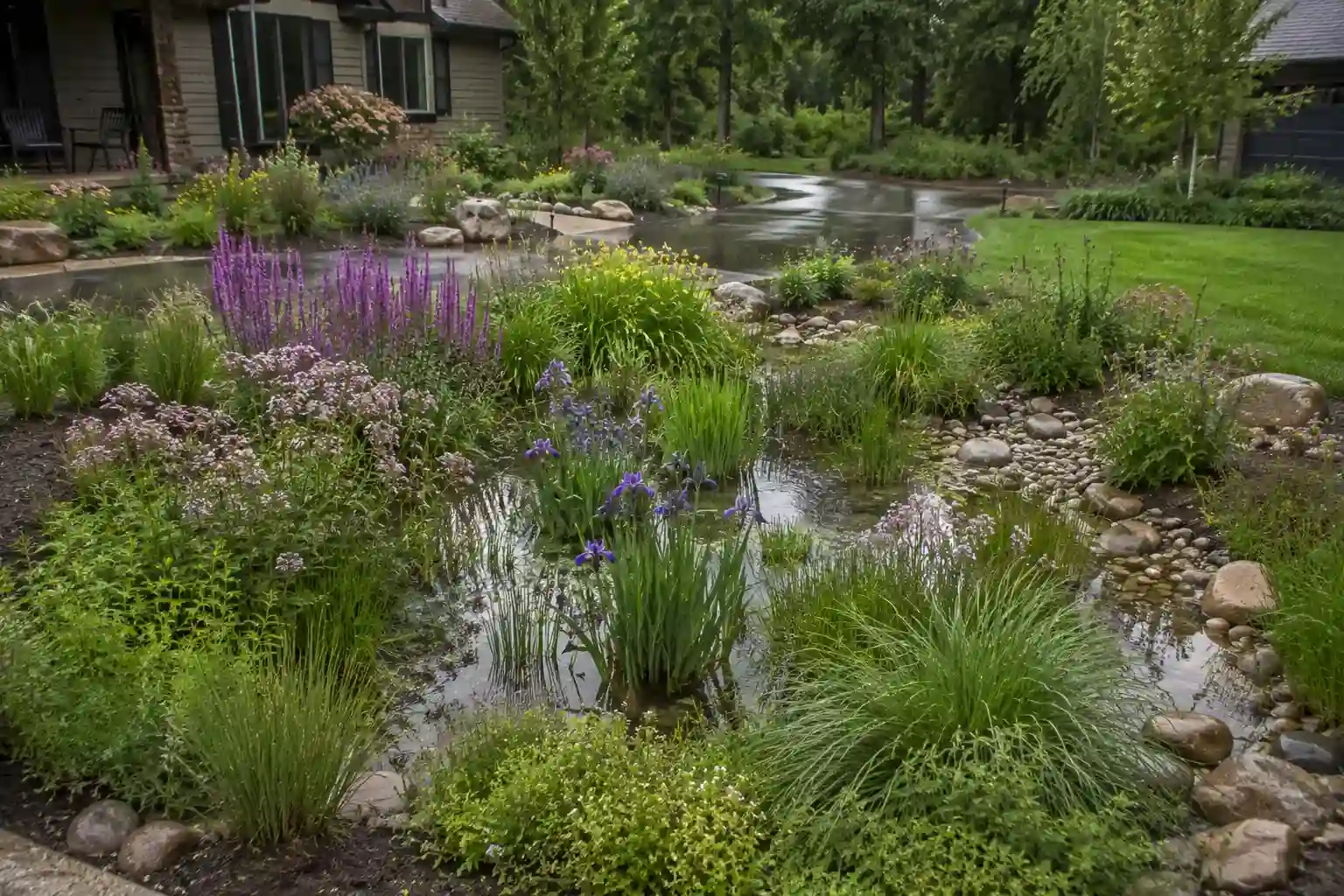
Martin Palma, Founder and CEO of Ecolandscape Studio, shares his professional experience with these ecosystems: «Many homeowners worry that installing a rain garden will create a muddy swamp in their yard. My greatest professional discovery in bio-drainage technology is that a properly designed rain garden functions as a completely dry, elegant, and stylish mixed border most of the time. We are not creating a permanent pond. We are designing a dynamic landscape zone. During a storm, it comes alive as a reflective water feature, then quietly returns to its original dry state, dramatically changing the way the landscape is experienced.»
The long-term performance and self-sufficiency of this living feature depend on selecting the right plant palette composed of highly adaptable species. Conventional ornamental perennials typically cannot survive under these conditions: their roots may rot during flooding or suffer from drought stress during dry periods. When designing rain gardens, we prioritize resilient native species with remarkable ecological flexibility. These plants can tolerate standing water for several days and then endure extended periods of dry conditions without difficulty.
The structural backbone of the planting design is formed by yellow flag iris and Siberian iris, the architectural presence of Joe-Pye weed, the vibrant spikes of purple loosestrife, and carefully arranged clusters of moisture-loving sedges and rushes. As these plants mature, their extensive root systems naturally loosen the soil, gradually increasing the infiltration capacity of the drainage system year after year.
Beyond reducing expenditures on conventional drainage infrastructure and creating a compelling visual identity, a rain garden performs a vital environmental function as a highly efficient natural biofilter. Runoff from roofs, driveways, and parking areas inevitably contains microscopic traces of petroleum products, heavy metals, dust, and de-icing compounds. Direct discharge of this water into ditches and waterways contributes to the contamination of local ecosystems and groundwater reserves.
Within a rain garden, this pollutant load is mechanically captured by the mulch and compost layers. Soil microorganisms working in partnership with plant root systems break down and assimilate harmful compounds, providing a deep level of water purification before infiltration into underground aquifers.
Investing in a rain garden represents a shift away from aggressive engineering interventions toward intelligent, nature-based solutions. At Ecolandscape Studio, we firmly believe that premium landscape design should be environmentally responsible, durable, and aesthetically exceptional. A rain garden clearly demonstrates that challenging site conditions and persistent puddles can be transformed into an exclusive design feature that enhances property value while reflecting the owner’s commitment to sustainability and environmental stewardship.