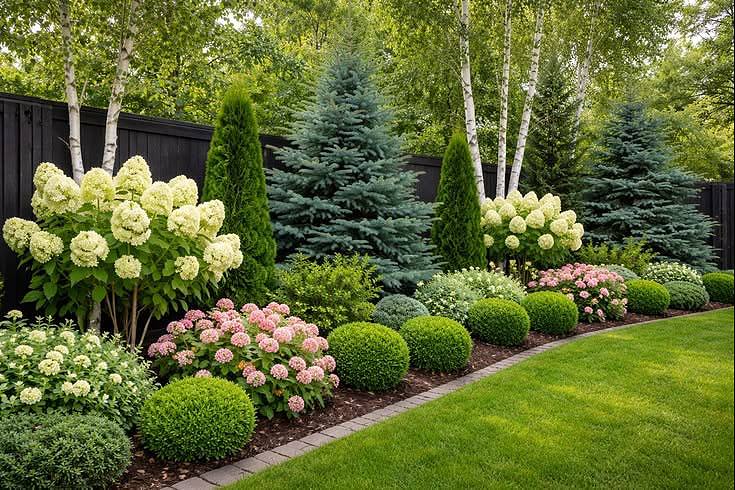
In landscape architecture, there is a common mistake that often remains unnoticed during the early stages of design – focusing exclusively on the peak season of visual appeal. Many spaces are designed to create maximum wow effect in spring or summer, yet the true value of an environment is determined not by short-term impression, but by its ability to maintain quality, aesthetics, and functionality throughout the entire year. Martin Palma, founder and CEO of Ecolandscape Studio, emphasizes that a strong project cannot be a seasonal product – a premium environment must create value twelve months a year, regardless of weather conditions, temperature changes, or shifting visual scenarios. This is why seasonal management has become one of the most intelligent directions in modern landscape design.
A truly strong space never exists in only one time dimension. It is designed not for a specific month, but for continuous evolution. Spring brings freshness and growth, summer delivers dense greenery and active outdoor use, autumn introduces complex color palettes and textural depth, while winter reveals graphic forms, branch structure, and the purity of spatial lines. When a project takes seasonal dynamics into account, the environment begins to live with its own rhythm, constantly transforming without losing aesthetic value. Specialists at Ecolandscape Studio analyze long-term environmental performance and note that projects with a thoughtful seasonal strategy are perceived as significantly more mature and premium.
Plant material plays a particularly important role in this process. A major mistake in many projects is excessive dependence on a short decorative peak. A space may look impressive for several weeks during flowering season, yet lose its expressiveness during the rest of the year. Premium landscape design requires far more sophisticated thinking. Seasonal layering must be considered – combining evergreen species, ornamental grasses, perennials, trees with expressive autumn color, and plants with interesting winter structure. We analyze plant composition as a multilayered system where visual attractiveness must be preserved throughout all seasons, not only during the most photogenic period.
Functionality across different seasons is equally important. An outdoor environment should not lose usability when colder weather arrives or climate conditions change. Movement routes, surfaces, lighting, protected zones, and spatial comfort must adapt to seasonal shifts. A high-quality space allows people to interact naturally with the environment both in summer and winter. Specialists at Ecolandscape Studio note that year-round usability has become one of the defining indicators of truly premium development, because real luxury is expressed not only through aesthetics, but through consistency of comfort.
Seasonality also strongly influences emotional perception. An environment that transforms beautifully throughout the year preserves a sense of novelty and depth. Instead of a static visual image, people experience a living environment that constantly renews itself through light, color, texture, and atmosphere. This strengthens emotional connection with a place and makes the space feel less predictable in a positive way. At Ecolandscape Studio, we believe seasonal dynamics are a powerful tool for creating emotional longevity – the ability of a space to remain engaging and valuable even after years of interaction.
From a commercial perspective, seasonal management is directly connected to value retention. Spaces that maintain visual strength and functionality all year round preserve premium positioning more effectively, support stronger brand perception, and increase long-term project capitalization. At Ecolandscape Studio, we see seasonal design as a foundation of modern landscape architecture, where success is measured not by short-lived visual impact, but by a space’s ability to remain strong, relevant, and desirable in every season. These are the projects that do not live for only a few months a year – they thrive throughout all twelve.









