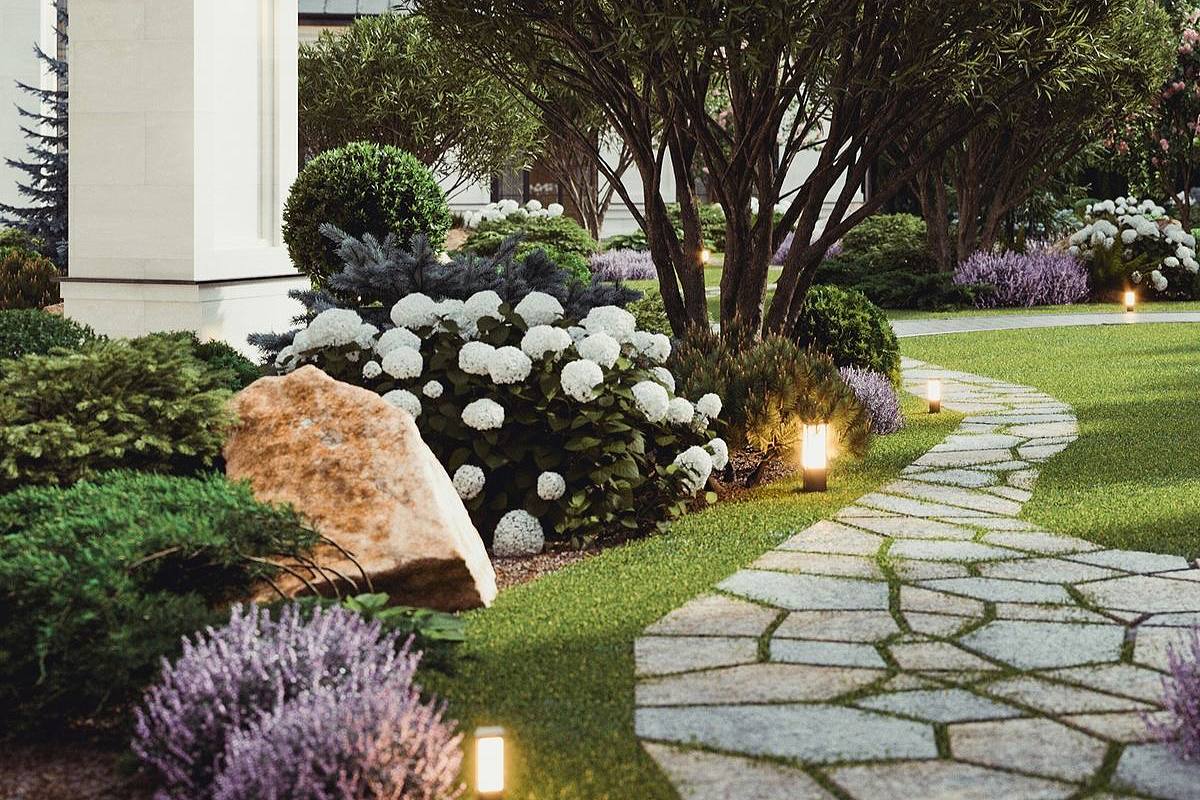
In landscape architecture, not all problems are immediately visible. A space may look aesthetically impressive in renderings, feature expensive materials, refined greenery, and expressive landscape elements, yet still remain a place where people do not want to stay. The reason often lies not in a lack of beauty, but in the presence of spatial friction – small, almost invisible irritants that accumulate within the user experience and subconsciously push people away from the environment. Martin Palma, founder and CEO of Ecolandscape Studio, emphasizes that strong landscape design should be evaluated not only by visual impression, but by how naturally people can move, stay, and relax within a space. This is why addressing invisible friction has become a critical part of modern landscape architecture.
Spatial friction emerges whenever the environment conflicts with human behavior. It may appear through overly narrow pathways, illogical turns, lack of shade, uncomfortable surfaces, abrupt level changes, weak navigation, glare, noise, poorly designed waiting areas, or visual barriers. Each of these factors may seem insignificant on its own, yet together they create a persistent feeling of discomfort. People are not always able to explain why they dislike a territory, but their body and nervous system quickly detect tension. Specialists at Ecolandscape Studio analyze behavioral response and note that these micro-discomforts often determine the true success of a property more strongly than decorative richness.
One of the most common sources of spatial friction is poor route logic. If people do not understand where to go, are forced to make unnecessary turns, or feel that a path does not align with their natural movement, the space becomes frustrating. People instinctively choose routes that are short, clear, and comfortable. When a project ignores this logic, users begin bypassing planned pathways, cutting across lawns, or avoiding certain zones entirely. At Ecolandscape Studio, we analyze movement logic and observe that quality landscaping should not impose behavior, but accurately anticipate it. When this happens, the environment functions without resistance.
Physical comfort also has a major impact. Heat, lack of shade, overheated surfaces, strong wind, slippery paving, or uncomfortable seating can completely undermine the perception of an otherwise beautiful space. A person may appreciate the design visually while having no desire to use it daily. This is precisely the core problem of spatial friction – it is often invisible during presentations, yet becomes immediately obvious in real operation. Specialists at Ecolandscape Studio note that premium landscape design must account not only for composition, but also for the physical perception of space, including temperature, texture, slopes, acoustics, and occupancy scenarios.
Visual friction is equally important. A space may be overloaded with details, filled with too many competing focal points, or, on the contrary, feel empty and lacking meaningful orientation cues. In both cases, clarity of perception is lost. Either the eye finds nothing to engage with, or it becomes fatigued by excessive visual information. At Ecolandscape Studio, we believe strong environments should create controlled clarity – a condition in which people can easily read the space, understand its logic, and avoid internal tension. This is especially critical in residential, hospitality, and commercial projects, where perceptual comfort directly influences user loyalty.
From a commercial perspective, reducing spatial friction increases the true value of a property. Territories where people can move, pause, orient themselves, and relax comfortably perform better over time, create stronger engagement, and generate deeper emotional attachment. At Ecolandscape Studio, we see anti-friction design as one of the emerging criteria of high-quality landscape architecture, where success is determined not only by how beautiful a space looks, but by how easily people accept it as part of everyday life. The absence of invisible irritants is what makes an environment not just attractive, but truly usable, vibrant, and valuable.