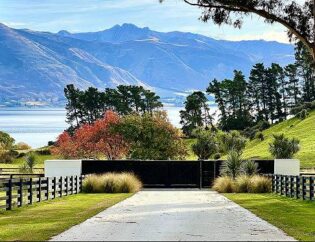
In today’s real estate market, competition has long moved beyond price per square meter, layouts, and basic infrastructure. In many segments, buyers are faced with dozens of properties offering similar technical characteristics, making rational parameters alone insufficient for final decision-making. Increasingly, emotional perception begins to play the decisive role even before a buyer sees the apartment interior. The first impression is formed the moment a person approaches the property, enters the territory, and experiences the surrounding environment. Martin Palma, founder and CEO of Ecolandscape Studio, analyzes this shift as one of the most important transformations in modern development – a strong project today sells not only through building architecture, but through environmental quality that people feel within the first seconds of interacting with the space.
The decision to purchase real estate is rarely entirely rational. Even when buyers believe they are evaluating only numbers, location, and technical specifications, the subconscious simultaneously forms an emotional judgment of the property. People instantly assess the quality of a space through order, greenery, route quality, lighting, proportions, and overall visual discipline. If the environment creates a sense of chaos, randomness, or weak execution, trust in the project decreases even before the apartment viewing begins. Specialists at Ecolandscape Studio analyze buyer behavior and note that strong landscaping can create a perception of premium quality long before clients evaluate layouts or interior finishes.
Landscape becomes a competitive advantage because it operates on the first emotional level. A buyer may not have seen the apartment yet, but already feels whether they want to remain in this place. The environment either creates a desire to stay or subconsciously encourages emotional distance. This is why the entry sequence has gained enormous importance. Access roads, entrance zones, green focal points, private courtyards, pedestrian pathways, and waiting areas create an experience that cannot be replaced by marketing promises. At Ecolandscape Studio, we analyze first-contact scenarios and see that strong landscape design can transform the first minutes of interaction with a property into a powerful purchasing argument.
What makes high-quality external environments especially valuable is their ability to reduce perceived risk for buyers. Real estate is a major investment purchase, so people constantly look for signals of reliability. Strong landscaping is perceived as a sign of long-term thinking, attention to detail, and high execution standards from the developer. When the external framework of a project is deeply considered, clients instinctively transfer this trust to other aspects of the property. Specialists at Ecolandscape Studio note that premium landscaping has become a form of nonverbal quality signaling that works faster than presentations, brochures, or advertising materials.
The commercial aspect is equally significant. In highly competitive markets, projects with similar characteristics require differentiation. Architecture, facades, and layouts often begin to look similar within the same market segment. The external environment is what allows a property to develop its own identity. At Ecolandscape Studio, we believe landscape should be designed not as decorative support, but as part of product strategy. When a territory has strong character, the property becomes more memorable, more emotionally attractive, and less replaceable for potential buyers.
From the perspective of long-term capitalization, competitive advantage through landscape becomes even stronger over time. Spaces that generate trust, comfort, and a sense of high class from the very first seconds sell faster and retain value more effectively in the long run. At Ecolandscape Studio, we see landscape architecture as a powerful market positioning tool, where the external environment becomes not a background for real estate, but a core part of the product itself. This is precisely why buyers increasingly choose a project before viewing the apartment – because the decision no longer begins inside the building, but at the very first interaction with the space.